

Virginia requires a resale certificate for covered community-association sales, and the association generally has 14 days after receiving a written request to provide it, according to the Virginia General Assembly. If you're asking what the HOA resale packet requirements in Virginia are, the key is to understand what this certificate must disclose and how its timing and fees affect a sale.
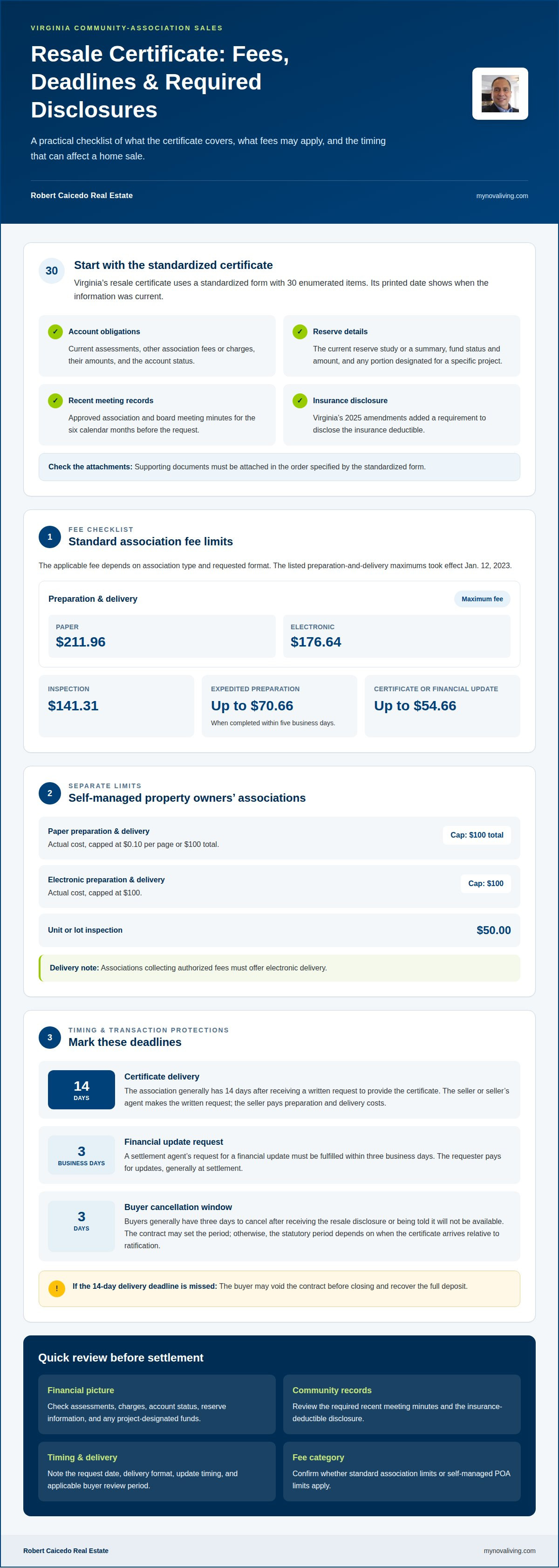
The certificate gives a buyer a dated picture of the association’s finances, rules, and current obligations. It must use Virginia’s standardized form, which sets out 30 required items.
Learn what information the certificate includes, which preparation, delivery, inspection, and update fees may apply, and how it is delivered. You’ll also find the deadlines and buyer protections that can affect a transaction, helping you approach the resale process with greater clarity.
Key Takeaways
- Learn which association charges, reserve details, meeting records, and governing documents can help you understand a property’s obligations.
- Separate preparation and delivery costs from inspection and update fees to see which charges may apply to a resale certificate.
- Understand how paper and electronic delivery, expedited preparation, and financial updates can affect the transaction timeline.
- Use the resale disclosures to make sense of the association’s financial and property-related details before moving ahead with a purchase or sale.
What is a resale disclosure document?
Virginia uses “resale certificate” for documents about a community-association resale; “disclosure packet” is no longer the formal term. To understand what the HOA resale packet requirements in Virginia include, focus on the standardized certificate and the association information it provides.
Virginia Community-Association Resale Certificates
A Virginia community-association resale certificate is a standardized disclosure of association matters tied to a property being sold. It helps you understand financial obligations and governing requirements before the transaction reaches closing. The form contains 30 enumerated items, and its information must be current as of a date printed on the certificate. The law’s required contents appear in § 55.1-2310.
Community-Association and Sales-Tax Certificates
A community-association resale certificate concerns a home and its association. A sales-tax resale certificate, by contrast, applies to a business transaction involving goods for resale. For a home sale, the association certificate addresses charges, account status, reserves, and association records. A sales-tax certificate serves a different purpose and does not explain a home’s association obligations.
Condominium and Property Owners’ Association Requirements
Virginia’s Resale Disclosure Act covers condominiums and property owners’ associations, among other common interest communities. The standardized certificate framework applies to both, while the governing documents and property type determine which records are relevant to a particular home. A POA seller must obtain the certificate from the association and provide it to the purchaser. In either case, review assessment balances, reserve information, and applicable rules before closing.
Governing Rules and Local Exceptions
State law sets the certificate framework, while association documents explain community-specific requirements. Some Reston properties, for example, have two HOA layers: the Reston Association and a cluster or neighborhood HOA. Certain transfers, including gifts and foreclosures, are exempt under § 55.1-2317. These distinctions matter because the property’s community structure and transfer type can affect which disclosures apply. They help clarify what the certificate covers in a specific transaction.
Preparation, delivery, and inspection fees
The seller or seller’s agent requests the resale disclosure from the association in writing. According to the Virginia General Assembly, a common interest community association has 14 days after receiving that request to provide the resale certificate. The seller pays preparation and delivery costs; the requester pays for updates, generally at settlement.
Virginia’s fee schedule distinguishes standard preparation, expedited service, inspections, and updates. Maximum fees for associations include:
- Paper preparation and delivery: $211.96; electronic preparation and delivery: $176.64. These maximums took effect Jan. 12, 2023.
- Inspection: $141.31, and expedited preparation: up to $70.66 when completed within five business days.
- Certificate or financial update: up to $54.66.
Self-managed property owners’ associations have separate limits. Paper preparation and delivery may cost actual cost, capped at $0.10 per page or $100 total. Electronic preparation and delivery may cost actual cost, capped at $100. The listed unit or lot inspection fee is $50.00. Associations collecting authorized fees must offer electronic delivery. The applicable fee depends on the association type and requested format.
Order promptly after the contract is ratified. If the association misses the 14-day delivery deadline, the buyer may void the contract before closing and recover the full deposit. Delayed documents can therefore affect both the transaction timeline and the buyer’s decision. A settlement agent’s financial-update request must be fulfilled within 3 business days.
Buyers generally have three days to cancel after receiving the resale disclosure or being told it will not be available. The contract may set the cancellation period; otherwise, the statutory period depends on when the certificate arrives relative to ratification. This gives buyers a defined window to review assessments, association obligations, and property disclosures before proceeding toward closing.
Required packet contents
The Virginia resale certificate brings association records and financial disclosures into the real estate transaction. Its standardized form contains 30 enumerated items, and supporting documents must be attached in the order specified by that form. For purchasers, the sequence helps connect each disclosure to the association record behind it. The certificate’s printed date also identifies when its information was current.
Financial entries show owners and purchasers the obligations tied to the property, not just the association’s general budget. The certificate must state current assessments and other association fees or charges, their amounts, and the account status. It also includes the association’s current reserve study or a summary. The reserve or replacement fund’s status and amount must appear, along with any portion designated for a specific project.
- Meeting records: approved minutes from association and board meetings for the six calendar months preceding the request.
- Reserve information: the current study or summary, fund status and amount, and any project-designated portion.
- Insurance: Virginia’s 2025 amendments added an insurance-deductible disclosure requirement.
- Account details: current assessments, other charges, amounts, and account status.
These records give purchasers context about future association obligations before settlement. For example, funds designated for a specific project have an identified purpose. Approved minutes add recent board and association decisions, while the account status distinguishes current charges from the property’s reported balance. Together, these documents make the certificate more useful than a simple fee list.
The Common Interest Community Board’s standardized form organizes required disclosures, while the property’s association records provide the details. Condominium and property owners’ association purchasers can use the same disclosure framework while reviewing records relevant to their community. Read financial entries alongside minutes and insurance disclosures to better understand what the documents show about the property and association before the transaction advances.
What Virginia laws govern HOA resale disclosure packets?
Virginia’s Resale Disclosure Act, in Title 55.1, Chapter 23.1, governs resale certificates for common interest communities. Section 55.1-2309 addresses the duty to request one when residential property is sold. The framework covers property owners’ associations, condominiums, real estate cooperatives, and Horizontal Property Act regimes. For a seller, that law identifies the association disclosure required for a covered transaction.
The seller or seller’s agent must submit the request in writing. According to the Virginia General Assembly, a common interest community association has 14 days after receiving the written request to provide the resale certificate. The deadline gives the parties a clear point for tracking delivery against the sale timeline. The certificate supports the purchaser’s review before closing, including review of reported charges and governing matters.
The ratified contract can set the buyer’s cancellation period for the resale certificate. If the parties do not set one, the statutory period is three days, measured from ratification or receipt depending on when the certificate arrived, according to the Virginia General Assembly. That timing makes the delivery date important: it affects how the review period is calculated and when the purchaser must decide whether to proceed.
Virginia law also addresses failures and exemptions. Under § 55.1-2314, if an association or preparer fails to meet certificate-content or update requirements, the buyer generally is not required to pay delinquent assessments or remedy certain governing-document matters existing as of the certificate date, subject to statutory exceptions. Section 55.1-2317 exempts certain transfers, including gifts and foreclosures. These provisions help distinguish a covered sale from an exempt transfer and clarify consequences when required disclosures are deficient.
Robert Caicedo Real Estate
Robert Caicedo Real Estate helps buyers and sellers understand association disclosures in the context of a Virginia property transaction. Buyer Representation can help you weigh reported assessments, reserves, and governing matters alongside the home and contract. Seller Representation can help you understand how resale-document timing fits into your transaction.
The association provides the certificate, but its information can shape a buyer’s decision and the path to closing. Whether you’re comparing a resale home with New Construction Homes or assessing an investment property, the disclosures offer useful context about community obligations. Bring your questions about the certificate into your real estate decision.
Contact Robert Caicedo Real Estate to discuss your Virginia buying or selling plans.
Shape Your Next Move With Confidence
Understanding the HOA resale packet requirements in Virginia gives you a useful starting point. Next, connect the association details to your plans. Consider what matters most in your next home, how the community fits your day-to-day life, and which questions deserve attention before you commit. This wider perspective can help keep the transaction aligned with your priorities.
If you’re preparing to buy or sell, discuss your goals and questions about association documents with Robert Caicedo Real Estate. A thoughtful conversation can help you consider the property, community, and your plans together, and clarify your next steps as you review disclosures and make decisions.
Contact Robert Caicedo Real Estate to talk through your plans. With a clear sense of what you want from your next home, you can move forward with confidence.
Frequently Asked Questions
How current does it have to be?
The certificate must show the date through which its information is current. If the original was issued more than 30 days but less than 12 months before settlement, a qualifying seller or buyer may request an update. That update is due within 10 days. This can matter when a closing date shifts, since the original figures may no longer reflect the latest account information.
Is the Association in good financial standing?
The certificate doesn’t provide a simple “good” or “poor” rating. To assess financial condition, consider the reserve study, reserve-fund balance, project-designated funds, current assessments, and account status together. For example, a major planned repair alongside limited reserves may signal future costs to weigh. Meeting records can also reveal board decisions that add context to the financial disclosures.
Can a buyer negotiate a price reduction or credit based on what's in the HOA packet?
Yes. After reviewing disclosures, a buyer can propose a price adjustment or seller credit, but acceptance depends on the parties’ negotiations and contract terms. A planned major repair or a newly disclosed association obligation, for example, may inform a buyer’s offer. Put any agreed change in the contract or an appropriate written amendment so the settlement terms clearly reflect the agreement.
What is a Virginia resale certificate?
It’s the standardized association disclosure used in a covered Virginia community-property sale. It describes association-related financial and governing information for the property, helping the purchaser understand community obligations as part of the transaction. It is distinct from the Virginia Residential Property Disclosure Statement, which is referenced under Code of Virginia § 55.1-700 et seq. The two documents address different disclosure subjects.
What documents must a Virginia HOA resale packet include?
The certificate uses the Common Interest Community Board’s standardized form, which lists 30 enumerated items. Supporting documents must follow the attachment order specified by that form. Expect association financial and account information, reserve materials, approved meeting minutes, and required insurance disclosures. The precise records relate to the community and property, so the form’s sequence helps purchasers connect each attachment with its disclosure.
What information must a Virginia condominium resale certificate include?
A condominium resale certificate follows Virginia’s standardized community-association disclosure framework. It includes applicable assessments and charges, account status, reserve information, approved meeting records, and required insurance details. The condominium association’s records provide the property-specific information behind these disclosures. Review how each item relates to the unit and shared community obligations, since those details can affect your understanding of costs and responsibilities after settlement.


