

When marketing a home with a geothermal system in Middleburg, present any estimated value as context, not a guaranteed increase. Buyers and appraisers also consider the system’s condition, operating costs, and comparable homes.
It’s natural to focus on energy savings, but broad claims won’t show what this particular home delivers. Utility bills and maintenance records make the benefits more tangible, while clear system details help buyers understand its comfort, sustainability, and upkeep. Explain savings responsibly, document the equipment, and describe its potential value without overstating the case. Thoughtful seller representation can bring these details together in a clear, compelling listing.
Key Takeaways
- Use utility bills and system records to make energy-saving claims specific to the home.
- Describe the geothermal system’s upkeep and warranties clearly so buyers understand what supports its long-term value.
- Frame sustainability as a practical home benefit, while keeping environmental claims measured and accurate.
- Present potential value premiums as context, and show how condition, documentation, and comparable sales shape an appraiser’s assessment.
Maintenance records, warranties, and pre-sale tune-ups
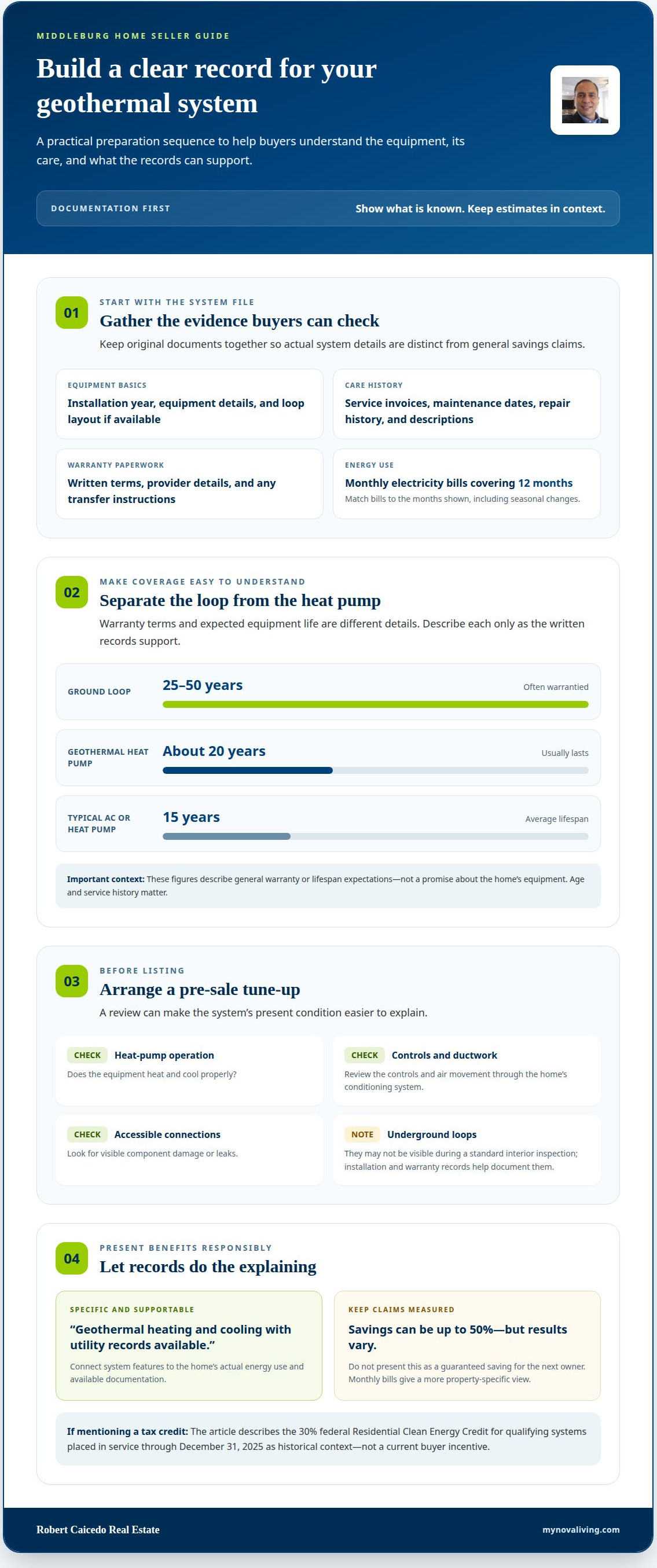
Build a clear record of the geothermal system before listing. Include its install year, equipment details, service invoices, warranty documents, and any repair history. Add monthly electricity bills covering 12 months to show actual energy use across heating and cooling seasons. A dated, organized file helps buyers distinguish documented performance from general savings claims.
Separate the ground loop warranty from the indoor heat-pump warranty. Ground loops are often warrantied for 25-50 years, while geothermal heat pumps usually last about 20 years. For context, a typical air-conditioning unit or heat pump averages 15 years. These figures describe expected life spans, not a promise about this system; the equipment’s age and service history matter.
Arrange a pre-sale tune-up to make the system’s condition easier to explain. A comprehensive review can cover heat-pump operation, controls, ductwork, and accessible connections. Key inspection points include whether the equipment heats and cools properly, air moves through the home’s conditioning system, and visible components show damage or leaks. Underground loops may not be visible during a standard interior inspection, so installation and warranty records help document them.
- Keep the original installation paperwork and loop layout, if available.
- Gather maintenance dates, service descriptions, and warranty terms.
- Match energy bills to the months they cover, including seasonal changes.
Keep the warranty provider’s details and any transfer instructions with the system records. Clear documentation helps answer buyer questions about who handles covered repairs and what the warranty includes. Describe coverage only as broadly as the written terms allow.
The Internal Revenue Service set the federal Residential Clean Energy Credit rate at 30% for qualifying systems placed in service through December 31, 2025. Treat that as historical tax-credit context, not a current buyer incentive. A well-kept maintenance file, paired with a recent tune-up, gives buyers a grounded picture of the home’s geothermal system and its ongoing care.
Listing description language that explains geothermal benefits
A geothermal heat pump transfers heat between the home and the ground, then uses the home’s ductwork to distribute warm or cool air. For a Middleburg listing, connect that function to comfort, documented energy use, and the specific equipment in the home.
Features Buyers Value
Buyers can assess geothermal heating more easily when a listing provides practical system details, not just its environmental appeal. State whether the heat pump provides both heating and cooling, and identify the ground-loop type if known. For Middleburg buyers, clear information about operating costs, equipment condition, and warranty coverage helps explain everyday comfort and what records are available.
Describing Benefits in the Listing
Effective listing language turns system features into clear, supportable benefits. Instead of promising lower bills, describe the home’s actual energy use and how the heat pump serves the property. For example, “geothermal heating and cooling with utility records available” is specific without implying every buyer will see the same savings.
Geothermal systems can lower homeowners’ utility bills by up to 50%, but actual results depend on the home and its energy use. Keep that figure in context, and avoid presenting it as a guaranteed saving for the next owner. Monthly bills offer a more property-specific view, while an estimated annual saving should be clearly identified as an estimate.
Use a short, consistent set of details in the listing:
- State the system’s installation year and whether it provides heating and cooling.
- Describe energy costs using the months covered by the available bills.
- Summarize the system’s maintenance history and warranty coverage accurately.
- Explain the ground-loop type when records identify it.
Choose precise wording over broad labels such as “eco-friendly.” A geothermal heat pump uses electricity, so describe its operation and documented performance rather than suggesting it runs without energy. This balanced approach lets comfort, efficiency, and sustainability strengthen the home’s story without stretching the facts.
Environmental impact and sustainability
Geothermal heating can support a home’s sustainability story by drawing heat from the ground rather than relying solely on outdoor air. Its environmental impact still depends on how the system operates and where its electricity comes from. Describe the actual equipment and energy use, not a broad claim that the home has no emissions.
Many geothermal heat pumps use a closed water loop mixed with antifreeze. The fluid circulates through buried pipes and normally does not need replenishing. This differs from an open-loop system, which draws on groundwater. For the listing, identify the loop type from installation records, then explain the system in plain language.
Electricity remains part of the picture. A geothermal heat pump needs power to operate, so its environmental impact is connected to the electricity the home uses. If the property also has natural gas or electric backup heat, explain that arrangement accurately. Buyers can then understand how the system works in colder weather without assuming it operates in isolation.
Connect sustainability with daily living through specific, supportable details. Describe how the system provides heating and cooling, whether it uses a closed loop, and how its documented energy use varies by season. Avoid claiming a precise carbon reduction unless property-specific information supports it. “Ground-source heating and cooling with a closed-loop system” tells buyers more than “green energy home.”
For a Middleburg home, sustainability language should complement, not replace, practical information about comfort and operation. Explain the system in balance: the ground loop transfers heat, the heat pump uses electricity, and backup equipment may serve the home under some conditions. This gives environmentally minded buyers useful context and helps others understand what the system contributes.
Estimated home-value premiums for geothermal systems
That estimate is context, not a guaranteed sale-price increase. Appraisers assess contributory value through comparable sales, so local evidence and the system’s condition shape the result.
For resale, geothermal heat pumps offer an efficiency distinction from conventional HVAC: they exchange heat with the ground, and geothermal systems are estimated to be 2 to 4 times more efficient than air-source systems. Energy savings can strengthen a buyer’s interest, but efficiency alone doesn’t establish a dollar premium. The home’s documented performance and available comparable sales matter.
Broader research offers useful context, not a substitute for a property-specific valuation. National Association of REALTORS® Green Designation surveys indicate buyers will pay $5,000 to $15,000 more for homes with significant energy-efficiency features. RESNET analyses suggest energy-efficient homes sell for 3-5% more than comparable homes. Neither finding promises the same premium for every Middleburg property.
Help an appraiser evaluate the system by presenting evidence that connects the equipment to the home’s performance. Useful documentation includes:
- Installation details and system age.
- Maintenance history and warranty information.
- Utility records showing energy use across the year.
- Details of energy-efficient upgrades that complement the geothermal heat pump.
Comparable geothermal sales can be scarce, making the system’s contributory value harder to isolate. A documented maintenance history and clear efficiency records give the appraiser more to analyze. The practical takeaway: market the system as a valuable feature, then support the description with evidence rather than treating an estimated premium as an asking-price formula.
Federal and local incentives depend on eligibility and timing. The federal Residential Clean Energy Credit rate discussed earlier was 30% for qualifying systems placed in service through December 31, 2025; geothermal systems may also qualify for power-company rebates, so local tax incentives are worth discussing with a tax professional.
Robert Caicedo Real Estate: New Construction Homes
Robert Caicedo Real Estate provides sellers with clear, buyer-focused representation for geothermal homes. If you’re preparing to list in Middleburg, Seller Representation can connect documented performance, maintenance history, and comfort benefits to the home’s broader appeal. The goal is a balanced presentation that explains the property without treating an estimated geothermal premium as a guaranteed sale price.
For buyers, Buyer Representation can help assess how a home’s geothermal features fit their priorities, from energy use to system condition. If you’re exploring a newly built home, New Construction Homes may also be relevant as you consider efficient heating and cooling options. Each path starts with your real estate goals and the details that matter most to you.
Ready to discuss your next real estate move? Contact Robert Caicedo Real Estate.
Make Your Next Move With Confidence
Make the geothermal system part of a bigger conversation about how you want to live next. For sellers, marketing a home with a geothermal system in Middleburg is an opportunity to tell a thoughtful story about comfort, efficiency, and the property’s character. A sound strategy connects those details to the needs of buyers who may value them.
Robert Caicedo Real Estate offers Seller Representation for homeowners preparing to move, Buyer Representation for people searching for a home, and New Construction Homes for buyers considering a newly built residence. Choose the path that fits your plans, whether you’re preparing to list, exploring a purchase, or looking ahead to a fresh start. Contact Robert Caicedo to discuss your next step.
Start a conversation about your real estate goals. Contact Robert Caicedo Real Estate and take your next step with confidence.
Frequently Asked Questions
How Much Value Does Geothermal Add?
For a Middleburg property, the actual contribution depends on buyer demand, system condition, energy costs, and comparable sales. Keep any estimate separate from the asking price, and present it as context alongside evidence of the home’s performance and the system’s remaining useful life.
What are the benefits of geothermal systems for homebuyers?
Homebuyers can gain efficient heating and cooling from one system, along with the potential for lower energy use. A geothermal system with a desuperheater may also save 40-50% of home water-heating energy costs. Buyers should understand which features the specific home has, including whether its geothermal equipment supports water heating. That detail makes the benefit clearer than a general “energy-efficient” description.
How much can geothermal heating and cooling reduce utility bills?
Geothermal systems can lower homeowners’ utility bills by up to 50%, though a particular home’s results depend on its energy use and system operation. For a useful property-specific comparison, look at bills across a full year and note seasonal changes. Separate electricity use from other household energy costs where the statements allow, so buyers can understand what the geothermal system actually contributes.
How does a geothermal system affect home resale value?
A geothermal system may support resale value, but its contribution depends on how buyers and appraisers assess the home against comparable sales. The Appraisal Institute’s Residential Green and Energy Efficient Addendum, Form AI 820.04, can help document energy-efficient features. Pairing that form with records of the home’s energy use gives the appraiser more context than the system’s installation cost alone.
What documents and system details should sellers provide when marketing a geothermal home?
Prepare a system file with its installation year, loop type, equipment details, warranty terms, maintenance records, and electricity bills covering 12 months. Include the loop layout if available, since buyers may want to understand how the ground system serves the property. Arrange the documents so a buyer can connect each detail to the relevant equipment, service history, or operating period.
What claims about energy savings or environmental benefits can sellers safely make in a home listing?
When marketing a home with a geothermal system in Middleburg, use documented energy bills to describe the property’s actual use and label savings estimates clearly. Don’t promise buyers a specific reduction. Explain the system’s features accurately, including its electricity use, and describe environmental benefits without unsupported emissions figures. Property-specific wording helps buyers understand the home without mistaking general estimates for guaranteed results.


