

A smaller home doesn’t make your memories smaller. The emotional challenges of downsizing in Reston, VA, often come from leaving familiar rooms, deciding what to keep, and facing the memories attached to everyday belongings. It’s normal to feel sadness, anxiety, nostalgia, relief, or a mix of emotions as you consider a change.
You don’t have to sort everything at once or treat every possession as just another item to move. This guide explains why downsizing can feel difficult and offers practical ways to make decluttering more manageable, preserve meaningful memories, and ease into new routines and social connections. You’ll find simple steps for sorting belongings, handling tough family conversations, and making a new space feel like home at a pace that respects what matters to you.
Key Takeaways
- Recognize that sadness, nostalgia, anxiety, and relief can coexist, and give yourself room to process memories as you decide what to keep.
- Make decluttering feel more manageable by focusing on one small area at a time and pausing when decisions become emotionally difficult.
- Plan for connection as part of the move: in 2022, 32.1% of U.S. adults reported loneliness and 24.1% reported a lack of social and emotional support, according to the Centers for Disease Control and Prevention.
- Use familiar belongings, new routines, and social activities to help a smaller home feel welcoming and create space for what comes next.
1. Why Is Downsizing So Emotionally Difficult?
Belongings can hold memories of family gatherings, milestones, and familiar routines. Sorting can therefore feel less like clearing a room and more like deciding which parts of your life to carry forward. To preserve a memory without keeping every object, photograph a cherished piece, write down its story, or pass it to a loved one who values it. A family member, for instance, might treasure the serving bowl used at holiday dinners. The emotional challenges of downsizing in Reston, VA, can feel sharper when decisions seem final, so start with items that hold less personal meaning.
Starting early gives you more time to consider each choice instead of making rushed decisions near moving day. Sort one drawer or shelf, then note which belongings are useful, meaningful, or ready to go. Family members can share stories, but the person moving should lead the decisions. An estate sale can provide a structured way to manage items and may generate income. Set a goal first, such as finding new homes for furniture or selling selected pieces, so the process has a clear purpose.
Condos and apartments can mean less space to maintain, while a senior living community may offer a setting designed for accessibility and security. The trade-off is leaving familiar rooms and choosing which belongings will fit. Staying in your current home is another option, as is moving to a smaller condo or apartment. Compare the daily routines each setting supports, including access to familiar activities and space for treasured furniture.
In Reston, downsizing support can include organizing and packing assistance, move coordination, or estate-sale services. Senior move managers may help plan the transition, while estate-sale services organize belongings for sale. Costs depend on the scope of work, labor, and sale arrangements; fees are provided after a quote request. Ask what tasks are included in writing before agreeing, so expectations are clear.
To reduce the risk of scams and high-pressure sales in Northern Virginia, don’t decide during an unexpected visit or while being pressured. Pause, review written terms with a trusted loved one, and stay in control of personal belongings and financial decisions. If a buyer urges you to sign immediately, for example, take time to read the agreement before deciding.
2. Breaking decluttering into manageable tasks
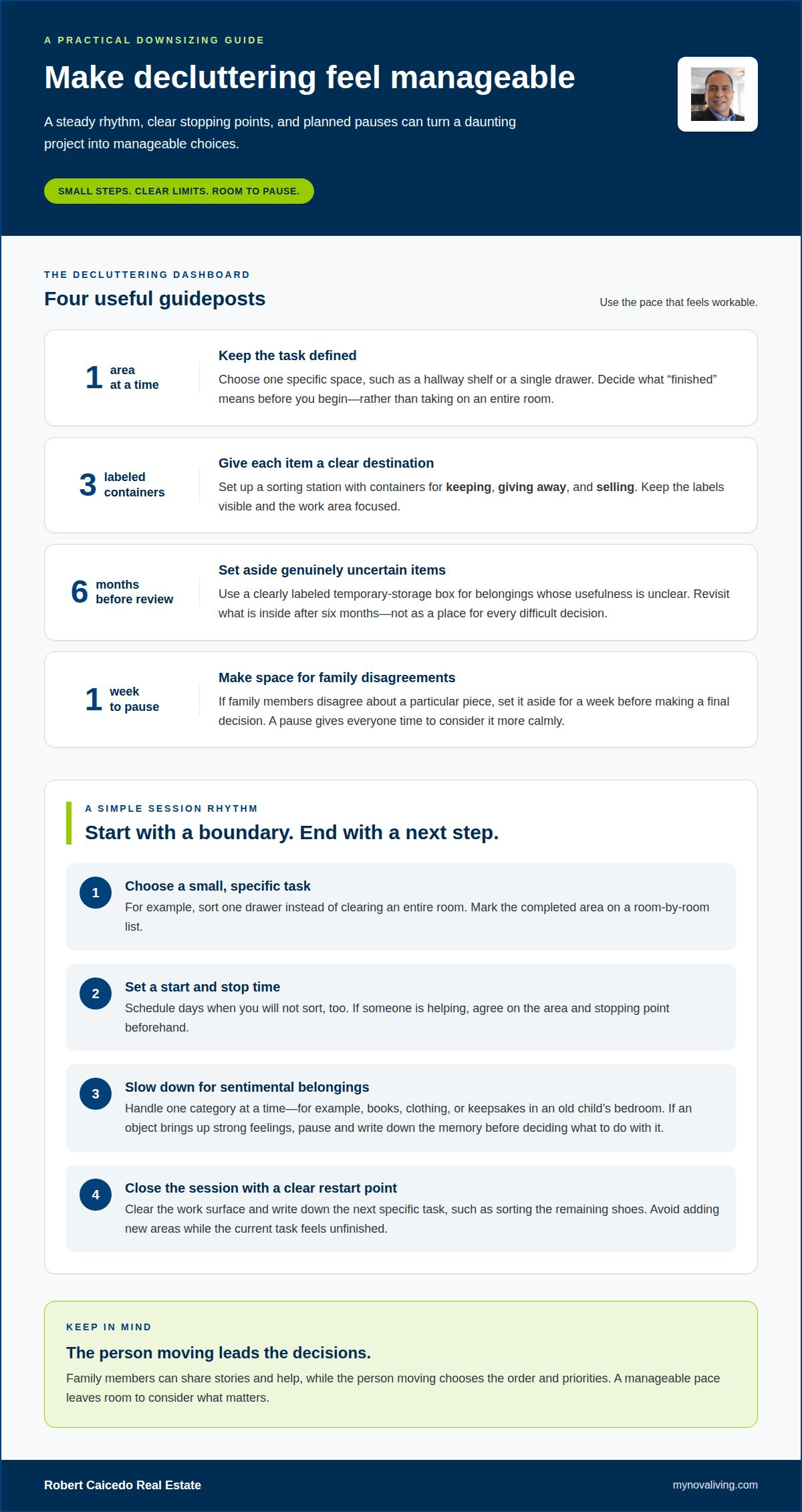
Make a simple plan before opening closets or cabinets. Choose one defined area, such as a hallway shelf, and decide what counts as finished. A manageable task might be sorting one drawer rather than clearing an entire room. This clear boundary helps prevent each session from becoming an overwhelming, all-day project. Mark completed areas on a room-by-room list. Each checkmark marks progress and shows what remains.
Set a start and stop time for each session, then schedule days when you won’t sort. For example, work on a linen closet one morning and leave the next day free. Rest days can help prevent burnout and make it easier to return with fresh attention. If organizers or family members are helping, agree on the area and stopping point beforehand. This keeps their assistance focused on the person’s priorities.
Emotionally charged spaces call for smaller steps. An old child’s bedroom, for instance, can be divided into books, clothing, and keepsakes, with one category handled at a time. Let the person moving choose the order. Pause if a sentimental object brings up strong feelings, and write down the memory before deciding what to do with it. This separates remembering from the pressure to decide immediately.
For belongings you’re unsure about, use a clearly labeled temporary-storage box and revisit its contents after six months. Limit it to items whose usefulness is genuinely unclear, rather than every object that feels difficult to sort. If family members disagree about a particular piece, set it aside for a week before making a final decision. The pause can ease tension and give everyone time to consider it more calmly.
Make it easier to restart each session by preparing a small sorting station with labeled containers for keeping, giving away, and selling. At the end, clear the work surface and write down the next specific task, such as sorting the remaining shoes. Avoid adding new areas while the current task feels unfinished. A steady rhythm, clear stopping points, and planned breaks can turn a daunting project into a series of manageable choices.
3. Building new routines and social connections
A move changes familiar cues, from where you keep your keys to how you spend your mornings. In the first week, place a favorite chair near a window and set up a familiar coffee spot. These small choices can bring comfort to a new living space as you establish fresh routines. Leaving a larger home can feel difficult, but it can also be an opportunity to shape daily life around what matters now.
Social connection deserves a place in your housing decision. In 2022, 32.1% of U.S. adults reported loneliness and 24.1% reported a lack of social and emotional support, according to the Centers for Disease Control and Prevention. Consider how each smaller-home option fits your existing relationships and preferred activities. For example, think about whether you can keep visiting loved ones, attend familiar community events, or join activities where you live.
Make connection part of your transition plan. Before moving, choose one activity to continue, such as a weekly call with a friend or a regular walk with a neighbor. After arriving, explore the community with a family member and identify a comfortable place to meet others. Senior living communities may offer social opportunities, while a condo or apartment may keep you close to familiar Reston routines. The right fit depends on the connections and daily patterns you want to maintain.
Family members can support the adjustment with specific, low-pressure visits. During an early visit, help arrange familiar furniture, unpack a few meaningful personal items, and explore nearby shared spaces together. Then let the new resident choose a routine to try, such as attending a gathering or taking a short walk. If retirement brings more open time, a simple weekly plan can balance quiet mornings with planned social moments. Review the plan after settling in, keeping what feels comfortable and changing what doesn’t.
4. Emotional effects of downsizing
During downsizing, stress can sit alongside excitement, grief, guilt, and relief. A familiar kitchen may represent decades of shared meals, while a crowded closet can feel like one more decision. Acknowledge each feeling without treating it as a verdict on the move. For example, write down what you’ll miss about a room, then name one positive change you hope to gain. This turns a broad worry into specific thoughts you can consider.
Feelings often intensify around possessions tied to identity or family history. A cherished table might bring back memories of holidays, while a collection may reflect a lifelong interest. Before deciding, ask what the object represents and whether you can preserve its memory another way. You might keep one meaningful piece, photograph the rest, or share the story with family members. The goal isn’t to erase the past. It’s to choose what deserves space in the next chapter.
Use practical strategies to keep emotions from taking over a sorting session. Set a clear stopping point, such as finishing one shelf, and pause if a conversation becomes heated. Family members can listen without judgment, reflect what they’ve heard, and let the person moving make the final choice. If anxiety returns, review a short list of reasons for moving, such as fewer household responsibilities or room for new experiences. Bring that list back to the decision at hand.
Support can also make the transition feel less solitary. Talk with a loved one who can listen, or seek professional support if distress is interfering with daily life. A simple check-in after each sorting session can help you notice what feels manageable and what needs more time. When you’re ready to explore how a new home could fit your priorities, consider your next housing move. A thoughtful decision can honor cherished memories while making room for a positive future.
Robert Caicedo Real Estate
Robert Caicedo Real Estate can help connect your housing plans with the next step in your move. If you’re preparing to sell a home you’ve lived in for years, Seller Representation can support the sale. If you’re exploring a smaller place that better fits your routines, Buyer Representation can help with your purchase. The focus stays on your priorities: the kind of space you want, the lifestyle you’re shaping, and the timing that feels right for your transition.
Turn to Robert Caicedo Real Estate when you’re ready to discuss selling your current home or buying a new one. Contact Robert Caicedo Real Estate to talk through your next move.
Shape a Move That Feels Right for You
The emotional challenges of downsizing in Reston, VA, don’t have to define your next chapter. Give yourself permission to make decisions at a pace that respects both your memories and the life you want to build. As you consider what comes next, think beyond square footage: focus on how a home can support your routines, relationships, and sense of comfort.
When you’re ready to explore a move, Robert Caicedo Real Estate offers Seller Representation and Buyer Representation to support your housing decisions. If a newly built home fits your plans, New Construction Homes are another option to consider. The right next step depends on what you want your new space to make possible.
Contact Robert Caicedo Real Estate to discuss your next move. You can move forward thoughtfully, carrying what matters and making room for what’s ahead.
Frequently Asked Questions
Why Is Downsizing So Emotionally Difficult?
Downsizing can bring several changes at once: leaving a familiar home, revising daily habits, and choosing what fits a different space. The emotional challenges of downsizing in Reston, VA, may also involve uncertainty about what comes next, not just attachment to possessions. Try naming the specific concern behind a difficult decision. “I’ll miss hosting dinner,” for instance, points to a ritual you may want to preserve, even in a smaller home.
How Can Families Provide Support?
Families can offer useful support by asking what would make the next sorting session easier, then following the answer. One person might arrange transportation for donations, while another gathers boxes or helps document household details. Avoid making every visit about moving tasks. Sharing an ordinary meal or familiar activity can remind a loved one that family connections continue beyond the address change.
How Can You Maintain a Positive Mindset?
A positive mindset doesn’t require feeling cheerful every day. Choose a personal reason for moving, such as spending less time caring for unused rooms, and keep it visible alongside practical reminders. Notice the progress that matters to you, whether it’s clearing a path through a room or setting up a favorite reading corner. Small, visible changes can make the transition feel purposeful rather than defined by loss.
What emotional challenges do older adults face when downsizing?
Older adults may experience grief, anxiety, guilt, or fear of change when leaving a home connected to important life stages. New surroundings can also raise worries about privacy or control. Someone who has always handled household decisions, for example, may feel unsettled when relatives begin organizing tasks. Naming the specific worry helps family members respond with practical support instead of assumptions.
How can downsizing affect a person's sense of identity and independence?
A home often reflects personal choices, roles, and routines, so changing it can feel like changing part of yourself. Someone who has been the family host, gardener, or neighborhood helper may wonder how that role will continue. Preserve meaningful parts of your identity through choices you control, such as arranging a welcoming space for visitors or keeping tools for a favorite hobby.
How can families help someone emotionally prepare to downsize?
Start by talking about the life the person wants after the move, before discussing boxes or furniture. Ask what a comfortable day would look like, including meals, privacy, visits, and favorite activities. Then connect those priorities to decisions about the next home. A family member can also help gather contact details and plan regular visits, making continued relationships feel more concrete during the transition.


