

A difficult buyer’s agent doesn’t have to derail a sale. Knowing how to deal with a difficult buyer’s agent in Leesburg starts with a calm, focused response: acknowledge the tension, clarify the issue, and ask what would help move the transaction forward. Keep the discussion centered on the property, the offer, and your priorities, not personal conflict.
It’s understandable to feel frustrated when messages are sharp, demands keep changing, or cooperation seems limited. A measured response can still protect your position. The representative can listen for the concern behind the other agent’s approach, respond with clear information, and set professional boundaries when communication crosses a line.
This guide explains how to open the conversation, understand the other party’s motivations, and build trust without giving up your interests. You’ll also learn how calm communication, clear expectations, and thoughtful boundaries can keep negotiations productive in Leesburg.
Key Takeaways
- Set clear expectations for communication and conduct so difficult exchanges stay professional and focused on the transaction.
- Acknowledge concerns and look for common ground to build trust without losing sight of the seller’s priorities.
- Keep your tone steady during tense moments, and allow space for the other agent to consider an offer or response.
- Listen for the needs behind the other agent’s position to shape a practical, seller-focused path forward.
1. Setting professional boundaries and referring clients elsewhere
At the start of a client relationship, explain the process in plain terms. A seller should know how offers, showings, negotiations, and a home inspection fit the transaction. Set a communication plan, including who receives messages and when. For example, a listing representative can ask that late concerns wait until the next business day. A clear 8 p.m. boundary helps keep communication professional while preserving a path for urgent transaction updates.
When handling offers and buyer-agent communications in Virginia, present offers clearly, share relevant information, and follow your seller’s direction. Keep discussions focused on the terms, timelines, and priorities that matter to the seller.
The National Association of REALTORS® Code of Ethics expects real estate agents to act honestly and fairly. That standard supports respectful dealings, but it doesn’t answer every Virginia transaction question or replace consideration of the specific circumstances.
A Leesburg seller should contact the listing agent’s broker when repeated hostility disrupts communication or makes the next step unclear. Raise concerns with the Virginia Real Estate Board when the issue involves suspected professional misconduct, rather than a disagreement over price or negotiation style.
Don’t assume that a buyer’s agent’s behavior alone makes refusing a showing or offer a sound decision. Ask the listing representative to assess the request, the seller’s instructions, and the transaction’s facts before responding.
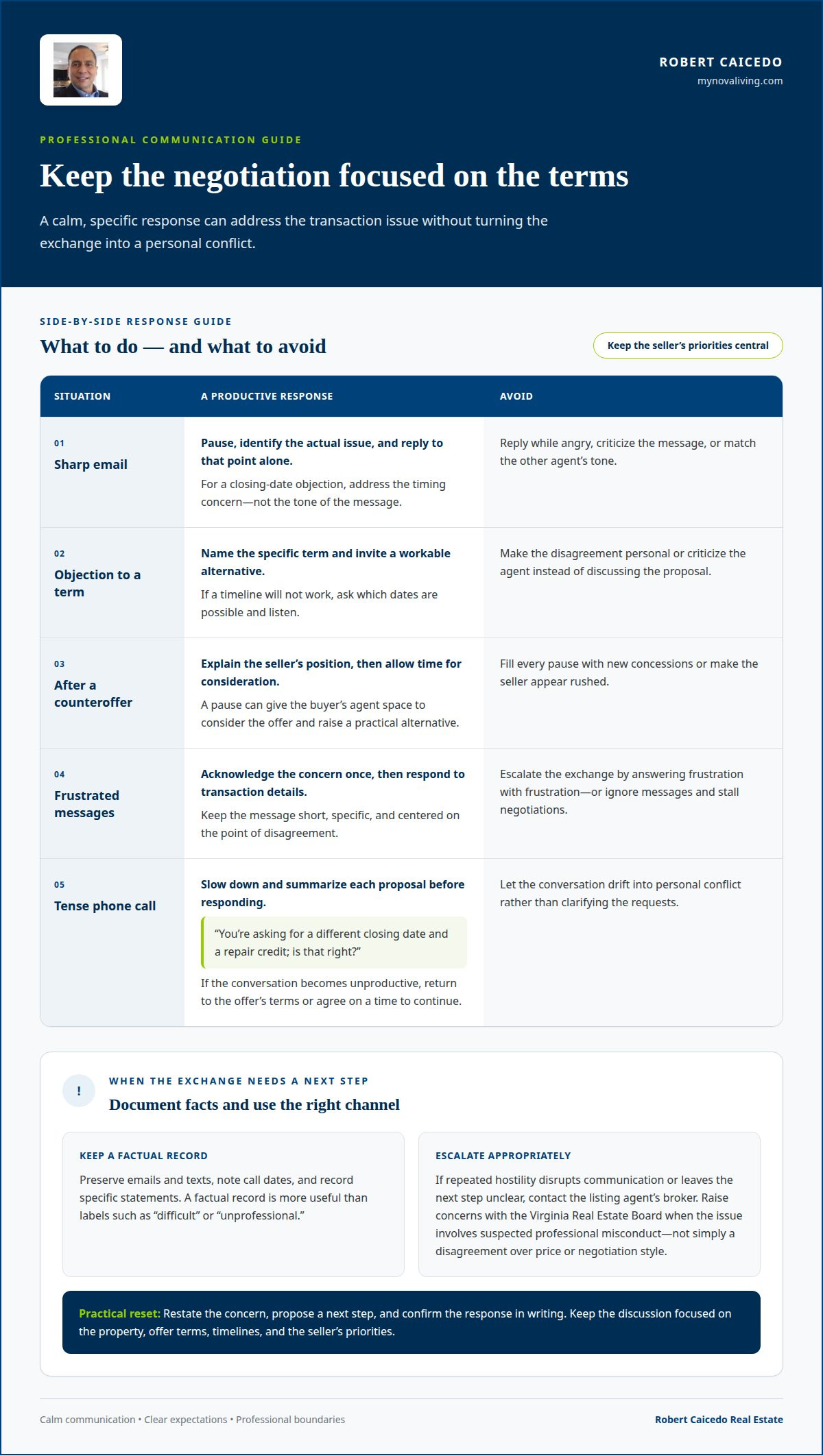
To document hostile conduct, preserve emails and texts, note call dates, and record specific statements. A factual record is more useful than labels such as “difficult” or “unprofessional.”
To resolve a dispute without putting a sale at risk, restate the concern, propose a practical next step, and confirm the response in writing. Confronting an agent personally can escalate conflict; ignoring messages can stall negotiations; refusing to discuss workable terms may cost the seller an opportunity.
Set market expectations using comparable property information and the seller’s goals, not assumptions about what a buyer should accept. If a buyer questions value or raises inspection concerns, respond with relevant property details and discuss possible terms. If communication remains unproductive, involve the broker or advise the seller on whether to continue negotiations.
2. Empathy and building trust
Start by acknowledging the concern, not judging its tone. If a buyer’s agent says the seller’s position feels inflexible, respond: “I understand the timing matters to your buyer. Which term is creating the greatest difficulty?” This recognizes the pressure without agreeing to a demand. Buying a home often involves competing priorities, and a specific, open question can turn friction into useful information.
Listen for what lies behind the objection. An agent pushing for a faster response may be managing a buyer’s uncertainty, while repeated price concerns may reflect budget limits or outside opinions. Summarize what you heard, then ask whether it captures the buyer’s main concern. This gives the other agent room to clarify rather than defend. Understanding a motivation doesn’t mean accepting every proposed term.
Trust also grows through transparent, consistent communication. If the seller can consider a change only alongside a different closing timeline, explain the connection clearly. The buyer’s agent can then present the trade-off accurately instead of interpreting silence as resistance. Share relevant property information and explain how it relates to the offer. If a concern needs more time, acknowledge it promptly and say when you’ll respond.
Keep the conversation respectful, even when the agents disagree. If the buyer’s agent challenges a counteroffer, identify the specific term at issue and invite a workable alternative. Separate the proposal from the person. Avoid sarcasm, personal judgments, or promises the seller hasn’t approved. When both sides understand the reasoning behind an agreement, they can discuss options more confidently. This approach doesn’t guarantee consensus, but it creates a clearer basis for the next decision.
3. Staying calm during tense interactions
A sharp email can make a routine negotiation feel personal. The seller’s representative should pause before replying, identify the actual issue, and address that point alone. If the buyer’s agent objects to the closing date, answer the timing concern rather than criticizing the message. This keeps the situation centered on terms the seller can evaluate. A measured reply also gives the other agent less reason to become defensive.
Silence can be useful after a counteroffer. Once you’ve explained the seller’s position, give the buyer’s agent time to consider it instead of filling every pause with new concessions. If the agent says the proposed timeline won’t work, ask which dates are possible, then listen. That space may reveal a practical alternative and helps the seller avoid appearing rushed.
For sellers considering how to deal with a difficult buyer's agent in Leesburg, calm, specific language can keep an exchange productive. A short message can confirm the point of disagreement, state the seller’s response, and invite a relevant alternative. If an agent sends several frustrated messages, acknowledge the concern once and respond to the transaction details. Avoid matching the agent’s tone or replying while angry.
During a call, slow the exchange by summarizing each proposal before responding. “You’re asking for a different closing date and a repair credit; is that right?” separates the requests and checks your understanding. If the conversation becomes unproductive, return to the offer’s terms or agree on a time to continue. A measured approach to how to deal with a difficult buyer's agent in Leesburg keeps the seller’s choices, not the conflict, at the center.
That restraint can help agents de-escalate tense situations: staying calm, avoiding defensive reactions, and not matching a client’s tone leaves room for reconsideration and further information.
4. Understanding the other party’s motivations
A buyer’s agent may seem difficult when messages are abrupt, requests change, or negotiations repeatedly stall. The seller’s representative should separate the behavior from the underlying concern, ask what is driving the request, and respond to the specific purchase issue. A firm tone may reflect pressure from a buyer, not a personal dispute with the seller.
Start with the terms. If the agent resists the seller’s price, the buyer may have a strict budget or be weighing other properties. If the agent presses for a quick response, the buyer may face a moving deadline or uncertainty about financing. Ask which factor matters most, then consider whether another term could address it. For instance, the seller might weigh a different closing timeline against the proposed price, keeping the decision tied to the seller’s goals.
Inspection concerns can reveal a buyer’s priorities. An agent requesting repairs may be responding to a safety concern, a maintenance cost, or the buyer’s preference for a move-in-ready home. The seller’s representative can clarify which inspection finding matters most and discuss the request in context. A buyer who is worried about plumbing, for example, may need a focused review of that issue rather than a broad argument about the entire report. This helps distinguish essential repairs from negotiable preferences.
Some behavior is still uncooperative, such as repeated personal remarks or refusing to discuss workable terms. Remain professional while assessing whether continued negotiation serves the seller. If the buyer’s position becomes unreasonably one-sided or no longer aligns with the seller’s goals, the seller can consider walking away. A buyer’s agent represents the buyer’s interests, whether or not they belong to a real estate association. Understanding those interests may uncover a path forward, but the seller doesn’t have to accept every demand.
Robert Caicedo Real Estate: Buyer Representation
Robert Caicedo Real Estate provides seller representation for Leesburg homeowners who want professional support with buyer-agent communication and negotiation. A representative can keep discussions focused on the offer, clarify the seller’s options, and assess whether proposed terms align with the seller’s goals. This support can be especially valuable when tension makes it harder to weigh a buyer’s request clearly.
Turn to professional representation when exchanges become difficult to manage, inspection requests feel unclear, or you need an experienced perspective before responding. Robert Caicedo Real Estate also provides buyer representation, supporting buyers through their side of a real estate transaction.
If you’re preparing to sell or working through a challenging negotiation, contact Robert Caicedo Real Estate to discuss your real estate needs.
Move your sale forward with a clear plan
A challenging negotiation can shape your next real estate decision. A clear plan for how to deal with a difficult buyer’s agent in Leesburg starts with deciding what matters most, which terms you’re willing to discuss, and where you need professional guidance. This perspective can keep a difficult exchange from defining the entire selling experience.
Before responding to an offer or request, consider the outcome you want and the trade-offs you’re willing to explore. A seller’s representative can help assess the proposal, communicate your position, and keep decisions tied to your goals. Robert Caicedo Real Estate also represents buyers considering new construction homes.
Take the next step with a conversation about your sale and the support you need. Contact Robert Caicedo Real Estate to discuss your real estate goals. With a thoughtful plan, you can move ahead with greater clarity and confidence.
Frequently Asked Questions
How can a Leesburg seller’s representative communicate boundaries with a buyer’s agent?
A Leesburg seller’s representative can set boundaries by stating the preferred communication channel, response process, and acceptable conduct in a concise written message. For example, ask that offer changes arrive by email so the seller can review the complete terms together. If communication becomes personal, redirect the discussion to the property or proposal. This keeps the exchange documented and makes the next action clear.
How do Leesburg and Loudoun County market conditions affect negotiations with a difficult buyer's agent?
Leesburg and Loudoun County market conditions shape a seller’s negotiating position, but not the standard for professional communication. Assess recent comparable sales, competing listings, buyer interest, and the seller’s timing before advising on a proposal. If similar homes give buyers alternatives, flexibility on terms may matter more. If the property attracts strong interest, the seller may have more room to hold firm, depending on the offer and their goals.


