

A calm, honest conversation matters more than a perfectly polished explanation. Explaining to my kids we are moving from our Aldie home starts with sharing the real reason, explaining what you know about the timing, and making room for their feelings. Be clear about what will change and what will stay familiar, without promising anything you can’t be sure of.
Moving can bring sadness, worry, or excitement, sometimes all at once. Your children may need time, reassurance, and chances to ask questions as plans take shape. This guide will help you explain why the move is happening, talk through the steps ahead, support your kids through the adjustment, and point out genuine things they might look forward to in the new place. Thoughtful details can make the change easier to picture, while familiar routines and open conversation can help home feel steady along the way.
Key Takeaways
- Acknowledge your child’s feelings and keep familiar routines in place as the move unfolds.
- Explain why the family is moving and give a clear, age-appropriate picture of the timeline.
- Make the new place feel real by sharing specific details your child can look forward to.
- Use simple, honest language with young children, and leave room for questions as plans develop.
1. Supporting children through sadness and adjustment
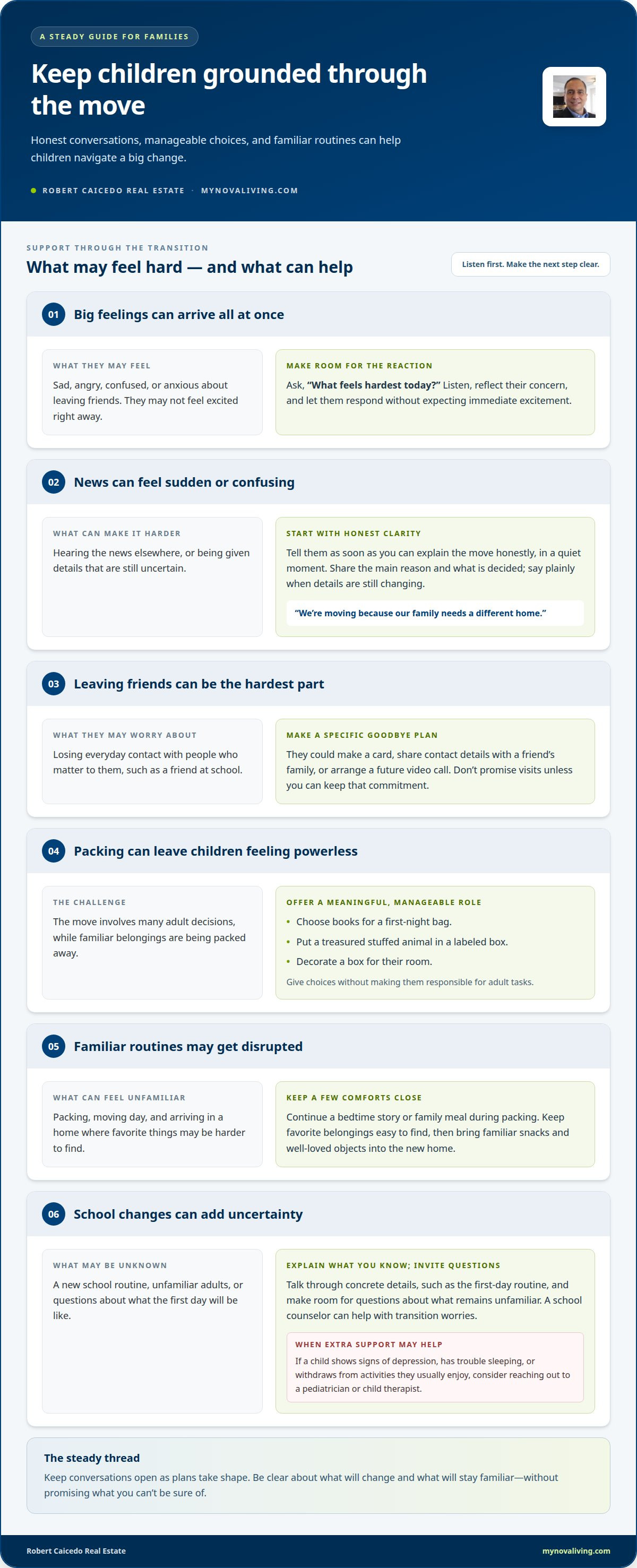
Tell children about the move as soon as you can explain it honestly, before they hear the news elsewhere. Choose a quiet moment and describe what has been decided. For example, say, “We’re moving because our family needs a different home.” Children notice parental stress, so speak calmly while acknowledging that you may feel unsettled too.
Children can feel sad, angry, confused, or anxious about leaving friends. If you’re explaining to your kids that you are moving from your Aldie home, give them room to react instead of expecting immediate excitement. Ask what feels hardest today. A child might say they’ll miss seeing a friend at school. Listen, reflect their concern, and discuss one practical way to stay connected.
Give your child a meaningful packing role. Let them choose books for a first-night bag, place a treasured stuffed animal in a labeled box, or decorate a box for their room. These manageable choices give them a part in the transition without making them responsible for adult tasks. Keep favorite belongings easy to find when you arrive.
Support friendships with a specific goodbye plan. Your child could make a card, share contact details with a friend’s family, or arrange a future video call. Don’t promise visits unless you can keep that commitment. Familiar routines also help: continue a bedtime story or family meal during packing, then bring favorite snacks and well-loved objects into the new home.
When explaining to my kids that we are moving from our Aldie home, I can also describe the school transition in concrete terms. Talk about what your child knows, such as the first-day routine, and invite questions about what remains unfamiliar. A school counselor can help with transition worries. If a child shows signs of depression, has trouble sleeping, or withdraws from activities they usually enjoy, consider reaching out to a pediatrician or child therapist.
2. Explaining why and when the family is moving
Tell your children once you can explain the move honestly, rather than waiting until boxes appear. Start with the main reason and what is already decided. For example, an Aldie family might explain that a parent’s job requires a move. If details are still changing, say so plainly. Children need a truthful starting point, not a complete plan before they can ask questions.
Keep the reason brief and appropriate for your child’s age. A toddler can hear, “We’re moving to a different home because of work.” A school-age child may want more context, such as how the move affects school or daily routines. For sensitive reasons, including finances or family changes, share only what helps the child understand. Keep adult worries and disagreements out of the explanation.
Describe the timeline as a sequence children can follow. You might say, “First we’ll pack the kitchen, then the movers will take our things, and then we’ll sleep in the new home.” If a school change is part of the move, explain when the new school routine begins. A calendar with simple drawings can show packing, moving day, and the first night without relying on dates that may change.
Separate firm plans from possibilities. Tell children what is settled, such as the decision to move, and what you’re still arranging, such as the exact date or room setup. Avoid promising a particular school, visit, or feature of the new home unless you can deliver it. When a plan changes, explain the update directly and show what happens next.
Keep the conversation open after the first talk. Invite each child to tell you what they understood, then gently correct any confusion. A young child may ask the same question about their bed several times; answer consistently. An older child may need a private conversation about friends or school. Return to the timeline as each step gets closer, so the move feels like a process rather than a sudden announcement.
3. Sharing specific positives about the new place
Start with details your child can picture, not broad promises. Use a photo, video tour, or online map to explore the new home and neighborhood together. Ask your child to notice a detail in each image, such as a room layout, a nearby landmark, or a route to school. Then connect those details to their interests: “Where might your art supplies fit?” Keep each example grounded in what you know. Curiosity doesn’t require pretending the move feels easy.
Give your child a small choice tied to the new space. They might choose which books to unpack first, where a favorite blanket belongs, or what familiar item should go in their room. If the home has a feature they can enjoy, point it out specifically. For example, show them a sunny corner for reading or a table where they can build with blocks. Avoid promising access to places or activities before you know they’ll be part of daily life.
Make the first days easier to imagine with a simple arrival plan. Name a familiar routine, such as reading a bedtime story, and a new experience, such as exploring the route to school. If your child is starting at a new school, a video call with their teacher can make the classroom and a new adult feel less unfamiliar. Let your child suggest a question to ask, like where coats go or what happens at lunch.
Keep the positives personal. A child who loves drawing may look forward to arranging art supplies; a young reader may enjoy choosing a spot for story time. Ask, “What would you like to explore first?” Then listen for an answer that reveals what matters most to them. A new home can bring fresh routines and discoveries, while favorite books, snacks, and family rituals keep familiar comforts close. Share what’s genuinely appealing, and let excitement grow at your child’s pace.
4. How do I tell young children we are moving from our home?
Choose a quiet moment when your toddler or preschooler isn’t hungry, tired, or rushing to play. Sit together and use familiar words: “We’re going to live in a different home. Your toys and bed are coming too.” For a school-age child, add the reason and what happens next. Keep the first conversation brief, then let your child respond before explaining more.
Young children often understand change through concrete details, not abstract plans. Show a photo of the new home, point to their bed, and explain what will go in their room. A simple drawing can help: sketch the current home, a moving box, and the new home. Avoid saying “soon” if you can describe the sequence more clearly, such as packing, moving, and sleeping in the new room.
Expect the same question more than once. A child might ask, “Will my teddy come?” or “Can I see my friend?” Answer directly and calmly. Say what you know, such as, “Teddy will travel with us,” and don’t promise a visit unless you can arrange one. If you don’t know an answer yet, explain that you’ll talk about it again when the plan becomes clearer.
Give your child a small, real role. Invite them to choose a few books for a personal bag, place a favorite toy in a labeled box, or select a picture for the new room. These choices offer some control without asking them to manage adult decisions. Keep the routine familiar during the conversation, perhaps reading the usual bedtime story afterward. If you’re considering a different home for your family, explore your next home options as plans take shape.
Robert Caicedo Real Estate: New Construction Homes
Robert Caicedo Real Estate can help with the housing decision behind a family move through buyer representation, including support for new construction home searches. If you’re considering a newly built home, explore how a different layout or setting could suit your family’s next chapter. Seller representation can also help if you’re preparing to sell your current home.
Bring your family’s priorities into the decision, such as the spaces your children need for sleep, play, and familiar routines. A clear picture of what matters can help you assess whether a new home fits the transition you’re planning. For guidance on your next real estate move, contact Robert Caicedo Real Estate.
Make the next conversation a beginning
If you’re explaining to your kids that you are moving from your Aldie home, remember that one conversation doesn’t need to settle every feeling. Let it open an ongoing dialogue. Your child may return with a new question after seeing a room, packing a favorite toy, or imagining the first morning in a different place. Treat those moments as invitations to listen and make space for what they’re thinking.
As your family considers what comes next, let the home search reflect the life you want to build together. Children can help describe what makes a space feel welcoming, while adults guide the decisions and timing. A thoughtful move is not about making every moment easy. It’s about helping your family approach change with honesty, care, and room to grow.
Contact Robert Caicedo Real Estate to discuss your next real estate step. Your family can move forward one conversation at a time, carrying familiar connections into a new chapter.
Frequently Asked Questions
When should parents tell kids about an upcoming move?
Tell children as soon as you can explain the move honestly, and before they hear the news elsewhere. You don’t need every detail settled first. Explain what’s decided, such as the reason for moving, and what you’re still working out, such as the exact moving day. If the plan changes, update them promptly so they aren’t left relying on outdated information.
How can I help children cope with sadness or anxiety about moving?
Listen without dismissing their feelings, and ask what part of the change feels most difficult today. A child might worry about sleeping in a new room or being left out at school. Help them name the concern, then discuss a manageable next step together. If sadness persists alongside trouble sleeping or withdrawal from favorite activities, consider speaking with a pediatrician, therapist, or school counselor.
What should I say if we are moving because of divorce, finances, or a job?
Give a truthful explanation that fits your child’s age, without sharing adult conflict or making them feel responsible. For a job move, you might say, “A new work opportunity means our family will live somewhere else.” During divorce, present the move calmly and avoid asking children to take sides. For financial changes, explain that adults are making choices to care for the family.
How can I make moving day and the new home feel less stressful for kids?
Make moving day predictable by telling children who will be with them and what will happen next. If possible, arrange for a familiar adult to stay nearby while adults handle logistics. At the new home, let children know which room or area they can settle into first. A simple arrival plan reduces surprises and gives them a clear place to pause when activity feels overwhelming.
How can I help children say goodbye to friends, neighbors, and their school?
Give children a meaningful way to mark the people and places they’re leaving. They could write a short thank-you note to a teacher, draw a favorite school memory, or make a small photo page with a friend. Let your child choose which goodbye feels right, rather than arranging a large event they may find uncomfortable. A personal gesture can help make the transition feel acknowledged.


