

What if selling your family home didn’t require you to make every emotional and practical decision at once? The emotional toll of selling a family home in Middleburg can come from more than leaving a place. It’s also saying goodbye to familiar routines, meaningful milestones, and rooms filled with personal history.
If the thought of sorting belongings or preparing the house makes the loss feel immediate, your reaction makes sense. Family members may also be ready to move forward at different times, which can make even simple choices feel complicated. You don’t have to rush yourself into feeling ready, or treat every decision as part of one overwhelming process.
This article will help you understand why the transition can feel so difficult and how to move forward with care. We’ll look at ways to make space for family conversations, choose keepsakes before tackling practical preparation, and break the selling process into manageable stages. With a thoughtful plan, you can honor what the home has meant while making room for what comes next in Middleburg.
Key Takeaways
- Recognize how memories, changing needs, and mixed emotions can shape your decisions without treating uncertainty as proof you’re making the wrong choice.
- Separate keepsakes from belongings to share, donate, sell, or revisit later, and remember that sentimental value and market value serve different purposes.
- Ease the emotional toll of selling a family home in Middleburg by approaching the process in adaptable stages, beginning with shared goals and decision-makers.
- Prepare questions for a seller representative about communication, preparation priorities, key milestones, and how decisions will be documented.
- Keep personal choices in your family’s hands while using practical guidance to bring more structure to the sale.
Why Selling a Family Home in Middleburg Can Feel Like More Than a Move
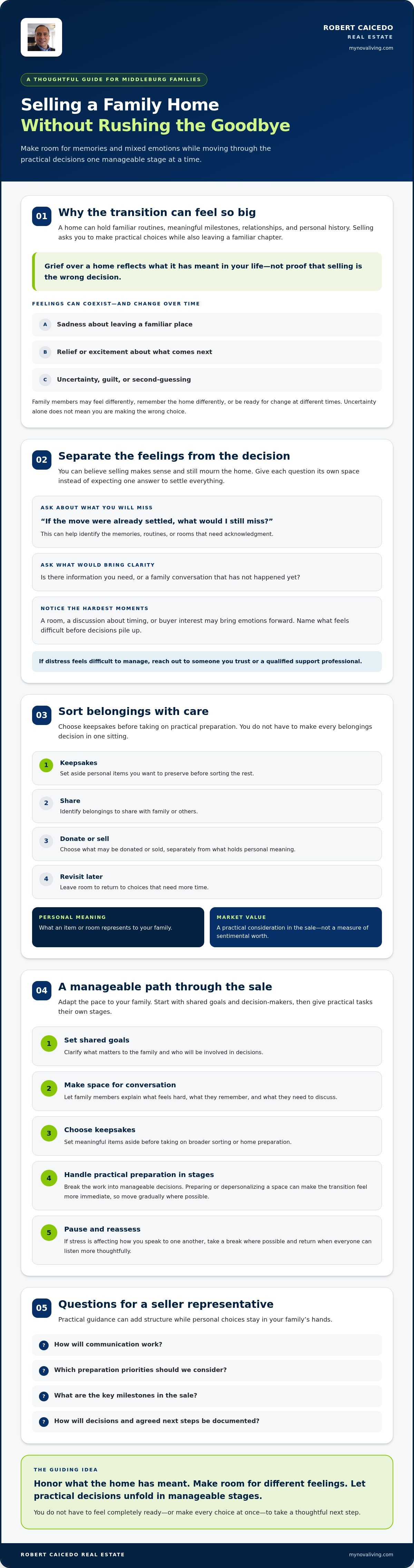
Selling a longtime home can ask you to make practical decisions while you’re also letting go of a familiar chapter. The emotional toll of selling a family home in Middleburg is the strain of separating the property sale from the memories, identity, and family changes connected to it. You may be ready for what comes next and still feel sadness about leaving.
Grief over a home is a response to what it has meant in your life, not proof that selling is the wrong decision. Relief, excitement, uncertainty, and sorrow can all be present at once. Those feelings don’t have to resolve into one clear answer before you take a next step.
In Middleburg, a homeowner’s sense of place may be tied to familiar routines, relationships, and the surroundings they’ve come to know. Those connections are personal, not universal. One family member may feel rooted in the house, while another may remember a more complicated period or be eager for change. Leaving can mean different things to different people.
Why a familiar home can hold so much meaning
A home becomes significant through the life lived inside it. You might remember holiday meals, birthdays, quiet mornings, children growing up, or a personal milestone marked in a particular room. The attachment may have little to do with the home’s features. It can rest in the daily rituals and relationships that unfolded there. And not every memory is joyful; family members don’t need to share the same history or feelings.
That’s why sorting a closet or preparing a room can feel unexpectedly weighty. Later, the practical work of preparing the property may include choosing what to put away or how to depersonalize your home. A neutral space can help prospective buyers picture themselves there, but the process may also make the transition feel more immediate. You can approach it gradually, keeping meaningful items aside while decisions are still taking shape.
What mixed emotions can look like during a sale
Sadness may arrive alongside relief that a change is underway. Guilt can surface when relatives disagree, while anxiety or second-guessing may grow as decisions become more concrete. These reactions can shift from one milestone to the next. Feeling unsettled doesn’t automatically mean you should stop; it may simply mean the choice matters.
Give yourself room to notice what each feeling is connected to. Is the hardest part saying goodbye to a familiar place, deciding what happens to belongings, or uncertainty about the move ahead? If distress feels difficult to manage, consider reaching out to someone you trust or a qualified support professional. You deserve support as well as a practical plan.
How to Understand Grief, Change, and Family Attachment During a Middleburg Home Sale
A home sale can coincide with other changes: a household becoming smaller, a new living arrangement, or a shift in who carries responsibility for the property. When several transitions overlap, the decision may feel heavier than any one practical task. Familiar rooms and belongings can also bring different memories forward, making it harder to know whether you’re grieving the change or questioning the choice itself.
Try separating those questions. You might feel certain that selling makes sense and still mourn the home you’re leaving. Or you might feel unsettled because an important decision hasn’t been fully discussed. Ask yourself: “If the move were already settled, what would I still miss?” Then consider separately what information or conversation you need to feel clearer about the decision.
Emotional attachment deserves acknowledgment, but it doesn’t have to dictate every transaction choice. You can honor what a home means while making practical decisions based on your family’s needs and circumstances. Looking ahead to purchasing your next home can also provide clarity during a major transition; for an example of how a family-owned agency supports buyers through regional property moves, learn more about Ollie James Real Estate.
Recognizing emotional triggers before decisions pile up
Some moments may carry more emotional weight than others: opening a room that holds personal history, discussing when to sell, or responding to buyer interest. Before making a plan, each person involved can note which tasks feel hardest and why. That simple check-in can help you distinguish a practical concern from a moment that needs more time or care.
If stress is affecting how you speak to one another, pause where possible. Return to the decision when everyone can listen and respond more thoughtfully. A short break can prevent a difficult conversation from turning into a rushed commitment.
Making space for different family perspectives
Two relatives may attach different meanings to the same object or room. One may see a familiar gathering place; another may see upkeep and responsibility. Invite each decision-maker to say what they hope to preserve, what they’re ready to change, and what feels difficult. Listen for the need underneath the position, such as keeping a connection to family history or reducing practical demands.
Then separate emotional concerns from practical constraints without treating either as less valid. A shared note can help clarify the next steps:
- Who has a voice in each decision?
- Which choices need agreement, and which can one person handle?
- How will you revisit disagreements without letting every task become a larger family debate?
For transaction decisions, seller representation can provide structure around the sale while personal choices remain with your family. If you’d like to understand what that guidance may involve, explore seller representation guidance as one starting point.
How to Balance Sentimental Value and Practical Choices When Selling in Middleburg
Once your family has acknowledged what the home means, the next step is to make decisions without asking one choice to carry every memory. A family photograph can be priceless to you without determining the property’s market value. These are different questions: “What do we want to preserve?” and “What is relevant to preparing the home for sale?” Keeping them separate can ease the emotional toll of selling a family home in Middleburg.
Deciding what to keep, share, or let go
Start small. Choose one manageable category, such as photographs, books, or tableware, rather than emptying a whole room. Use a simple system, and leave uncertain choices for later. Before distributing shared belongings, agree on who has a say and when decisions need to be made.
| Choice | How to use it |
|---|---|
| Keep | Set aside items you want in your next home. |
| Share | Offer family belongings to relatives who want them, with clear agreement. |
| Donate | Choose usable items you’re ready to pass on. |
| Sell | Consider items you no longer need and don’t wish to give away. |
| Undecided | Make a holding area and revisit these items after a pause. |
If keeping every object isn’t practical, photograph it or record the story attached to it. A memory can remain part of the family even when the object doesn’t move with you. Middleburg’s sense of place may also be part of what you’re sorting through; this Middleburg's community and lifestyle guide offers more context about the area.
Choosing sale preparations without losing perspective
Separate practical needs from personal preferences. Safety or maintenance concerns may call for attention, while cosmetic updates are choices to weigh, not automatic requirements. A full refresh may not suit every seller or every property. Ask a real estate professional which preparation choices are relevant to your sale plan before committing time, effort, or money.
Preserving your family’s history doesn’t mean preserving every physical detail of the home. You can take the photographs, recipes, or small objects that hold meaning, while making considered decisions about the space itself. A clear distinction between keepsakes and sale preparation helps each task feel more manageable.
A Step-by-Step Way to Manage the Emotional Work of Selling a Middleburg Family Home
A plan can give the sale a steadier shape without turning it into a rigid schedule. The emotional toll of selling a family home in Middleburg may feel harder to manage when family conversations, belongings, and transaction decisions all compete for attention. Separate emotional decisions from transaction logistics, and each becomes easier to consider without having to resolve everything at once.
Use these steps as a flexible guide. Adjust them to your family’s needs, energy, and circumstances.
- 1. Clarify why you’re considering the sale. Begin with the reasons for the move and what matters most to each decision-maker. Some may prioritize simplifying responsibilities, while others may want time to preserve particular memories or belongings. Naming those priorities helps you see where you agree and where a separate conversation may help.
- 2. Agree on how you’ll communicate. Choose a point person to gather updates and share them with the people involved. Decide which topics need a group discussion and which can be handled one-to-one. This can reduce crossed messages and help keep emotional conversations from getting tangled with routine questions.
- 3. Set limits that protect your energy. Decide how much time you can reasonably give a task and how many decisions you want to make in one sitting. Plan breaks, and identify a trusted person who can offer support without taking over. Stopping before everyone is depleted is a valid part of the plan.
- 4. Sort in manageable stages. Choose one room, one category, or one short work session. Set aside items that need more thought rather than forcing a decision. Review what’s been done together, then adjust the next task if family needs or circumstances change.
- 5. Keep transaction questions in their own list. Write down questions about sale preparation, buyer interest, or next steps as they arise. Bring them to your real estate professional or another appropriate adviser instead of trying to settle every practical detail during a family sorting session.
Progress doesn’t have to mean moving quickly. It can mean agreeing on one decision, completing one manageable task, or recognizing that a conversation needs to continue later. A flexible process makes room for both the practical work and the feelings that come with it.
If seller representation would help organize the sale’s transaction decisions, you can learn about seller representation and consider what guidance would fit your family’s needs.
How Middleburg Sellers Can Find Thoughtful Support and Take the Next Step
Thoughtful support should make the sale’s decisions clearer, not take personal choices out of your family’s hands. A real estate professional can help organize transaction questions and explain options, while your family decides what to keep, how to honor the home, and what feels right for this transition. That distinction matters when the emotional toll of selling a family home in Middleburg sits alongside the practical work of a sale.
Questions to ask before choosing real estate support
Use an initial conversation to understand how an agent communicates and approaches decisions. You might ask:
- How will you explain our options and keep the family members we identify informed?
- Which preparation choices call for your professional input, and which are personal preferences for us to decide?
- How will you share questions, changes, and important transaction milestones?
- How can we document decisions so everyone can refer back to what was agreed?
Notice whether the answers feel clear and respectful of your priorities. It’s also reasonable to explain that some discussions may take time, or that different relatives need different kinds of updates. Robert Caicedo Real Estate provides seller representation for residential transactions in Middleburg and nearby Northern Virginia communities. This may be an option to consider if practical guidance would help you organize sale decisions, without assuming a particular outcome or timeline.
Moving forward while honoring the home's place in your story
Before the handover, choose a goodbye that feels genuine to you. You might gather with family in a meaningful room, create a shared photo archive, or write down stories connected to the home. A ritual doesn’t need to be elaborate. It simply gives you a moment to recognize what this place has held for your family.
Ownership can change while the memories remain yours. You can carry forward a familiar recipe, a photograph, or the stories you tell about the years spent there. Moving on doesn’t require erasing the home’s place in your life.
If you’re considering seller representation in Middleburg, you can speak with Robert Caicedo Real Estate about your questions and decide whether the support feels right for your family.
Take the Next Step at a Pace That Feels Right
The emotional toll of selling a family home in Middleburg can make even practical choices feel personal. Give those feelings room, and make the process more manageable by separating family decisions from transaction tasks. Start with shared priorities, sort belongings in small stages, and ask for professional guidance where it can help clarify the sale.
You can honor the home’s place in your family’s story without keeping every object or resolving every emotion before moving forward. A thoughtful plan leaves space for different perspectives while helping you take one decision at a time.
Seller representation is Robert Caicedo Real Estate’s primary service, serving Middleburg and nearby Northern Virginia communities. If you’re ready to discuss the practical side of a sale, Talk with Robert Caicedo Real Estate about your Middleburg home sale. You can begin with questions, consider your options, and choose the next step that fits your family.
Frequently Asked Questions
Is it normal to feel sad about selling a family home?
Yes. A home can hold relationships, routines, milestones, and memories from a particular chapter of life. Sadness may exist alongside relief or excitement, and it doesn’t automatically mean selling is the wrong decision. Give yourself room to name what you feel and talk with people you trust. You can also handle choices in manageable stages, rather than expecting one emotion to resolve every question at once.
Why is selling a family home so emotional?
Selling can bring several changes together: leaving familiar spaces, sorting belongings, adjusting routines, and acknowledging that a chapter is ending. Relatives may also attach different meanings to the same rooms or objects. Notice which moments or decisions feel hardest, then separate those feelings from practical tasks you can plan. Understanding what’s behind a reaction can help you respond with care instead of dismissing it or rushing past it.
How do I cope with the emotional toll of selling my parents' home?
Start by clarifying who needs to be involved and what decisions must be made. Set aside time for family conversations before sorting, then work through one room or category at a time. Photos, written stories, or shared keepsakes can preserve memories when every object can’t be kept. The emotional toll of selling a family home in Middleburg can feel especially personal; if grief feels intense or persistent, consider talking with someone you trust or a qualified professional.
Can family members disagree about selling a home in Middleburg?
Yes. Relatives may have different memories, financial needs, or hopes for the home’s future. Give each person room to explain what matters, then distinguish shared decisions from individual preferences. Agree on who is responsible for transaction decisions and how updates will be shared. For property-specific or legal questions, consult the appropriate qualified professional. Robert Caicedo Real Estate provides seller representation in Middleburg and nearby areas, including Aldie, Leesburg, Ashburn, Sterling, Reston, and Washington, D.C.
How can I sort a family home without feeling overwhelmed?
Avoid trying to clear the entire home at once. Choose one room, shelf, or category, then sort items into keep, share, donate, and undecided groups. Set a reasonable stopping point, and invite relatives to identify belongings that matter to them before anything is removed. If a choice feels too difficult, pause and return to it later. A smaller task can make progress feel possible without forcing a rushed decision.
Should I make repairs before selling a family home?
It depends on the home’s condition, your priorities, and the sale strategy. No single list of updates suits every property. Ask a real estate professional to help distinguish safety or maintenance concerns from optional improvements, then consider the time and effort each choice requires. You can set a clear limit on what you’re willing to take on. That boundary helps keep preparation aligned with your needs and next steps.
How do I preserve memories after selling my family home?
Choose a few meaningful ways to carry the home’s story forward. Create a photo collection, record family memories, keep selected objects, or share a meal before moving. Invite relatives to add their favorite moments, since each person may remember a different detail. Preserving the story doesn’t require keeping every belonging or staying in the home. It can mean deciding intentionally what you want to remember and pass along.


