

What if the first step toward selling your DC home isn’t finding a buyer, but clarifying who has authority to act? If you’re navigating a home sale with an uncooperative co-owner in DC, you may be worried that disagreement will stall the process, add expense, or leave the property harder to sell. Those concerns are understandable, but a conflict doesn’t automatically mean court is your only option.
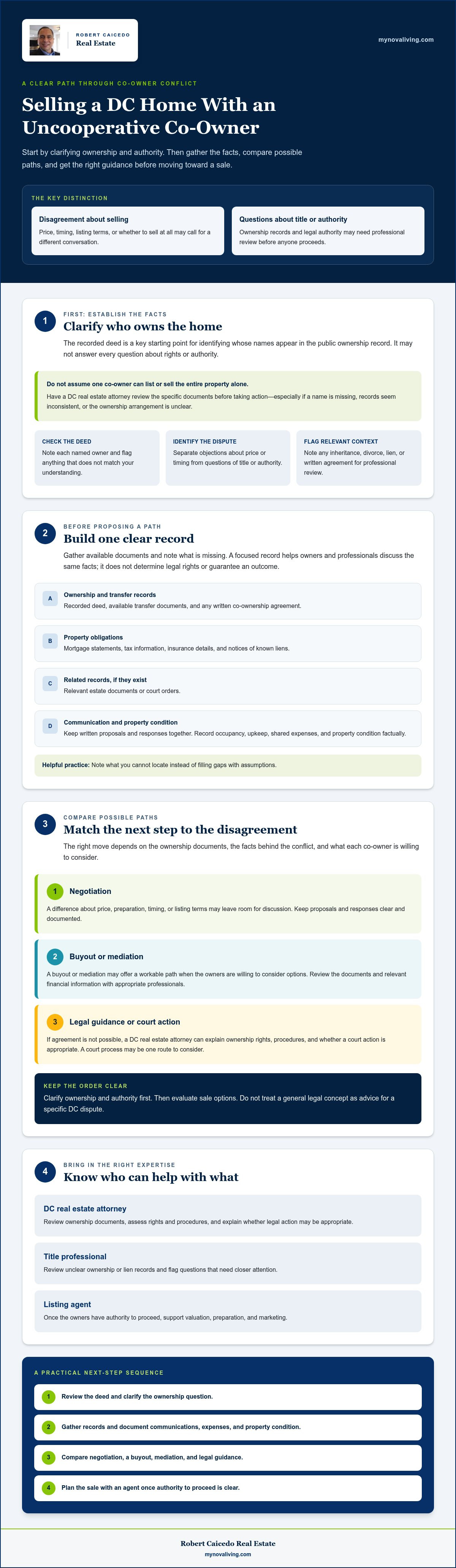
Your next move depends on the ownership documents, the facts behind the disagreement, and what each co-owner is willing to consider. Before listing the entire property, review the deed and any co-ownership agreement, and get clear on expenses, repairs, and each owner’s goals. A buyout, negotiation, or mediation may offer a workable path; if agreement isn’t possible, a DC real estate attorney can explain whether a court action is appropriate.
This guide will help you compare those options, understand which questions to resolve first, and decide when to bring in legal guidance. Once the owners have authority to proceed, an experienced listing agent can support valuation, preparation, and marketing. The aim is a clear next step, with less guesswork and a thoughtful plan for the home.
Key Takeaways
- Separate a disagreement about selling from questions about title or authority, since each may call for a different next step.
- Gather the deed, mortgage or lien information, tax records, and any co-ownership agreement before proposing a path forward.
- Compare negotiation, a buyout, and legal action by considering how much cooperation each requires and where professional guidance may help.
- While navigating a home sale with an uncooperative co-owner in DC, keep clear records of occupancy, upkeep, shared expenses, and communications.
- Know when to consult a DC attorney about ownership rights and procedures, and when an agent can help plan the sale once you’re authorized to proceed.
First, clarify who owns the DC home and what the disagreement is about
A disagreement over a home can feel urgent, especially when you’re worried that delay could affect its condition or value. Start with the facts, not assumptions. Before deciding how to sell, confirm who owns the property and whether the conflict is about the proposed sale or about who has legal authority to act.
Co-ownership means two or more people hold an ownership interest in the same property; the recorded deed is a key starting point for identifying whose names appear in the public ownership record. It can help clarify the situation, but it may not answer every question about rights or authority. One co-owner shouldn’t assume they can list or sell the entire property alone. If you’re navigating a home sale with an uncooperative co-owner in DC, have an attorney review the specific documents before taking action.
What the deed and ownership records can clarify
Locate the deed and note each named owner. Then gather any related ownership documents you have, such as a written co-ownership agreement. The way ownership is held and the language in recorded documents can affect which options are available, so don’t rely on a quick reading if something is unclear.
A DC real estate attorney or title professional can review ownership records and flag questions that need closer attention. Legal guidance is especially useful if a name is missing, a document appears inconsistent, or the deed doesn’t reflect what you understood the ownership arrangement to be. Real estate practices like D'Intino Law Firm, LLC, for instance, assist clients with complex property disputes and deed discrepancies, highlighting the importance of professional counsel when untangling co-ownership rights.
Separate the sale disagreement from other disputes
Pinpoint what your co-owner objects to. Is the disagreement about the asking price, timing, listing terms, or selling at all? A difference over price or preparation may leave room for negotiation. A dispute over title or authority is a different issue and may require legal review before anyone moves ahead with a listing.
Write down any circumstances that could affect the ownership picture, including an inheritance, divorce, lien, or written agreement. These details don’t determine the outcome on their own, but they can shape what a professional needs to review. Avoid making claims about who can approve a sale until a DC attorney has assessed the facts.
If the owners ultimately can’t agree, a court process may be one legal route to consider. A partition by sale is a general legal concept involving sale of jointly owned property, but that reference isn’t a substitute for advice about a specific DC dispute. First, establish what the records show and get guidance on what they mean for your situation.
Gather the documents and facts before proposing a DC home sale
Once you’ve identified the basic ownership question, assemble the information that can make a conversation about selling more productive. A focused record helps you and your co-owner discuss the same facts, and helps an attorney or real estate professional see what still needs to be checked. It won’t decide anyone’s legal rights or guarantee a particular outcome.
Quick checklist: collect the deed, available ownership and transfer records, mortgage and lien information, tax and insurance records, any written agreements, and a factual log of communications and property condition.
Records to assemble before a DC property consultation
Start with documents you already have. Keep copies together and note anything you can’t locate, rather than trying to fill gaps with assumptions.
- Ownership records: The recorded deed and any available transfer documents. Note the names shown and flag anything that seems inconsistent.
- Property obligations: Mortgage statements, tax information, insurance details, and notices of known liens. A professional may need to verify current balances or record information.
- Agreements and related records: Any written co-ownership agreement, relevant estate documents, or court orders, if they exist.
These records can help clarify what questions need answers before you propose a sale or buyout. They don’t establish a particular legal result by themselves. Ask a DC attorney to assess rights and procedures, and have unclear ownership or lien records reviewed by an appropriate title professional.
Create a clear record of communication and property condition
Keep relevant written proposals and responses in one place. Make notes factual and respectful: record what was proposed, when, and how your co-owner responded. Avoid editing messages or relying on memory alone. This can help everyone understand whether the sticking point is price, timing, sale terms, access, or a broader disagreement.
Also note who occupies the home, its visible maintenance needs, and any access or showing concerns. If repairs are needed, document the condition and any steps taken to address it. Don’t assume you can make major changes or arrange access without first confirming what’s appropriate for your situation.
Before discussing a price or buyout figure, seek a current valuation conversation. A real estate professional can explain how comparable local sales and the home’s condition may inform pricing, while an attorney can address ownership questions. If you’re navigating a home sale with an uncooperative co-owner in DC, keep those roles distinct. For a real estate perspective, you can explore DC home-sale guidance as you prepare your questions.
Compare negotiation, a buyout, and legal action for a DC co-owner dispute
Once you understand the ownership records and the source of the disagreement, compare paths by how much cooperation they need and how much control you want to retain. No option guarantees a particular outcome. A DC attorney can help assess legal rights and procedure; a real estate professional can inform valuation and sale strategy.
| Option | Consent and control | Professional input | Uncertainty and next step |
|---|---|---|---|
| Negotiation | Both owners need to participate meaningfully and agree on the terms. | A real estate professional may inform pricing and sale preparation; counsel can review proposed terms. | Agreement depends on cooperation. Exchange written proposals addressing valuation, timing, expenses, and preparation. |
| Buyout | The owners must reach agreement on one owner purchasing the other's interest. | Independent valuation input may help if you disagree about a fair figure. Ask an attorney to review the proposed arrangement. | A buyout is an option to explore, not an automatic right or guaranteed agreement. Discuss valuation and terms before relying on it as a solution. |
| Legal action | May be considered when agreement cannot be reached, subject to the facts and applicable law. | A DC attorney should assess eligibility, procedure, and potential outcomes. | Results and process are case-specific. Ask counsel what legal options may apply before deciding how to proceed. |
When a structured conversation or buyout may be worth exploring
If communication is still possible, propose a focused conversation or exchange written terms. Spell out the price or valuation method, target timing, responsibility for expenses, and any preparation needed before a sale. If you and your co-owner have different views of value, ask a real estate professional about relevant comparable sales. An agent can inform a pricing discussion, but doesn’t determine ownership rights.
Mediation may help some co-owners discuss terms with a neutral facilitator. It isn’t right for every dispute, so ask a DC attorney or qualified mediator whether it fits your circumstances. Keep the goal practical: identify whether there’s a workable agreement before the conflict becomes harder to resolve.
What to ask a DC attorney about partition or court options
Partition may be a legal avenue in some co-ownership disputes, but whether it applies depends on the ownership and case facts. If you’re navigating a home sale with an uncooperative co-owner in DC, ask a DC attorney to verify which court and process may be relevant, what costs could arise, and what outcomes are possible. Don’t assume a court will order a sale, or predict how long a case may take. Get advice tailored to your documents and situation.
Take practical steps to protect the DC home while the dispute continues
While you work through the disagreement, focus on preserving the home and keeping decisions transparent. A calm, factual record can help reduce misunderstandings and give your attorney or real estate professional a clearer picture of what’s happening. Don’t treat routine upkeep as permission to make major decisions on behalf of every owner.
Keep property decisions documented and proportionate
Record maintenance concerns, occupancy arrangements, shared expenses, and communications as they arise. For needed work, describe the issue, take dated photos where appropriate, and obtain estimates before committing to major repairs. Keep receipts and note who paid. If an expense is disputed, ask a DC attorney how to handle it rather than assuming the cost will be shared or reimbursed.
Access and belongings can become sensitive during a co-owner dispute. Don’t change locks, remove someone else’s property, or restrict access without legal guidance. If an urgent repair can’t wait, contact counsel promptly to understand how to proceed and document the issue, proposed work, and related communications.
Prepare for a possible listing without overstepping
A listing agent can discuss the home’s market position, preparation priorities, and a potential marketing plan. That input can help you understand what sale readiness might involve, but it doesn’t establish who has authority to list or sign documents. Confirm the required authority and signatures with a DC attorney before beginning a listing or making commitments on behalf of the owners.
In the meantime, share relevant information about the property’s condition, occupancy, and access concerns with professionals you consult. Keep any discussion of a possible sale exploratory until the authority question is resolved. This helps you plan without suggesting that a listing is already approved.
If you’re navigating a home sale with an uncooperative co-owner in DC, keep legal and real estate roles distinct: counsel advises on rights and procedures, while an agent can guide sale preparation and execution once you’re authorized to proceed. When that authority is clear, you can discuss DC home-sale preparation with a seller representative.
Choose the right DC professionals and plan your next move
The right professional depends on the question in front of you. If you’re unsure who owns the home or who can authorize a sale, start with a DC real estate attorney. If ownership authority is clear and you need to shape a sale strategy, speak with a listing agent. If discussions remain stuck or the disagreement escalates, return to legal counsel before taking further steps.
Keep the roles distinct. An attorney can advise you about ownership rights, legal procedures, and how to address unresolved disputes. An agent can help assess market value, plan preparation and marketing, and coordinate sale activity once the owners have authority to proceed. Neither professional replaces the other.
Questions to ask a DC real estate attorney
Bring the deed, any co-ownership agreement, relevant court or estate documents, and a concise summary of the disagreement. Ask how those records may affect your options, and which legal process, documents, costs, and potential outcomes apply to your specific situation. Avoid relying on general information to predict what a court might decide.
Also ask how to handle communication between owners, property access, shared expenses, and urgent decisions while the dispute continues. Clear guidance can help you avoid actions that create new conflict or complicate the next step.
Questions to ask a listing agent before moving forward
Once authority to sell is clear, ask the agent how they would approach pricing analysis, preparation priorities, marketing, and coordination between co-owners. Discuss communication expectations, including how proposals and decisions will be shared. Ask about experience with co-owned home sales and confirm they can serve a property located in Washington, DC.
As you compare professionals, look for clear answers about their role and limits. A real estate agent can guide sale planning, but can’t determine title rights or provide legal advice. If an ownership or court question resurfaces, direct it to your attorney before proceeding.
Navigating a home sale with an uncooperative co-owner in DC can feel like a complicated process, but your next step can be simple: title question to an attorney, sale strategy to an agent, and unresolved conflict back to counsel. Once you’ve clarified authority to sell, you can explore seller representation and real estate guidance for planning the home’s sale.
Move forward with a clear plan for your DC home
Navigating a home sale with an uncooperative co-owner in DC starts with knowing what the ownership records say and what’s driving the disagreement. Gather the relevant documents, keep a factual record of property-related decisions, and compare cooperative options with legal guidance before committing to a path.
Keep each professional’s role clear. A DC real estate attorney can advise on ownership rights and legal procedures. Once you’ve confirmed authority to sell, an experienced agent can help you consider valuation, preparation, marketing, and coordination. The right next step depends on your documents and circumstances, so there’s no need to rush into assumptions.
Robert Caicedo Real Estate offers seller representation and real estate consulting, including service in Washington, DC. After clarifying your authority to proceed, discuss your DC home-sale plans with Robert Caicedo Real Estate and explore a thoughtful approach to the sale. One clear step at a time can help you move toward a more manageable process.
Frequently Asked Questions
Can one co-owner sell a house in DC without the other owner’s consent?
Don’t assume you can sell the entire property independently. The deed, ownership arrangement, any agreements, and the circumstances all matter. Transferring an individual ownership interest is different from listing and conveying the whole home to a buyer. Before signing a listing agreement or making representations to buyers, ask a DC real estate attorney to review the title documents and confirm who has authority to act.
What happens if one co-owner refuses to sell a house in DC?
A refusal doesn’t automatically resolve the disagreement or establish that either owner has a particular legal remedy. Review the deed, keep a factual record of proposals and responses, and consider whether structured negotiation or a buyout discussion could address the sticking points. If agreement remains impossible, ask a DC attorney whether a court process may apply to your circumstances. Don’t assume a sale or specific outcome is certain.
Can I force a partition sale of a jointly owned home in DC?
Partition is a legal concept that may be relevant to some co-ownership disputes, but it doesn’t guarantee a sale. Whether it’s available and what a court might order depend on the ownership documents and specific facts. Ask a DC attorney to assess eligibility, explain the process, and discuss alternatives and possible consequences. Avoid relying on general information to predict a court’s decision or the result of your case.
How do I find out who legally owns a property in DC?
Start by locating the recorded deed and reviewing available property records for the names listed. A record search may not answer every question about ownership agreements, liens, inheritance, or later legal events. If the names, ownership shares, or authority to act are unclear, ask a qualified title professional or DC real estate attorney to review the documents. Public records are a useful starting point, not a legal opinion.
Can I buy out an uncooperative co-owner of a DC home?
You can propose a buyout, but it generally requires agreement on value, expenses, timing, and the legal transfer of ownership. An unwilling co-owner may not accept the proposal, and you shouldn’t assume a buyout is compulsory or guaranteed. Independent valuation input can help inform the discussion. Before signing terms or transferring an interest, ask a DC attorney to review the proposed arrangement and explain how the ownership records may need to be addressed.
Should I hire a real estate agent or an attorney for a co-owner dispute?
Their roles differ and may complement each other. A DC attorney can advise on ownership rights, legal options, and court procedures. A real estate agent can help with pricing, preparation, marketing, and sale coordination once authority to list is established. If you’re navigating a home sale with an uncooperative co-owner in DC and the owners disagree about who can authorize a sale, consult counsel first. Confirm an agent’s experience with co-owned sales and DC properties.
Can the home be listed while the co-owners disagree about price or timing?
A disagreement about price or timing can affect whether the owners can authorize and carry out a listing together. An agent can discuss valuation and marketing, but can’t resolve questions about ownership authority. Review the deed and any written agreements with a DC attorney, then confirm who must consent and sign. Once authority is clear, a listing agent can help you explore pricing and marketing options that reflect the home and the owners’ agreed plans.


