

In Georgetown, the smartest pre-sale improvement may be the exterior work you choose not to start. Selling a home in Georgetown DC with historic district rules means balancing buyer expectations with the details that give your property its distinctive character. If past renovations don’t come with clear records, it’s natural to wonder whether they could raise questions during a sale.
You don’t need to resolve every preservation question alone, but you do need a clear picture of what has changed and what may require review. This guide explains how historic district oversight can affect your sale, what to verify before planning exterior updates, and how to prepare buyers with accurate, useful information.
You’ll learn which property-specific records to gather, why approvals and permits matter when documenting past work, and how to prepare without overlooking Georgetown’s historic character. With a thoughtful plan, you can present your home confidently and help buyers understand both its appeal and the considerations that come with owning it.
Key Takeaways
- Start with your property’s address and the specific work you’re considering. Review requirements can depend on both.
- Keep preservation review and construction permits distinct, and verify whether each applies before work begins.
- Historic district rules don’t automatically prohibit updates. Check how maintenance, exterior alterations, and interior cosmetic work may be treated.
- Gather records of past work, including approvals, permits, plans, receipts, warranties, and photographs, to help answer buyer questions clearly.
- When selling a home in Georgetown DC with historic district rules, seller representation can help coordinate preparation, marketing, and buyer communication. Confirm preservation and permit requirements with the appropriate authorities or qualified professionals.
Selling a Home in Georgetown DC with Historic District Rules: What They Can Affect
Before you repaint a facade, replace windows, or make another pre-sale improvement, ask two questions: What rules apply to this address, and what exactly do you plan to change? Understanding the property and proposed work first can help you avoid preventable delays and explain the home’s history to buyers.
Georgetown’s historic character is part of its appeal. The Georgetown Historic District reflects the neighborhood’s architectural and historical significance, but a property’s location and the details of a project matter. Historic-district status can bring preservation review into decisions about exterior work. Don’t assume every home or repair follows the same path. Confirm your property’s status and applicable requirements with the appropriate DC authorities.
What Georgetown historic-district status means for a seller
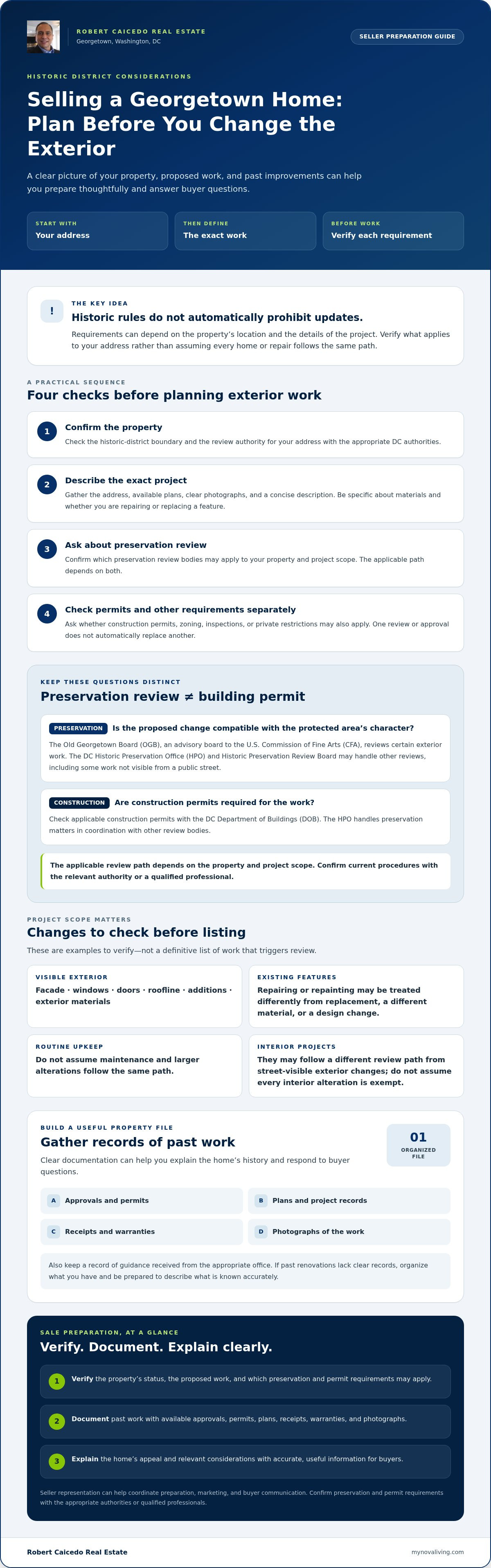
Historic-district review evaluates whether certain proposed changes are compatible with a protected area’s character. In Georgetown, the Old Georgetown Board (OGB), an advisory board to the U.S. Commission of Fine Arts, reviews certain exterior work. The DC Historic Preservation Office and Historic Preservation Review Board may handle other reviews, including some work not visible from a public street. The applicable path depends on the property and project scope. Verify the boundary and review authority for your address before planning work.
Preservation review is not the same as a building permit. A project may also involve construction permits, zoning, required inspections, or private restrictions such as condominium or homeowners’ association rules. One review or approval doesn’t automatically replace another. Confirm each requirement that may apply with the relevant authority or a qualified professional.
Which changes should you check before listing?
Check proposed changes that could alter the home’s visible appearance, including work on the facade, windows, doors, roofline, additions, and exterior materials. Repainting or repairing an existing feature may be treated differently from replacing it with a different material or changing its design. These are examples to verify, not a definitive list of work that triggers review.
Routine upkeep and larger alterations shouldn’t be treated as interchangeable. Before scheduling maintenance, describe the exact work and materials to the appropriate DC office and ask what review or permits may be needed. Keep a record of the guidance you receive.
Interior projects may follow a different review path from street-visible exterior changes, but don’t assume every interior alteration is exempt. Property-specific designations and project details can affect what rules apply. For selling a home in Georgetown DC with historic district rules, checking the address and scope early gives you a clearer basis for deciding what to complete, what to document, and what to leave for the next owner.
How Georgetown Historic Review and Permits May Apply to Your Sale
Once you know what work is being considered, follow a simple sequence: identify the property, describe the project, check preservation review, then confirm permit requirements. This helps you ask specific questions instead of assuming a familiar repair follows the same process as a larger exterior change.
Georgetown’s review process may involve the Old Georgetown Board (OGB) and the U.S. Commission of Fine Arts (CFA). The DC Historic Preservation Office (HPO) handles preservation matters in coordination with other review bodies, while the DC Department of Buildings (DOB) is the office to check for applicable construction permits. Preservation review and a building permit are separate questions. Don’t assume approval from one office covers requirements handled by another. For background, consult the DC Office of Planning’s Old Georgetown Board review process.
A practical first check for Georgetown property owners
Prepare a small project file before contacting an office. Include the property address, any available plans, clear photographs, and a concise description of the proposed work. For example, distinguish repairing existing window components from replacing windows with a different design or material. Then ask which preservation review bodies and permits may apply to that address and scope.
Procedures and jurisdiction can change, so confirm current requirements directly with the responsible DC offices. Keep a contact log with the date, office contacted, guidance received, and any application or case reference. This can help you track next steps and explain what you verified as you prepare the home for sale.
What to do about past exterior work
Gather available documentation for previous projects: preservation approvals, permits, contractor records, plans, receipts, and before-and-after photographs. Organize these by project, adding dates if known. A clear record helps you describe changes to the home and answer buyer questions without relying on memory alone.
If records are missing, don’t assume the work was approved or that it wasn’t. Ask the appropriate office how to check available records or clarify the project’s history. If questions remain, consult a qualified professional. Avoid describing undocumented work as compliant unless you’ve verified that claim.
For selling a home in Georgetown DC with historic district rules, careful preparation can make the process easier to explain. Seller representation may help coordinate listing preparation and buyer communication, while preservation and permit questions should be confirmed with the relevant DC authorities or qualified professionals.
Do Georgetown Historic District Rules Prevent Updates Before Selling?
No. Historic-district status doesn’t automatically prohibit every update. The key is to understand the work you’re considering and verify how current requirements apply to your property. A small maintenance task, a change to a visible exterior feature, and fresh interior paint may raise different questions.
Maintenance, repair, or alteration: why the distinction matters
As a practical starting point, maintenance keeps an existing feature in working order, repair addresses damage, and alteration changes a feature’s appearance, material, or design. These are useful descriptions, not formal legal categories. Repainting, replacing windows, changing a front door, or adding an exterior feature could each be treated differently depending on the property and exact scope. Check each proposed project with the appropriate DC office before assuming review is or isn’t needed. The DC Historic Preservation Office provides information on the District’s preservation program and can help direct owners to relevant guidance.
Use this comparison to frame your questions, not as a definitive ruling:
| Work type | Question to ask | Where to verify |
|---|---|---|
| Routine upkeep or repair | Does this exact work and material require preservation review or a permit? | Relevant preservation office and DC Department of Buildings |
| Visible exterior change, such as new windows, a different front door, or an added feature | Which review body applies to this address and proposed design? | DC preservation authorities, including the Old Georgetown Board where applicable |
| Cosmetic interior preparation, such as painting | Are there property-specific conditions or other requirements to consider? | Appropriate DC office; confirm any separate building requirements |
Choose sale preparations that respect historic character
Start with presentation steps that don’t depend on permission to change the exterior: clean thoroughly, declutter, improve lighting, and prepare rooms to feel cared for. These steps can help buyers appreciate the home without altering its historic details.
For proposed work, weigh the likely benefit against the time needed to confirm review, permits, and documentation. A replacement window or new exterior feature may require more planning than a simple cosmetic refresh. If the scope is unclear, ask the responsible DC office and consider consulting a qualified preservation or design professional before committing to work.
For selling a home in Georgetown DC with historic district rules, a measured approach can respect the home’s character while keeping your preparation plan practical. Verify first, then decide which updates make sense for your sale.
How to Prepare a Georgetown Home for Sale Under Historic District Rules
A clear, well-organized record makes your home’s story easier to share. Before setting a preparation or marketing schedule, confirm the property’s address-specific historic status, review the history of past work, and identify questions that still need answers. This gives you a stronger foundation for decisions about updates and buyer communication.
Create a property history and approvals file
Gather records in one accessible digital or physical file. A project-by-project summary helps you see what’s documented and what needs follow-up.
- List known renovations and repairs, including dates, the work completed, and contractor details if available.
- Match each project with any related preservation approvals, permits, plans, receipts, warranties, and before-and-after photographs you have.
- Label gaps plainly, such as “approval record not located,” and note which DC office or qualified professional you’ll contact to help verify the history.
Don’t treat a missing document as proof that work lacked approval or that it was approved. If records are incomplete, ask the relevant authority how to check the available project history. Keep notes of your inquiries and any references you receive. Clear records support accurate answers without overstating what you know.
Coordinate preparation, pricing, and buyer communication
Use what you’ve learned to shape a practical listing plan. The home’s condition, documented work, and distinctive historic features can inform which preparation steps make sense and how its character is presented. If you’re considering additional work, resolve outstanding review or permit questions before committing to a schedule. Allow time for official guidance, documentation, or professional input.
Prepare concise, factual responses to likely buyer questions: what work was completed, what records are available, and which items remain unverified. Separate confirmed details from open questions. Before making statements about approvals or compliance in marketing materials, seek confirmation from the appropriate DC authority or a qualified professional.
Seller representation can help coordinate listing decisions, preparation, and clear buyer communication. It doesn’t replace preservation, permitting, or legal guidance, but it can help keep the sale plan organized around verified information. For selling a home in Georgetown DC with historic district rules, present the home’s character with confidence and be precise about what the records establish.
Discuss a seller representation plan that brings your preparation and buyer communication into focus.
Selling Your Georgetown Home: Build a Clear Plan with Seller Representation
A confident listing plan starts with verified details, not assumptions. Confirm the property’s historic status, review records for past work, check whether proposed changes need review or permits, and gather documentation before shaping the marketing. This gives you a sound basis for decisions and helps keep buyer communication clear.
Questions to ask before choosing your sale strategy
Before setting a timeline or drafting listing language, consider what still needs confirmation:
- Which property details and historic features can you describe confidently, and which should you verify first?
- What records can help answer buyer questions about visible alterations and completed work?
- Which questions belong with a DC authority, qualified preservation or design professional, or legal adviser?
Separating confirmed facts from open questions helps you avoid overpromising. For example, you can state that records are available for a particular project without claiming every past alteration has been verified or approved.
Turn preparation into a confident listing plan
Build a schedule that leaves room to resolve uncertainties before photography, marketing, or buyer conversations begin. Your property’s condition, documented improvements, and distinctive features can inform preparation priorities, pricing decisions, and how the home is presented. If a proposed project needs further review, weigh its potential value against the time and documentation involved before moving forward.
Seller representation can help coordinate listing decisions and keep communication organized, from preparation priorities to accurate descriptions of the home. It doesn’t replace guidance from preservation authorities, permitting offices, or legal professionals. Instead, it can help bring verified information together and present the home’s Georgetown character with care.
For selling a home in Georgetown DC with historic district rules, a thoughtful plan can make the process more manageable while giving buyers a clear account of the property. Robert Caicedo Real Estate provides seller representation in Washington, D.C., as well as in Northern Virginia communities including Aldie, Leesburg, Middleburg, Ashburn, Sterling, and Reston. Discuss your Georgetown home sale with Robert Caicedo Real Estate.
Make Your Georgetown Sale Plan With Confidence
A thoughtful sale begins with verified details. Confirm which requirements apply to your address and proposed work, then bring together available records of past changes. This gives you a clearer foundation for marketing the home’s historic character and answering buyer questions accurately.
Historic district status doesn’t automatically rule out every update. The right next step depends on the property and project, so check preservation and permit questions with the responsible DC offices or qualified professionals before setting your preparation timeline.
If you’d like support coordinating listing decisions, preparation, and buyer communication, Robert Caicedo Real Estate provides seller representation in Washington, D.C., and Northern Virginia communities including Aldie, Leesburg, Middleburg, Ashburn, Sterling, and Reston. For selling a home in Georgetown DC with historic district rules, a clear plan can help you move forward with care and confidence. Discuss your Georgetown home sale with Robert Caicedo Real Estate.
Frequently Asked Questions
Do I need approval to replace windows in Georgetown, DC?
You may need preservation review or permits to replace windows, but the answer depends on your property, the window design and materials, visibility, and current review requirements. Before ordering or installing replacements, contact the responsible DC office with your address and a description of the proposed work. Ask which review bodies and permits apply. Don’t rely on a neighbor’s experience or assume replacing windows in kind follows the same process everywhere.
Can I sell a Georgetown home if previous exterior work has no paperwork?
Missing records don’t establish whether past work was approved or compliant, and they don’t by themselves determine whether you can sell. Gather any available plans, receipts, contractor records, photographs, approvals, or permits. Ask the relevant DC office how to check for available records, and consult qualified professionals about unresolved questions. Describe what you know accurately to prospective buyers, distinguish confirmed facts from unknowns, and avoid promising a particular legal outcome.
What is the Old Georgetown Board, and how could it affect a home sale?
The Old Georgetown Board is a preservation review body involved in evaluating certain work in Georgetown’s historic district. Its current role for your property depends on the address, proposed work, and applicable procedures. Verify whether OGB review applies before making changes. Preservation review is distinct from construction permits and other approvals. Confirm current details with the Commission of Fine Arts or the appropriate DC office rather than relying on a general description.
Do historic district rules apply to interior renovations in Georgetown?
Preservation review often focuses on exterior impacts, but don’t assume every interior project is exempt. The property’s designation, project scope, and separate permitting requirements may affect what needs review. Before starting or advertising interior renovations as approved or unrestricted, describe the specific work to the relevant DC authorities and ask what requirements apply. Keep any guidance and related permits with your project records so you can give buyers a factual account.
How can I check whether my Georgetown property is in a historic district?
Check your exact address with official DC preservation resources and ask the relevant office to confirm the property’s designation and applicable review process. A Georgetown address or a home’s architectural appearance alone isn’t a substitute for address-level confirmation. Save the source you consulted, the date you checked, and any response from the office. That record can help guide preparation decisions and support clear, accurate conversations with prospective buyers.
Will historic district rules delay the sale of my Georgetown home?
They may affect your preparation schedule if you plan work that needs review or permits, or if important records are difficult to locate. Timing depends on your project, applicable procedures, and the information available. Check requirements early and leave room in your plan to verify details before setting a listing date. Ask the responsible office about current processing expectations, and avoid relying on a fixed timeline that may not fit your property.
What documents should I gather before listing a historic Georgetown home?
Collect available permits, preservation approvals, plans, contractor records, warranties, receipts, and photographs of completed work. Organize them by project, adding dates and brief descriptions where you can. Note missing records honestly, then ask the appropriate office or a qualified professional how to clarify gaps. Share only what you can substantiate with buyers. A complete file can make it easier to answer questions without implying undocumented work was approved or compliant.


