

A quiet listing calls for a focused reset: compare your asking price with nearby sales, review buyer feedback, and improve how the home is presented online and in person. If you’re deciding what to do if your Reston house isn’t getting any offers, consider a price adjustment when it has been on the market for over 30 days without an offer. An open house can also give buyers a chance to experience the home firsthand.
No offers can feel discouraging, especially after you’ve prepared your home and waited for the right buyer. But the silence is useful information: it may point to a mismatch in price, presentation, or buyer demand, rather than a reason to make a rushed change.
Learn how to assess demand, identify what may be holding your listing back, and compare local sales before adjusting your strategy. Thoughtful improvements and another open house may also help more buyers connect with your home.
Key Takeaways
- Read seasonal demand, mortgage rates, and the supply of similar Reston homes to understand the market around your listing.
- Use showing activity and buyer feedback to identify whether price, condition, presentation, or marketing may be limiting interest.
- Compare your home with relevant nearby sales to shape a pricing decision around what buyers have actually chosen.
- Make targeted improvements before hosting another open house, so visitors can experience the home at its best.
1. Assessing market conditions and buyer demand
Reston prices and days on market make the most sense when compared with similar homes in Fairfax County and nearby communities, including Aldie, Leesburg, Middleburg, Ashburn, Sterling, and Washington, D.C. Match property type, condition, size, and location before drawing conclusions: a larger home or a different neighborhood can shape buyer expectations. Compare closed sales with active listings, then note whether similar properties are attracting showings or staying on the market. This puts your asking price in context instead of treating every nearby listing as equivalent.
In 2026, how long a Reston home takes to sell depends on its price, condition, presentation, and competition. Late fall and winter often bring lower buyer activity, while rising mortgage rates can reduce the number of buyers able to afford an asking price. Higher rates also increase monthly housing payments. If your home has been listed for over 30 days without offers, consider a price adjustment based on comparable sales and current competition.
Reston neighborhood features can shape demand in different ways. Buyers may weigh nearby schools, HOA fees, commute options, and amenities against a home’s price and layout. An HOA fee affects ongoing ownership costs, while a commute route can influence how practical a location feels. Present these details clearly and compare your home with listings that offer a similar day-to-day experience, not just a similar appearance.
Check how many similar homes are competing for buyers’ attention. An oversupply can make a listing less visible, so strong photos and a clear online presentation matter. If buyers are showing interest but not making offers, consider whether the overall value feels compelling. A carefully chosen incentive, such as flexibility around the closing date or a contribution toward buyer expenses, may help. Align any incentive with buyer feedback and your sale priorities.
- Compare closed sales and active competition using meaningful property similarities.
- Track seasonal demand and mortgage-rate pressure when judging buyer activity.
- Show how Reston location features affect everyday ownership and convenience.
- Consider a targeted incentive when it addresses a specific buyer concern.
There is no single selling timeline: price, condition, presentation, and competing listings all affect how long a Reston home takes to sell. If it has been listed for more than 30 days without an offer, consider adjusting the price based on comparable sales and current competition.
2. Why isn’t your home selling?
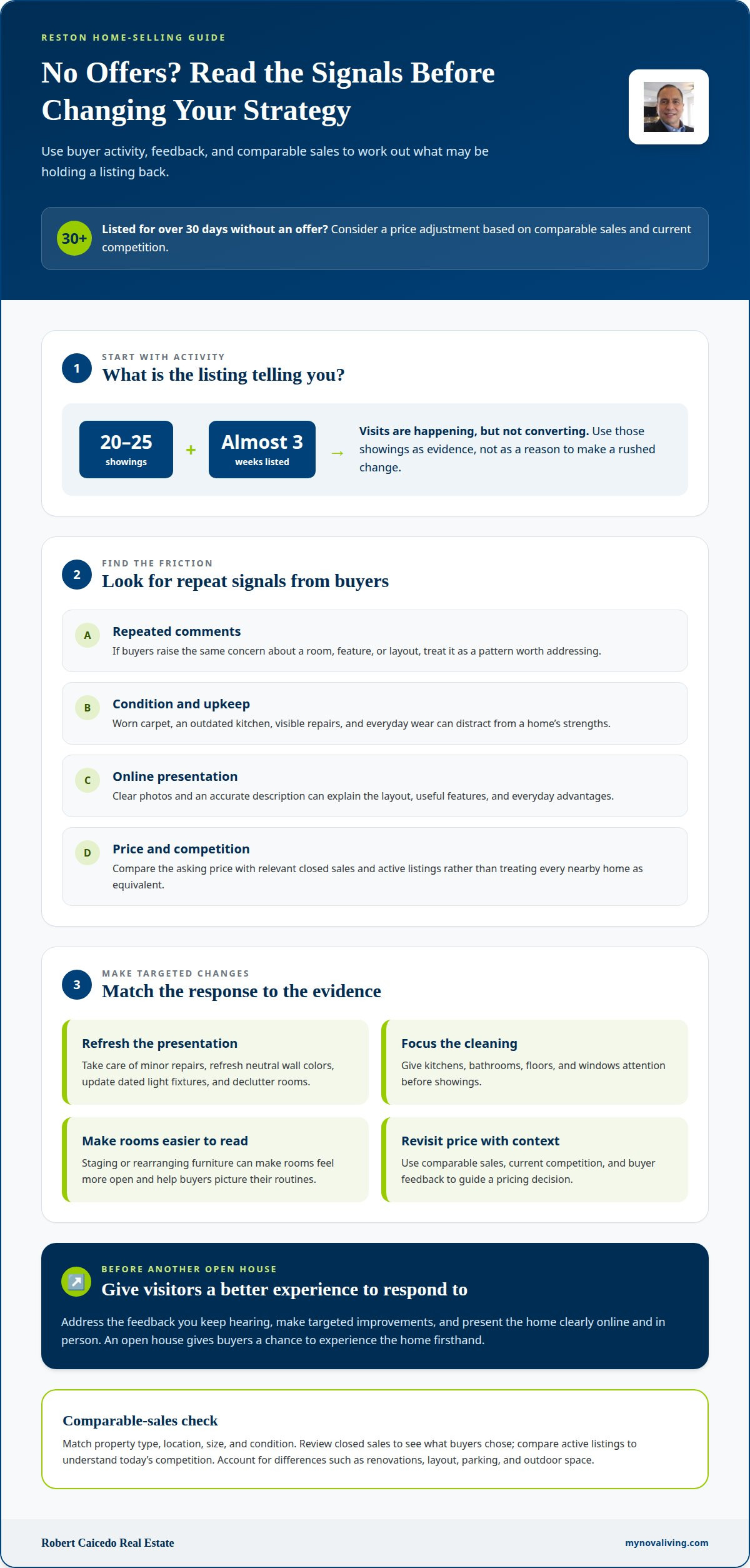
Start with the pattern of activity. A Reston listing active for almost 3 weeks, with 20-25 showings and no offers, is attracting visits but not converting them. If you’re deciding what to do if your Reston house isn’t getting any offers, use those visits as evidence. Repeated concerns about the same room, feature, or layout may reveal what’s stopping buyers from moving forward.
Improve the online impression with clear listing photos and a description that explains the home’s layout, useful features, and everyday advantages. Mention details buyers can picture, such as a basement-level garage, and show spaces accurately. A concise description can clarify how the rooms connect, helping buyers decide whether to schedule a showing or attend an open house.
Reston buyers may expect a home to be clean, cared for, and accurately presented. Worn carpet, an outdated kitchen, or visible repairs can distract from its strengths and raise questions about future work. Take care of minor repairs, refresh neutral wall colors, update dated light fixtures, and declutter rooms so buyers can see how each space functions.
Professional cleaning can sharpen the first impression before showings. Focus on kitchens, bathrooms, floors, and windows, where everyday wear is easy to notice. If buyers repeatedly mention the kitchen or garage, treat that feedback as a pattern. Staging or rearranging furniture can make rooms feel more open and help buyers picture their routines there.
If you’re still weighing what to do if your Reston house isn’t getting any offers, set a clear relisting plan before withdrawing. Meaningful improvements can give buyers a different experience, but returning with the same price or presentation may leave their concerns unresolved. Consider preparation and ongoing ownership costs, then decide what to change and how that change responds to buyer feedback.
3. Evaluating comparable home sales
Comparable sales show what buyers have recently chosen, not simply what nearby sellers hope to receive. Ask your real estate agent to review Reston homes with a similar property type, size, condition, and location. Focus on closed sales first, then compare active listings to understand the choices buyers have now. A townhouse near transit may not be a useful comparison for a detached home with a different commute.
Review each property’s sale price alongside its features and presentation. A renovated kitchen, finished basement, updated bathrooms, or attached garage can help explain why one home sold for more. Condition matters, too: a well-maintained home may attract stronger interest than a similar property with visible repairs. Note whether the comparable had outdoor space, parking, or a layout suited to the same buyer’s needs.
Then consider timing and competition. A sale from a different market moment may not reflect current buyer demand, while an active listing shows what your home competes against now. Compare how long similar homes stayed available and whether their asking prices changed before sale. These details help distinguish a pricing gap from differences in condition or features, without treating one property as a perfect match.
- Match the basics: Compare property type, location, size, and overall condition.
- Study the differences: Account for renovations, layout, parking, and outdoor space.
- Separate sold from active: Closed sales show buyer choices; current listings show competition.
- Review the timeline: Look at time on market and any price changes before sale.
Use the comparison to build a clear pricing range, not to copy a neighbor’s asking price. If similar Reston homes sold after price adjustments or offered features yours lacks, weigh that evidence before changing your price. Your agent can bring these comparisons together and explain which differences matter most to buyers. A measured review makes the next pricing decision more deliberate and grounded in local sales.
4. Hosting open houses
An open house lets Reston buyers experience your home in person, including its layout, light, and flow. In one reported example, 20 sets of people attended, showing that visitor numbers alone don’t explain why offers are missing. Pair attendance with comments about specific rooms, features, or concerns. A busy event with repeated objections can reveal a different issue than an event with few visitors.
Prepare each space to make it easy for visitors to imagine living there. Clear counters, put away personal items, open interior doors, and arrange furniture to show how rooms connect. In a home with a basement-level garage, make the route clear so visitors can assess its convenience. A professionally cleaned kitchen and bathroom can also help the home feel cared for during an in-person visit.
Make the online invitation match the in-person experience. Clear listing photography can help buyers decide whether to book a showing or attend an open house. Use accurate images of the kitchen, living areas, bedrooms, and garage, then make sure the description highlights useful features without overstating them. Buyers should arrive with a clear sense of what they’ll see.
After an open house, organize feedback by theme. If several visitors mention a small kitchen, difficult layout, or garage access, decide whether a practical change could address the concern. If visitors respond positively to a feature, highlight it in the listing and future event materials. Consider holding another open house after making improvements, so buyers see a more polished presentation rather than the same experience again.
For your next open house, focus on a welcoming walkthrough, clear photos, and a plan to capture recurring feedback. Plan your next open house around the improvements buyers are most likely to notice.
Robert Caicedo Real Estate
Robert Caicedo Real Estate provides seller representation for homeowners reassessing their pricing and marketing strategy. When buyer feedback, comparable sales, and open-house activity point to a change, representation can help bring those signals together and shape the next steps for your listing.
Consider the choices ahead: refine the presentation, adjust the asking price, or make targeted improvements before another open house. The right approach depends on what local sales and buyer responses reveal about your home, not on repeating changes without a plan.
If you’re considering selling, contact Robert Caicedo Real Estate to discuss your home and a strategy that fits your goals.
Choose a clear next move
If you’re weighing what to do if your Reston house isn’t getting any offers, make your next decision intentional. Choose the change that best addresses the strongest signal from buyers, then give that adjustment time to shape the listing’s response. A measured plan can help you avoid reacting to every quiet day with a different strategy.
Keep your priorities in view, too. Your timing, preferred terms, and willingness to make changes all affect which path feels right. A focused conversation can help you weigh those priorities alongside market feedback and decide what to do next.
Connect with Robert Caicedo Real Estate to discuss your next step. A thoughtful strategy can put you back in control and help you move forward with greater clarity.
Frequently Asked Questions
Why isn’t your home selling?
A home may struggle to sell when the listing’s promise and the showing experience don’t align, or when buyers can’t easily arrange a visit. Limited showing windows, for example, may be inconvenient for people coordinating work or travel. Review whether scheduling is straightforward, the description accurately represents the property, and likely buyers can quickly understand its practical advantages.
Why isn't my Reston, VA house getting offers?
Your Reston home may be reaching the wrong buyer group or competing with properties that offer a different fit. Condos, townhouses, and detached homes appeal to different needs, even within the same community. Check that your listing clearly identifies the property type and highlights details that matter to its likely audience, such as storage, outdoor space, or flexible rooms.
How should I price a Reston home compared with recent nearby sales?
Use recent closed sales as your anchor, then account for differences that affect how buyers view value. A nearby home with renovated bathrooms, for example, may not be directly comparable to one needing updates. Keep a written comparison of condition, layout, and included features, and distinguish the final sale price from the original asking price when assessing your position.
Which listing photos, staging, and repairs help Reston homes attract buyers?
Lead with a bright, uncluttered image that helps buyers understand the home’s layout, then include clear views of the main living areas and distinctive features. Before photography, clear countertop items, straighten furniture, and replace burned-out bulbs. Fix visible distractions, such as a loose cabinet handle or scuffed entryway, so the images and in-person visit feel consistent.
Should I reduce the price or offer seller concessions on a Reston home?
Choose an adjustment based on what buyer responses suggest is holding the sale back. A price change may make sense when buyers don’t see the home as competitive with similar choices. A concession may be more relevant when an interested buyer identifies a specific expense as a concern. Compare how each option could affect your expected proceeds and sale terms before deciding.
How do Reston home prices and days on market compare with Fairfax County and nearby areas?
Compare Reston homes with similar properties in Fairfax County and nearby areas, including Aldie, Leesburg, Middleburg, Ashburn, Sterling, and Washington, D.C. Review closed sales and active listings, since neighborhood and home features can affect prices and time on market.


