

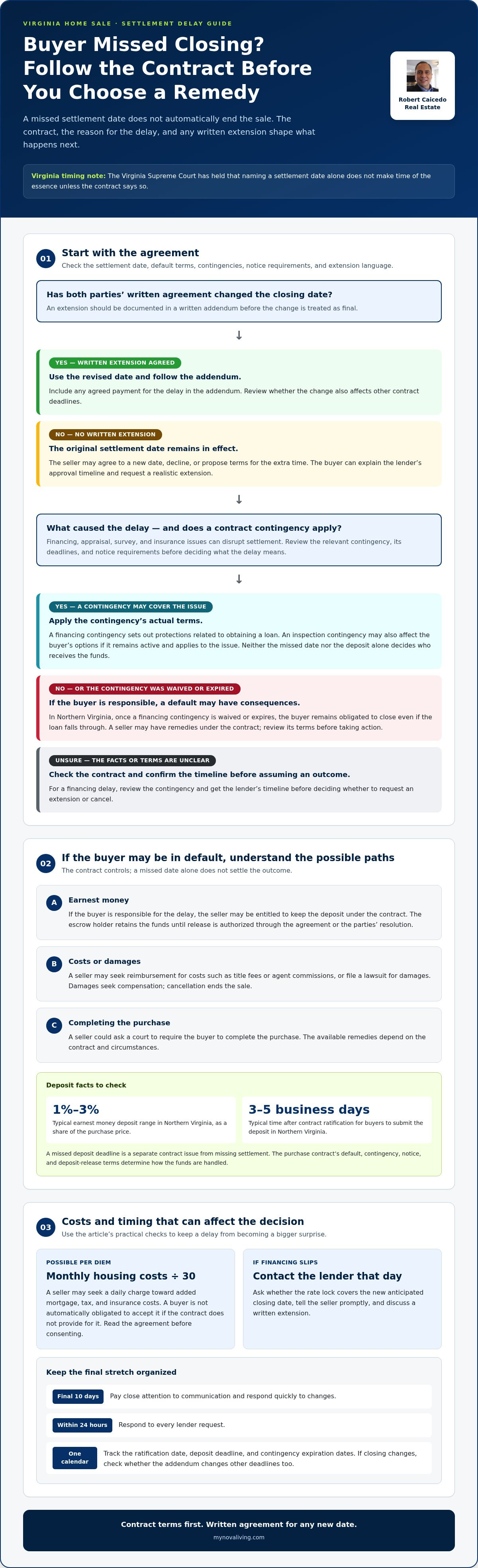
A missed closing date doesn’t automatically end the sale. If you’re wondering what happens if a buyer misses the closing date in Virginia, the contract and reason for the delay matter: the buyer’s earnest money may be at risk, and the seller may have grounds to cancel or pursue a remedy. The Virginia Supreme Court has held that naming a settlement date alone doesn’t make time of the essence unless the contract says so.
A delay can feel alarming, especially when you’ve planned a move around a specific date. A lender setback, unresolved appraisal issue, or buyer’s decision not to proceed can each lead to different consequences under the contract.
The reason for missing the date can shape what happens next. Earnest money, a written extension, and the seller’s options may all be affected, so understanding the contract can help clarify the choices ahead.
Key Takeaways
- Review the purchase contract to understand how the settlement date, contingencies, and any extension terms affect your options.
- Know when earnest money may be at risk, especially if the buyer is responsible for the delay after contingencies are removed.
- Put any revised closing date in a written addendum so both parties have a clear agreement.
- Separate a financing or appraisal setback from a buyer’s choice not to proceed; the reason for the delay can shape what happens next.
So, The Buyer Missed the Closing Date…What Now?
A missed settlement date can affect the transaction, but the contract and reason for the delay determine the next steps. Financing, appraisal, survey, and insurance issues can all disrupt a planned closing.
Preventing and Responding to Delays
Preventing closing delays means handling lender, appraisal, survey, and insurance issues early and communicating quickly when plans change. It matters because a small unresolved item can hold up approval or settlement. Pay close attention to communication during the final 10 days before closing, and respond to every lender request within 24 hours. If the date slips, contact the lender that day to ask whether the rate lock covers the new anticipated closing date. Tell the seller promptly and discuss a written extension.
Financing Contingencies and Loan Delays
A financing contingency sets out contract protections related to obtaining a loan. Its terms affect what a buyer can do if approval is delayed or denied. Underwriting issues can delay or prevent the purchase, while appraisal problems may lead to price renegotiation. In Northern Virginia, once a financing contingency is waived or expires, the buyer remains obligated to close even if the loan falls through. The seller may agree to an extension, giving the buyer more time to resolve financing. Review the contingency and get the lender’s timeline before deciding whether to request an extension or cancel.
Per Diem Charges for Delayed Closings
A per diem is a daily charge a seller may seek for costs caused by a delayed closing. It matters because an extension can add expenses beyond the purchase price. A common calculation divides the seller’s monthly housing costs by 30. The seller may seek payment toward additional mortgage, tax, and insurance costs. A buyer isn’t automatically obligated to accept a requested per diem if the contract doesn’t provide for it, so read the agreement before consenting.
Earnest money deposit consequences
Earnest money shows the buyer’s commitment and is generally held in escrow, then credited at closing. In Northern Virginia, deposits typically range from 1% to 3% of the purchase price. The purchase contract controls how the deposit is handled if the transaction stalls, the buyer defaults, or the parties cancel. A missed closing date alone doesn’t explain who receives the funds; the buyer’s obligations and any applicable contingencies matter.
The risk increases if the buyer can’t close after contingencies have been removed. If the buyer is responsible for the delay, the seller may be entitled to keep the earnest money under the contract. For example, a buyer whose financing fails after waiving the financing contingency may face a different outcome from one protected by an applicable contingency. An inspection contingency may also affect the buyer’s options if its terms remain active and apply to the issue. Review the agreement’s deadlines, notice requirements, and deposit-release terms before assuming the money is forfeited or recoverable.
In Northern Virginia, buyers typically have 3 to 5 business days after contract ratification to submit the deposit. Missing that deadline creates a separate contract issue from missing settlement. Note the ratification date, deposit deadline, and any contingency expiration dates in one calendar. If the closing date changes, get the extension in writing and review whether it also changes other contract deadlines. A delayed closing doesn’t automatically settle who gets the deposit; the contract’s default and contingency provisions shape that decision. The escrow holder retains the funds until release is authorized through the agreement or the parties’ resolution. For a purchase involving property across borders, international real estate guidance can help you understand additional transaction considerations.
Seller cancellation after a missed closing date
Virginia Realtors standard purchase contracts identify the settlement date and the parties’ contractual duties. If both parties agree to a later date, they should document the extension in a written addendum before treating the change as final.
Responses to a Buyer Extension Request
A seller receiving an extension request can agree to a new date, decline, or propose terms for the extra time. The original settlement date remains in effect until both parties agree in writing. The buyer can explain the lender’s approval timeline and request a realistic extension. The seller can weigh ongoing mortgage interest, taxes, insurance, and move plans against keeping the transaction on track. Any agreed payment for the delay should be included in the addendum.
Seller Remedies After Buyer Default
If a buyer fails to close without an agreed extension, that failure may constitute a breach of contract. In Northern Virginia, a seller may be entitled to the earnest money deposit if the buyer defaults, seek reimbursement for costs such as title fees or agent commissions, or file a lawsuit for damages. A seller could also ask a court to require the buyer to complete the purchase, even if financing fails or the buyer no longer wants the home. These remedies have different aims: cancellation ends the sale, while damages seek compensation.
Contract Terms for Settlement Delays
The settlement date matters, but the Virginia Supreme Court has held that naming a date alone doesn’t make time of the essence unless the contract says so. This distinction can affect whether a seller may cancel immediately after a missed date. Review the agreement’s default, contingency, and notice terms before taking action. A buyer facing seller nonperformance may sue for specific performance or damages, depending on the contract and its contingencies. A financing contingency may protect the buyer under its terms; the buyer’s position changes once it expires or is waived. Written terms give both parties a clear record of the agreed date and obligations.
Assessing why the buyer missed closing
The reason for a missed closing can help distinguish a temporary obstacle from a decision not to perform. A lender delay, low appraisal, survey problem, insurance barrier, or unfinished repair can interrupt a real estate purchase. Identify the exact unresolved issue, who must address it, and whether a purchase-contract contingency still applies. Then compare the timeline and communications with the contract’s deadlines.
Financing trouble can arise during underwriting, even after a buyer starts arranging a mortgage. The key question is whether a financing contingency remains active or has expired or been waived. If it remains active, its terms may protect the buyer if loan approval fails; otherwise, the buyer may still be obligated to close. Ask the lender what specific requirement remains outstanding and when it expects to resolve it, then share that information with the seller in writing.
Property issues need a separate assessment. A low appraisal may lead the parties to renegotiate the price, while survey findings can trigger repair requests or further discussion. Insurance can also block closing if the property is considered uninsurable because of significant faults or previous claims. If the seller has agreed to repairs, establish what remains unfinished and whether the work affects the move or settlement date. The National Association of Realtors attributed 6% of delayed settlements in its December 2025 survey to appraisal issues.
Keep the record specific: note the cause, relevant contract provision, notices sent, and dates the parties discussed. For example, a lender document delay differs from a buyer who changes plans after signing. That distinction can affect whether the earnest money deposit is at risk and what remedies the agreement allows. If you’re buying and need help evaluating your position, discuss buyer representation before agreeing to revised terms.
Robert Caicedo Real Estate: Seller Representation
Robert Caicedo Real Estate represents sellers considering their options after a buyer misses closing. The focus is the transaction: understanding the seller’s position, reviewing the contract’s deadlines and contingencies, and weighing whether an extension or cancellation is the next step. Buyers can also work with Robert Caicedo Real Estate to understand how a delay and the agreement affect their options.
A missed date can leave both parties balancing practical needs with contractual obligations. Clear guidance can help you understand the issues and weigh the choices ahead.
For support with your real estate transaction, contact Robert Caicedo Real Estate.
Move Forward With a Clear Plan
Understanding what happens if a buyer misses the closing date in Virginia is a starting point, not the whole story. Your next move can affect whether the transaction proceeds, your plans change, or you prepare for another home purchase. Keep your priorities clear and make decisions in light of both the agreement and the home you want to move toward.
Robert Caicedo Real Estate represents buyers and sellers in real estate transactions. If your plans involve a newly built home, the firm also offers representation for new construction homes. A conversation with Robert Caicedo can help you focus on the practical choices ahead and move forward with greater clarity.
Contact Robert Caicedo Real Estate to discuss your next step. A thoughtful plan can help you approach what comes next with confidence.
Frequently Asked Questions
What Happens If You Miss the Closing Date?
If you’re asking what happens if a buyer misses the closing date in Virginia, the contract terms and reason for the delay shape the response. A buyer waiting on a lender decision can share the status and request a written extension. If the buyer doesn’t complete the purchase, the seller may pursue remedies allowed by the agreement. The earnest money outcome depends on the contract and applicable contingencies.
Does the Contract Include a “Time Is of the Essence” Clause?
Review the contract’s wording: a settlement date alone doesn’t necessarily make timing strictly essential. The Virginia Supreme Court has held that naming a settlement date alone does not make time of the essence unless the contract says so. Look for an express clause or language explaining the consequences of missing the date. Don’t assume a deadline has a particular legal effect simply because it appears in the contract.
In case of a late closing, what happens?
A late closing can lead to an agreed extension, a seller’s attempt to cancel, or a dispute about contract performance. For example, the seller may agree to a revised settlement date while the buyer’s lender completes an outstanding approval step. The parties can also put any proposed daily charge in writing. If there’s no agreement, the contract’s settlement and default terms guide what happens next.
What Happens If You Default?
A buyer who defaults may risk losing the earnest money deposit, and the seller may seek other remedies allowed by the contract. Depending on the circumstances, the seller could pursue damages or ask a court to require the buyer to complete the purchase. These outcomes aren’t interchangeable: one seeks compensation, while the other seeks completion of the sale. The agreement’s remedy language matters.
When Does a Delay Become a Breach of Contract?
A delay can become a breach when a party fails to perform a contractual duty without an applicable protection or agreed change. Failing to close on the settlement date without an agreed extension may constitute a breach. A lender delay alone doesn’t determine the outcome. Compare the missed obligation with the contract’s contingencies, notice requirements, and written amendments.
What does a Virginia real estate contract say about missing the closing date?
Understanding what happens if a buyer misses the closing date in Virginia starts with the agreement’s settlement date, duties, contingencies, and default provisions. If the parties choose a new date, document it in a signed written addendum. For example, reflect a revised lender timeline in the amendment rather than treating it as an informal change to the agreement.


