

A distinctive floor plan can be a selling point when buyers can picture how it works in daily life. To understand how to market a home with a unique floor plan in Middleburg, show how its spaces connect and explain the everyday uses that make the layout feel intentional. Homeowners insurance isn’t required by law in the United States, though a mortgage lender might require it.
An unconventional layout can be memorable, but buyers need more than an unusual arrangement to imagine living there. Clear descriptions and thoughtful visuals can turn an unexpected flow into a practical, appealing story.
This guide explains which features to emphasize in your listing, how to prepare an inventory checklist, and what to know about homeowners insurance as you get ready to sell. You’ll learn how to present your home’s character while helping buyers understand how each space works.
Key Takeaways
- Describe how rooms connect and serve daily life so buyers can understand the purpose behind an unconventional layout.
- Use a coordinated set of photographs, video, and a readable floor-plan diagram to make the home’s flow easier to picture.
- Build visibility across relevant real estate websites and marketing channels, with listing details and visuals that tell one consistent story.
- Seller Representation can help shape the home’s presentation and marketing approach around its distinctive features.
Which features of a distinctive floor plan should be highlighted in a Middleburg home listing
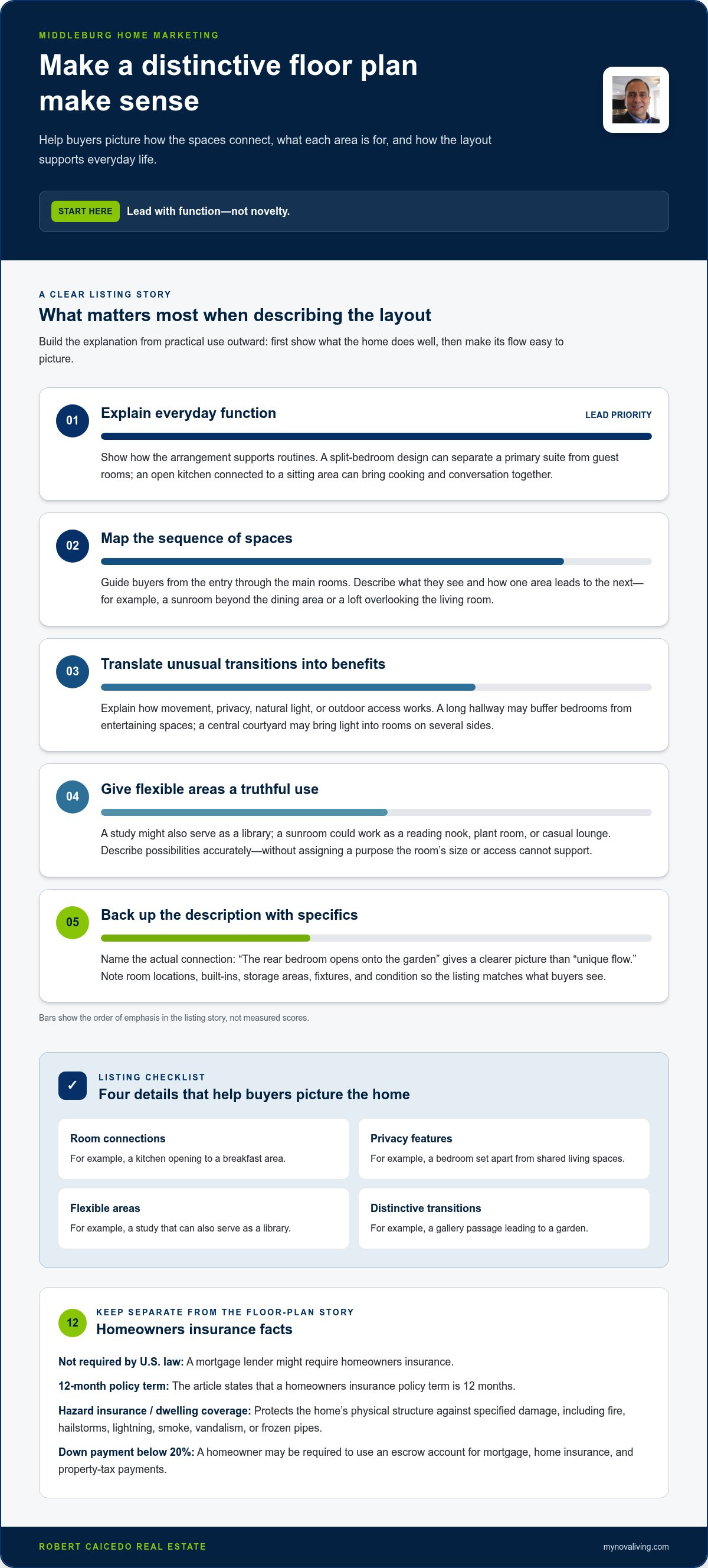
For sellers asking how to market a home with a unique floor plan in Middleburg, start with function, not novelty. Explain how the layout supports daily routines. A split-bedroom design, for example, can separate a primary suite from guest rooms. An open kitchen connected to a sitting area can link cooking and conversation naturally.
Map the home as a sequence of experiences. Describe what buyers see from the entry, then show how the main rooms connect. If a sunroom sits beyond the dining area, explain whether it works as a reading nook, plant room, or casual lounge. If a loft overlooks the living room, describe its potential as a work area or retreat.
Translate unusual transitions into practical benefits. A long hallway might create a quiet buffer between entertaining spaces and bedrooms. A central courtyard could bring light into rooms on several sides. Point out features that shape movement, privacy, natural light, and connections to outdoor areas. Describe spaces accurately, without suggesting a room can serve a purpose its size or access doesn’t support.
Build a listing checklist around details that help buyers picture the home:
- Room connections, such as a kitchen opening to a breakfast area.
- Privacy features, such as a bedroom separated from shared living spaces.
- Flexible areas, such as a study that can also serve as a library.
- Distinctive transitions, such as a gallery passage leading to a garden.
Pair each feature with a clear example. “The rear bedroom opens onto the garden” gives buyers a useful image. “Unique flow” doesn’t. Create an inventory checklist of rooms, built-ins, storage areas, and included fixtures. Note each item’s location and condition, then ensure the listing matches what buyers see during a visit.
Keep the home’s physical features separate from its insurance details. Homeowners insurance isn’t required by law in the United States, though a mortgage lender might require it. A homeowners insurance policy term is 12 months. Hazard insurance, also called dwelling coverage, protects a home’s physical structure against specified damage, including fires, hailstorms, lightning, smoke, vandalism, or frozen pipes. A homeowner with a down payment of less than 20 percent may be required to use an escrow account for mortgage, home insurance, and property-tax payments.
Present unusual spaces honestly, with a clear purpose and supporting detail. That precision helps buyers assess whether the layout suits their routines, from hosting in an open living area to finding quiet in a separate study.
How should photos, video, and floor-plan diagrams showcase an unconventional home layout?
Build a visual sequence that shows how rooms connect. Start with an exterior image, then move through the entry, main living areas, private rooms, and outdoor connections. For example, a photo from the foyer can show how a curved hall opens toward the living room. Each image should explain the home, not just capture an attractive detail.
Choose angles that explain scale and connection. Photograph the kitchen from the adjoining dining area to show how the spaces relate. Keep the camera level and avoid exaggerated wide-angle effects that can distort room proportions. Include a doorway, window, or familiar furnishing for context. A close-up of custom shelving can add character, but pair it with an image showing where the feature is.
Prepare each room before photographing. Clear walking paths, open doors to reveal useful sightlines, and switch on lights where they improve visibility. In a split-level home, show the stairs and landing together so buyers can follow the change in elevation. If a sunroom connects to a patio, capture both spaces to make the transition clear.
Use a simple visual checklist to plan the shoot:
- Show each major room and its connection to adjacent spaces.
- Capture transitions, such as a short stairway or gallery passage.
- Include built-ins, alcoves, and other features that affect room use.
- Keep image order consistent with the route a visitor would walk.
A video tour can make an unusual layout easier to understand. Move steadily from the entry through the main spaces, pausing at a split-level landing or open passage. Avoid quick pans that make room boundaries hard to follow. Brief narration can explain a specific feature, such as how a pocket door separates a study from the living area. Show the connection with the camera movement rather than relying on labels alone.
Make the floor-plan diagram a clear companion to the photos. Label rooms by their actual use, mark doors and stairs, and show how hallways connect spaces. Keep the orientation consistent with the tour when possible. If a room has more than one practical use, describe that flexibility in the listing instead of assigning it a misleading label. Check that the diagram reflects the home’s current layout.
Before publishing, review the photos, video, and diagram together. If the diagram shows an entrance to the garden, include an image that makes the route clear. Consistent visuals help buyers understand the layout before arranging a visit.
Which real estate websites and marketing channels reach buyers in Middleburg and Clay County?
Start with broad listing visibility, then add channels that help buyers understand the home. A local listing service can put the property in front of participating real estate professionals. Ask how the listing will appear on consumer search platforms, and keep its address, description, and images consistent wherever it is shared.
Major property-search websites, including Zillow, Realtor.com, and Redfin, let buyers browse listings by location and features. Use a clear headline and describe the layout in everyday language. A central courtyard brings light into the dining room tells buyers more than unusual design. Review the listing after it goes live to catch missing photos or incorrect room details.
Be precise about the location. For a home in Middleburg, identify the correct town and surrounding area in the listing, then describe its actual setting in the local community and Northern Virginia region. Accurate geography helps buyers searching by place find the property and understand its location. Do not confuse Middleburg with other regions or incorrect counties.
Coordinate each channel with the home’s strongest selling points:
- Use the listing service and consumer portals for the full description and property details.
- Share a short video tour on social platforms such as Facebook and Instagram.
- Send a focused email to interested buyers with a direct link to the listing.
- Offer printed property sheets at showings for visitors who want layout details offline.
Social posts should add context rather than simply repeat the headline. A Facebook post might explain how a main-floor suite sits apart from shared living spaces. An Instagram carousel could pair a room photo with a caption about its connection to the next space. Keep claims consistent with the listing and direct interested viewers to the complete property details.
Local connections can complement online exposure. Share the listing with community groups or professional networks when their rules allow property posts. A concise note about nearby destinations, such as Middleburg’s village center or a public trail, helps readers picture the setting. Describe access and distance accurately rather than implying a place is within walking distance.
Review the listing after launch: search by address, compare platform details, and correct inconsistencies. Track which channels generate meaningful inquiries, such as questions about the floor plan or requests for a showing. Use that feedback to decide which details to emphasize in later posts.
Robert Caicedo Real Estate: Seller Representation
Robert Caicedo Real Estate provides seller representation for homeowners preparing to present a distinctive property. Turn to this support when you’re ready to build a selling strategy around the home’s layout, features, and intended audience. A courtyard, split-level design, or connected studio space can benefit from a thoughtful explanation that helps buyers understand how the home works.
Seller representation can help you organize the listing story, position key features, and bring the presentation together across marketing materials. You’ll have a real estate partner throughout the selling process, from planning how to introduce the home to preparing it for buyer attention. The goal is an accurate, compelling account of what makes the property distinctive.
To explore seller representation, contact Robert Caicedo Real Estate or visit mynovaliving.com.
Shape the Next Chapter for Your Home
A distinctive home can invite buyers to imagine a different kind of daily life. Decide which story your property should tell, then make sure each detail supports that vision. If you’re considering how to market a home with a unique floor plan in Middleburg, connect the home’s design with the buyers who will value it.
Robert Caicedo Real Estate offers seller representation for homeowners preparing to sell and buyer representation for those searching for a home. Its new construction homes service can also support buyers exploring a newly built residence. Choose the path that fits your plans, whether you’re preparing to list or beginning a search.
Contact Robert Caicedo Real Estate to discuss your next real estate step. Your home’s individuality can become the beginning of someone else’s sense of belonging.


