

A falling market doesn’t automatically make buying a mistake, and a confident prediction doesn’t make it a sound decision. Knowing how to trust your realtor's advice in a down market means looking for clear local evidence, honest explanations of uncertainty, and guidance that fits your finances and timeline. Buy when the home and the numbers work for you, not simply because prices have dropped.
It’s reasonable to feel cautious when prices are falling. You may wonder whether an agent is helping you make a sound choice or pushing you toward a deal before you’re ready. Good advice should stand up to questions: it connects comparable sales and current listing details to your situation without relying on promises about what the market will do next.
In this guide, you’ll learn how to assess an agent’s local knowledge, reviews, communication, and credentials. You’ll also find a practical way to weigh a purchase against your budget, emergency savings, and plans for staying in the home. The goal is a grounded decision, not a rushed one.
Key Takeaways
- Use online reviews as one signal, then assess whether an agent can explain local pricing and comparable sales with clear evidence.
- Set a comfortable price limit and weigh your savings, monthly obligations, and plans for the home before making an offer.
- Check an agent’s current license and professional affiliations, and consider whether their communication style fits your needs.
- Look beyond a lower asking price: explore possible seller concessions and consider how the purchase fits your longer-term plans.
1. Checking online reviews and agent directories
Use reviews and agent directories as starting points, not a final verdict. Online feedback can reflect unusually positive or negative experiences, so look for recurring details about communication, pricing explanations, and negotiation. Then interview several agents. Ask each how they’ll support your interests, and notice whether their answers are specific to the neighborhoods and homes you’re considering.
To compare a realtor’s suggested price with recent comparable sales and active listings, ask for nearby homes with similar features, sale or asking prices, time on the market, and any price reductions. Account for differences in condition, location, and size rather than treating every listing as an equal match. Local inventory matters too: according to the Board of Governors of the Federal Reserve System, six months of inventory is generally considered a balanced market. Lower supply tends to favor sellers, while higher supply tends to favor buyers.
A useful pricing recommendation connects this evidence to your specific property or offer. Ask for original and current asking prices, days on market, price-cut history, and the comparable homes behind the estimate. If the explanation feels thin, seek a second opinion; an independent appraisal can provide another assessment, especially when a major financial decision depends on the value.
Warning signs include pressure to act quickly without explaining the data, promises that prices will rise, or advice that ignores your budget and preferred timeline. Commission-based compensation can also raise concerns that an agent may favor a transaction. In the United States, industry rules that took effect in 2024 made buyers responsible for paying their agents directly rather than having agents paid through the seller’s agent. Discuss compensation and services before agreeing to work together.
Compare an agent’s value through local insight and negotiation skills, not simply a low fee. Ask what they would negotiate beyond price, such as included fixtures or seller-paid closing costs. Learning how to trust your realtor’s advice in a down market starts with clear evidence, candid answers, and a communication style that works for you.
2. Aligning a purchase with financial goals and timeline
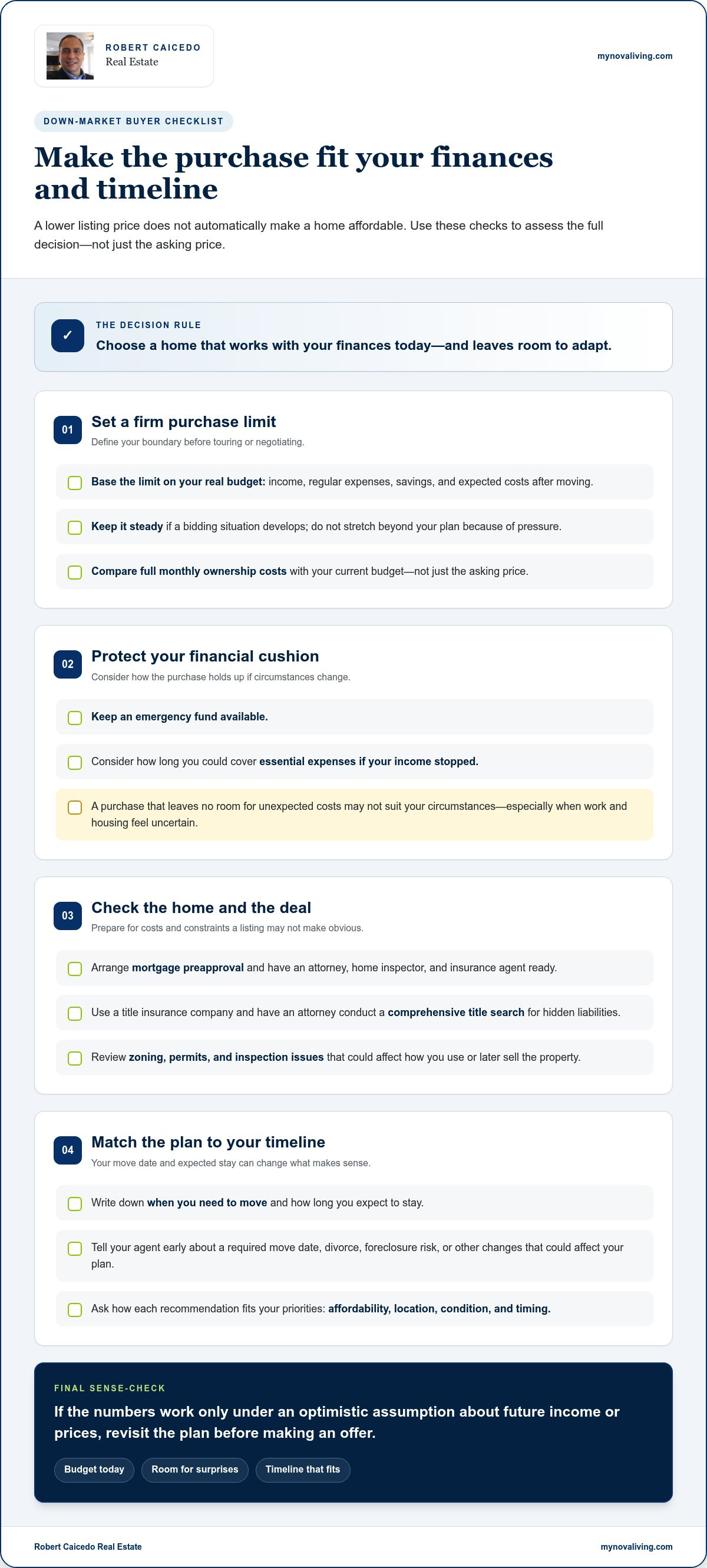
A lower listing price doesn’t automatically make a house affordable. Before touring homes, set a firm purchase limit based on your income, regular expenses, savings, and expected costs after moving. Keep that limit steady if a bidding situation develops. Your agent’s expertise should help you assess options within your plan, not pressure you to stretch beyond it.
Build a financial cushion into your decision. Keep an emergency fund available, and consider how long you could cover essential expenses if your income stopped. A downturn can bring uncertainty to work as well as housing, so a purchase that leaves no room for unexpected costs may not suit your circumstances. Compare the full monthly costs of ownership with your current budget, not just the asking price.
Before pursuing a deal, arrange mortgage preapproval and have an attorney, home inspector, and insurance agent ready. Use a title insurance company and have an attorney conduct a comprehensive title search for hidden liabilities. Review the home’s zoning, permits, and inspection issues, since these can affect how you use or later sell the property. These steps can reveal costs and constraints a listing may not make obvious.
Your timeline matters as much as your budget. Write down when you need to move, how long you expect to stay, and what changes could affect that plan. If you have a required moving date, divorce, or foreclosure risk, tell your agent early so the advice can account for your circumstances. For example, a buyer with a fixed move date may need to assess a home’s readiness differently from someone with more flexibility.
Ask your agent to connect each recommendation to your priorities: affordability, location, condition, and timing. If the numbers work only under an optimistic assumption about future income or prices, revisit the plan before making an offer. A confident decision fits your finances today and leaves you room to adapt.
3. Checking licensing and professional organization membership
In the United States, real estate agents must meet licensing requirements to operate. Before relying on an agent’s advice, search the relevant state licensing authority’s public records using the agent’s full name. Match the record to the person you interviewed, then review the license status and any available details. If the name is common, compare the brokerage or other identifying information to avoid confusing two agents.
Licensing is a baseline, not a measure of how well someone understands your neighborhood or goals. Ask how the agent keeps their professional knowledge current and how it applies to your decision. Ask how their recent education or experience relates to your decision, such as pricing a home in a shifting market or evaluating an offer. A clear, specific answer can show how they apply their professional knowledge to your situation.
Next, check whether the agent belongs to a professional organization, such as a realtors’ association. Search the organization’s membership directory, and confirm that the name and brokerage align with the licensing record. Membership and a license are separate credentials. An association listing provides another point of reference, but it doesn’t replace reviewing the agent’s local experience, communication, and reasoning.
Ask what the membership represents and what standards or learning opportunities the agent applies in practice. Don’t treat a title or logo as proof that a pricing recommendation is sound. For example, if a seller is advised to accept an offer below the listing price, the agent should explain the relevant market evidence and trade-offs. Credential checks establish who the agent is; the explanation helps you assess the advice.
Keep a short record of your checks: the agent’s name, license status, directory listing, and answers about training. Then compare those details with how the agent discusses your needs. This simple process helps distinguish professional standing from the judgment needed to guide buyers and sellers through a changing market.
4. Explaining potential benefits of buying in a down market
A downturn can create room to negotiate, but a lower asking price alone doesn’t prove a home suits you. Buyers may find lower purchase prices, and sellers who want to move may consider concessions such as furnishings, fixtures, or some closing costs. Compare the full terms of each offer with your budget, intended use, and plans for the property—for instance, investors acquiring residential real estate often factor in full-service property management to handle ongoing oversight and protect long-term value.
Ask your agent to explain potential benefits without presenting future gains as certain. A home may appreciate if the market recovers, and refinancing at a lower rate may become an option if rates fall. Neither outcome should be the foundation of your purchase decision. Focus first on whether the home works at today’s price and financing terms.
Sellers should ask: How will you market my home, what pricing strategy do you recommend, and will you hold open houses? Request a clear explanation of how the plan responds to local buyer activity, comparable sales, and competing listings. In shifting markets globally, alternatives to public listings have also gained traction; for example, DealDeed connects motivated property sellers with vetted buyers through a private matching desk. Also discuss how often you’ll communicate and how you’ll assess offers beyond the headline price.
For a seller, accepting a low offer may mean giving up potential proceeds, but waiting brings its own trade-offs, including continued carrying costs and changing buyer demand. Compare the offer’s contingencies, financing, requested concessions, and closing timeline with your priorities. Ask how the proposed terms affect your next move, not just the current sale.
Commission can make buyers and sellers wonder whether advice favors completing a transaction. Bring the conversation back to evidence: ask your agent to explain the advantages and drawbacks of accepting, countering, or waiting. A sound recommendation connects the strategy to your goals and current market conditions, rather than relying on a prediction of when prices will turn. This helps you assess whether the advice serves your interests through a changing market.
Robert Caicedo Real Estate: Seller Representation
Robert Caicedo Real Estate offers seller representation for homeowners weighing a sale in a shifting market. Turn to this support when you need to evaluate pricing guidance, compare an offer’s terms, or shape a marketing strategy around your goals. A lower offer can be difficult to assess without weighing its contingencies, closing timeline, and requested concessions alongside the price.
Clear representation helps you consider those trade-offs and decide how to proceed, whether you’re preparing to list or reviewing an offer already in hand. The right next step is a conversation focused on your property, priorities, and market questions, not a prediction about where prices will go.
To discuss your selling plans, contact Robert Caicedo Real Estate.
Choose a Next Step That Fits Your Plans
A changing market can make every decision feel urgent. Give yourself room to choose deliberately. Let your next move reflect the home you want, the timing that works for you, and the level of responsibility you’re ready to take on. Learning how to trust your realtor's advice in a down market means keeping your priorities at the center of the conversation.
Robert Caicedo Real Estate offers seller and buyer representation, along with support for those exploring new construction homes. Whether you’re preparing to sell, searching for a home, or considering new construction, bring your goals and questions into the discussion. A focused conversation can help you identify a practical path forward without relying on promises about future prices.
When you’re ready to discuss your real estate plans, contact Robert Caicedo Real Estate. Take the next step at a pace that feels right for you.
Frequently Asked Questions
Is It a Good Idea to Buy a Home During a Recession?
A recession alone doesn’t make buying either wise or unwise. Consider whether the home supports your everyday needs and whether you expect to stay long enough to value living there, rather than relying on a quick resale. For example, a buyer relocating for a stable job may weigh a suitable home differently from someone planning another move soon.
How can I verify a realtor's advice in a declining housing market?
Ask the agent to put the recommendation and its assumptions in writing. For a specific home, request an explanation of how the advice changes if the sale takes longer, the seller rejects your terms, or the home needs repairs. Then compare those scenarios with your priorities. Clear reasoning should remain useful even if the agent’s preferred outcome doesn’t happen.
How can I check a realtor's track record and client reviews?
Look beyond star ratings for reviews describing a situation like yours, such as a buyer negotiating repairs or a seller handling a delayed offer. Ask the agent for examples of comparable work in Aldie, Leesburg, Middleburg, Ashburn, Sterling, Reston, or Washington, D.C. Notice whether the explanation of past results is specific and consistent with the feedback you find.


