

A perfectly matched closing date isn’t the only way to make a move manageable. Managing the stress of selling and buying at the same time in DC starts with a clear financial plan and a timeline built around your circumstances. Whether you sell or buy first depends on market conditions, your available equity, and how you’ll cover the gap if the transactions don’t align.
There’s a lot to coordinate: sale proceeds, purchase financing, moving dates, and the possibility of temporary housing or storage. A bridge loan may help you buy before your current home sells, but qualification depends on factors such as your credit, debt-to-income ratio, and repayment plan. This guide explains how to map out costs and timing, assess bridge-loan considerations, prepare a practical backup plan, and coordinate both transactions with one agent, so you can move forward with greater clarity and less last-minute pressure.
Key Takeaways
- Map expected sale proceeds, purchase costs, and a financial buffer before setting your move plan.
- Choose whether to sell or buy first based on market conditions and how you’ll manage any overlap between homes.
- Assess bridge-loan eligibility around your income, debt, credit, and repayment plan, and prepare a backup for a timing gap.
- Coordinate offer terms, closing dates, and moving logistics through one agent to keep both transactions aligned.
How a real estate professional plans the finances and timing of a simultaneous home sale and purchase
Start with a side-by-side budget for your current home and next purchase. Estimate sale proceeds after paying off the outstanding mortgage and any HELOC at closing. Then account for the next home’s down payment, loan costs, moving expenses, and a buffer for timing changes. This helps you set a purchase budget based on usable equity, not just your current home’s estimated sale price.
If you’re upsizing, map the move against your priorities: the space you want, preferred neighborhoods, and the likely sale process. Buying before selling may mean carrying mortgages on two homes. Selling first clarifies your purchase budget, but you may need temporary housing. The right sequence depends on market conditions and your ability to manage overlapping costs.
DC sellers’ closing costs and transfer taxes don’t add up to one fixed total. The estimate depends on the transaction and its costs, including any mortgage or HELOC payoff and negotiated terms. Lay out those items alongside expected proceeds to see how much you’ll have available for your next home.
Include recordation and transfer taxes as separate line items in your DC purchase budget. Account for the applicable rates and total cost alongside lender and title charges when estimating closing costs.
A standard home closing typically takes 30-45 days. A professional works backward from that window to coordinate listing, offer, financing, and move dates. Sale and purchase closings can be scheduled on the same day or one day apart, though the plan needs room for delays.
A sale contingency makes your purchase offer depend on selling your current home, often successfully closing that sale. Sellers may continue considering other offers, so the contingency can affect how competitive your offer appears. A professional aligns the offer terms with your sale timeline and financing plan.
The main risks are an unexpected delay, lower-than-expected sale proceeds, or overlapping housing payments. Model these scenarios before committing, including what happens if your sale closes later than planned. That preparation makes managing the stress of selling and buying at the same time in DC a series of coordinated decisions, not one all-or-nothing deadline.
2. Bridge loans and qualification requirements
A bridge loan is short-term financing that can cover a down payment until your current home sells. It may help you make an offer without a sale contingency, but it adds another debt obligation during the move. Lenders generally consider factors such as credit, debt-to-income ratio, and your plan for selling the existing home.
Income matters, too. If you’re carrying an existing mortgage, you need enough income to qualify for a second mortgage within the lender’s debt-to-income limits. Align your purchase timing with your sale plan, while the lender assesses your qualification and loan terms. Keeping those roles clear grounds the financing strategy in both your transaction schedule and borrowing capacity.
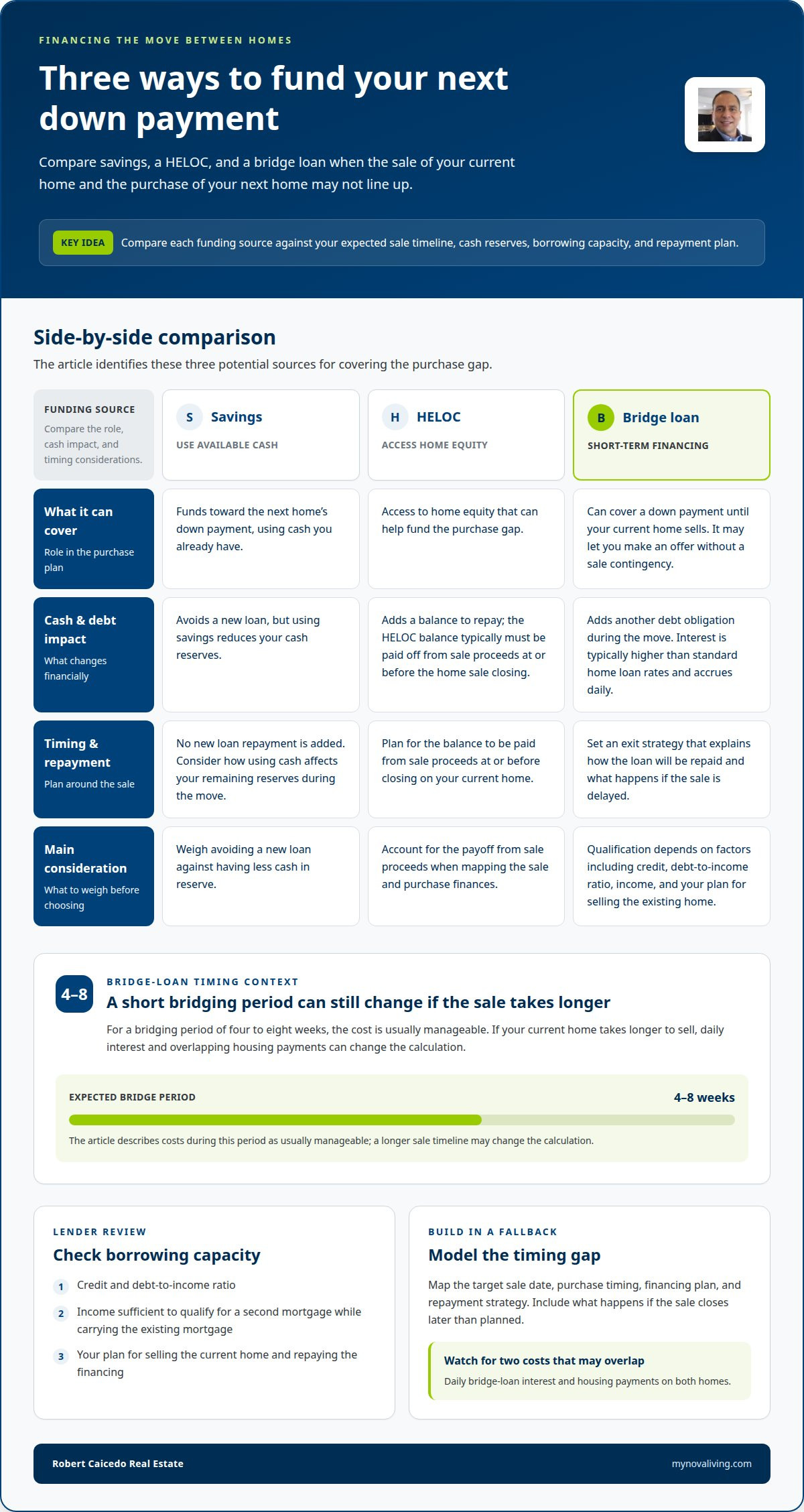
Compare three potential funding sources: savings, a HELOC, and a bridge loan. Using savings avoids a new loan but reduces your cash reserves. A HELOC provides access to home equity, but its balance typically must be paid off from sale proceeds at or before the home sale closing. A bridge loan may provide the down payment before the sale, but its interest is typically higher than standard home loan rates and accrues daily.
Ask your financing professional to compare each option against the expected sale timeline. For a bridging period of four to eight weeks, the cost is usually manageable. If your current home takes longer to sell, daily interest and overlapping housing payments can change the calculation. Make sure the exit strategy explains how the loan will be repaid and what happens if the sale is delayed.
A real estate professional can coordinate the offer timeline with the financing plan, including a target sale date and a fallback if closing shifts. Buyers considering a purchase before their home sells should consult a lender or mortgage broker about qualification and the repayment plan. Clear dates make managing the stress of selling and buying at the same time in DC more deliberate, especially when financing depends on sale proceeds.
How a real estate professional helps prepare for temporary lodging, short-term loans, or storage
A real estate professional builds a backup plan around the order of your sale and purchase closings. If you sell first, temporary housing can bridge the gap before your next home is ready. Options include an apartment, hotel, Airbnb, or a stay with friends or family. The professional can help align the move schedule with your transaction dates, so you can plan where you’ll stay and when your belongings need to move.
A rent-back agreement may offer another option after selling. It can let you stay in the home for a short period after closing by renting it from the buyer. Factor the arrangement into the sale timeline and coordinate it with your next purchase. It may give you more time to move, but it doesn’t replace planning your next housing arrangement.
If your DC home sale closes after your purchase closing, prepare for possible overlapping mortgage payments. A real estate professional can help map the expected dates and identify whether savings or short-term financing could cover the gap. The financing option, repayment plan, and length of the overlap shape the decision.
Storage can help if the new home isn’t ready for every item or you need to move out first. Plan the sequence: movers can take selected belongings to storage while essentials go to temporary lodging. This makes it easier to buy and sell without forcing every possession into one moving day.
For a backup plan, track the sale closing, purchase closing, lodging dates, mover schedule, storage needs, and any potential overlap in housing costs. If a date shifts, you’ll know which arrangements to update first. This turns a timing problem into clear next steps and keeps lodging, financing, and moving logistics connected to both transactions.
4. Coordinating both transactions with one agent
One agent can connect the sale and purchase timelines, keeping the next steps for each transaction visible together. For a DC move, that means tracking listing preparation, buyer offers, purchase terms, inspections, financing milestones, and both settlement dates. If one date changes, the agent can communicate how it affects both deals instead of treating them as separate calendars.
A shared timeline also reveals dependencies. If your purchase offer depends on selling your current home, track the sale’s progress alongside the purchase deadlines. If an inspection or financing milestone shifts, your agent can help coordinate communications and explain how the change affects the other transaction.
- Track both settlement dates and the move-out and possession dates tied to each home.
- Keep offer terms, contingency dates, and financing milestones in one coordinated timeline.
- Share changes promptly with the people involved in each transaction.
This approach is especially useful when the two contracts have different deadlines or conditions. Your agent can help you understand which dates are fixed, which may be negotiable, and what a change could mean for your situation. For example, moving a sale settlement may affect when proceeds become available for the purchase, while a delayed purchase closing may affect your moving arrangements.
Coordination also supports clearer decisions during negotiations. Consider how a proposed sale term fits your purchase offer instead of assessing it in isolation. If a buyer requests a different settlement date, weigh that request against your purchase schedule and housing plan. The goal is one connected timeline, not two contracts moving forward independently.
Before accepting an offer or committing to a purchase date, review the sequence of deadlines across both transactions with your agent. A single view of the timeline helps reveal where the plan is tight and where flexibility matters. With that coordination, managing the stress of selling and buying at the same time in DC becomes easier to organize, one decision at a time.
Robert Caicedo Real Estate
Robert Caicedo Real Estate can bring your sale and next purchase into one considered plan. Turn to the team when you’re weighing which home to sell first, setting a purchase budget, or aligning offer terms with your moving timeline. Seller Representation and Buyer Representation support both sides of the transition, helping you make decisions with the full move in view.
If a new-build home or investment property is part of your next step, those priorities can also shape your search and planning. Share your goals, preferred timing, and the details that matter most for your move. Contact Robert Caicedo Real Estate to discuss coordinating your sale and purchase.
Shape your next move with intention
Your next step is to turn competing dates and decisions into a plan that reflects how you want to live. Consider what matters most in your next home, how much flexibility you have around moving, and which decisions need to happen first. That clarity can make managing the stress of selling and buying at the same time in DC feel more purposeful, even when plans shift.
With guidance tailored to your priorities, you can treat the transition as more than two transactions. You’re creating your next chapter at home, and your plan can keep that goal at the center.
Contact Robert Caicedo Real Estate to discuss the move you’re planning. Your next home can begin with a thoughtful conversation and a clear sense of what comes next.
Frequently Asked Questions
How does buying and selling a home at the same time work in Washington, DC?
You’re coordinating two linked transactions: selling your current home and purchasing the next one. The sequence depends on your finances, the market, and whether your purchase offer relies on your sale. For example, you might accept a sale offer before making a purchase offer, or plan a purchase while your current home is listed. A shared calendar helps keep important dates and decisions connected.
How can a bridge loan or HELOC help fund a new home before selling?
A bridge loan may provide down-payment funds before your current home sells; a HELOC lets you borrow against existing home equity. Each option creates a repayment obligation, so compare the borrowing terms and plan how you’ll use sale proceeds. Include a delayed sale in the repayment plan. A HELOC balance is typically paid from sale proceeds at or before closing.
How do rent-back agreements work in Washington, DC, and what do they cost?
A rent-back agreement lets a seller stay in the home for a short period after closing by renting it from the buyer. The parties agree on the arrangement’s length, payment, and other terms as part of the transaction. There’s no single cost that applies to every DC sale. The agreed payment and duration determine the expense, so include both in your moving budget.
How can a DC real estate agent, lender, and settlement company coordinate both closings?
Everyone can coordinate around a shared schedule, tracking the dates and information relevant to their role. The agent aligns offer terms and transaction milestones, while the lender manages financing milestones and the settlement company coordinates closing details. If a date changes, timely communication helps everyone understand which deadlines or moving arrangements may also need adjustment.


