

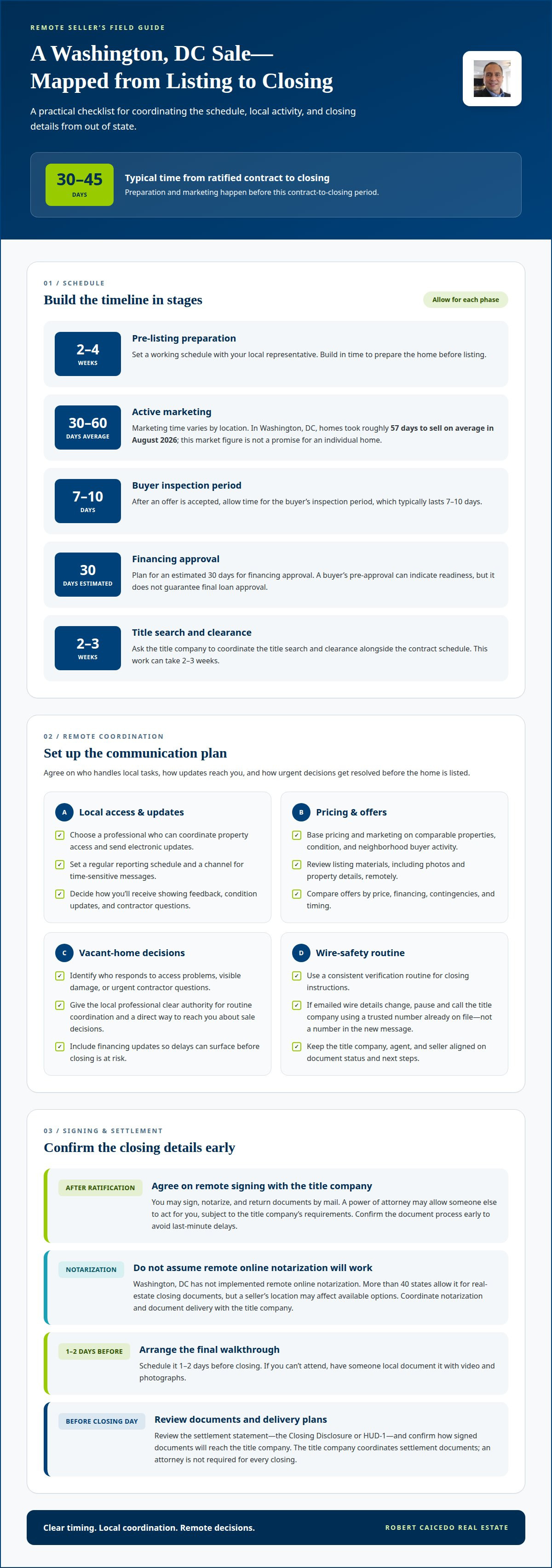
Distance doesn’t have to put your Washington, DC home sale on hold. Understanding how to sell a Washington DC property while living out of state starts with a local professional coordinating preparation, showings, offers, and closing details while you make decisions remotely. After the contract is ratified, closing typically takes 30 to 45 days.
It’s natural to wonder how repairs, cleaning, and buyer visits can be handled smoothly when you’re not nearby. A clear plan and regular communication make each step easier to manage without requiring travel for every decision.
This guide explains how to prepare the property remotely, coordinate the sale, and plan for signing and closing. It also covers tax considerations that may affect your proceeds, so you can move forward with a clearer picture of what to expect.
Key Takeaways
- Build a realistic sale schedule: a typical Washington, DC transaction takes 30 to 45 days from ratified contract to closing, in addition to preparation and marketing.
- Set up a remote communication plan for property access, buyer feedback, urgent decisions, and closing documents before the home is listed.
- Understand how the primary-residence test, your filing status, and the property’s use may shape potential capital gains taxes.
- Seller Representation can bring local coordination to repairs, presentation, showings, offers, and the decisions that keep an out-of-state sale moving.
Typical listing, marketing, and closing timelines
A typical Washington, DC sale involves preparation, listing, marketing, a contract, and closing. An attorney is not required for every closing, while the title company coordinates settlement documents.
-
Map the Listing-to-Closing Timeline
Set a working schedule with your local representative before listing, and build in time for preparation, marketing, and buyer review. The pre-listing phase usually takes 2-4 weeks, while active marketing averages 30-60 days and varies by location. Homes in Washington, DC, took roughly 57 days to sell on average in August 2026; that market figure isn’t a promise for an individual home.
After an offer is accepted, allow for the buyer’s inspection period, typically 7-10 days, and financing approval, estimated at 30 days. Most standard transactions take 30 to 45 days from ratified contract to closing. Ask the title company to coordinate the title search and clearance, which can take 2-3 weeks, alongside the contract schedule.
-
Arrange Remote Signing and Closing
Agree on signing arrangements with the title company as soon as the contract is ratified. You can sell without attending in person by signing, notarizing, and returning documents by mail. A power of attorney may allow someone else to act for you, subject to the title company’s requirements. Confirm the document process early to avoid last-minute delays.
Washington, DC hasn’t implemented remote online notarization. More than 40 states allow it for real-estate closing documents, so an eligible seller’s location may affect available signing options. Don’t assume a remote online session will work for a DC transaction; coordinate notarization and document delivery with the title company.
-
Schedule the final details.
Have the final walkthrough scheduled 1-2 days before closing. If you can’t attend, arrange for someone local to document the walkthrough with video and photographs. Review the settlement statement, called the Closing Disclosure or HUD-1, before closing day, and confirm how signed documents will reach the title company.
Remote-sale communication and emergency planning
A nonresident can sell a Washington, DC property without being physically present for every step. A clear communication plan helps keep local activity, buyer questions, and urgent property needs moving while you make decisions remotely.
-
Choose an Agent for Remote Sales
Choose a real estate professional who can coordinate local access, send electronic updates, and explain decisions before action is needed. Set a regular reporting schedule and a channel for time-sensitive messages. To manage how to sell a Washington DC property while living out of state, decide how you’ll receive showing feedback, property-condition updates, and contractor questions. Avoid approval processes that leave decisions waiting while you’re away.
-
Price, Market, and Negotiate Remotely
Set pricing and marketing based on comparable properties, the home’s condition, and buyer activity in its Washington, DC neighborhood. Ask the professional to send listing materials, including photos and property details, for your review. When offers arrive, weigh price alongside financing, contingencies, and timing. A buyer’s pre-approval can indicate financing readiness, but it does not guarantee final loan approval.
-
Prevent Wire Fraud and Closing Delays
Use a consistent verification routine for closing instructions. If emailed wire details change, pause and call the title company using a trusted number already on file, not one in the new message. An out-of-state owner can complete a remote sale, but delayed signatures or document delivery can disrupt settlement. Keep the title company, agent, and seller aligned on document status and next steps.
-
Plan for Vacant-Home Issues
Before the property is vacant, decide who will respond to access problems, visible damage, or an urgent contractor question. Give the local professional clear authority for routine coordination and a direct way to reach you about decisions affecting the sale. Buyers’ agents can document a final walkthrough with video and photos. If you’re considering how to sell a Washington DC property while living out of state, include financing updates in the communication plan so delays surface before closing is at risk.
Capital gains taxes and possible state tax credits
For a nonresident seller, DC withholding can affect the proceeds shown at settlement. The closing statement should identify any withholding, while your final tax liability depends on the applicable filings and your circumstances.
- Check whether the home qualifies for the Section 121 exclusion. According to the Internal Revenue Service, a seller must have used the property as a primary residence for at least 2 of the 5 years before sale. The Internal Revenue Service says the exclusion can shelter up to $500,000 of gain for married taxpayers filing jointly, or $250,000 for a single filer. Compare your occupancy history with those requirements before estimating taxable gain.
- Separate sale proceeds from taxable gain. Gain generally depends on the home’s adjusted tax basis and sale proceeds, not simply its selling price. Gather purchase and improvement records, and review the property’s condition and documented capital improvements with a tax professional. If the home was rented, depreciation recapture may affect the calculation; rental history matters even if the property is now vacant.
- Account for DC transfer and recordation taxes. DC’s transfer tax rate is 1.1 percent for properties selling for $400,000 or less, and 1.45 percent above $400,000. The recordation tax follows the same rate structure. Have the sale contract state how both costs are allocated between buyer and seller, then review those line items in the settlement statement. An inspection or repair agreement can also affect the final figures.
- Plan for withholding and state tax credits. The settlement team records applicable DC withholding on the closing paperwork, which you should keep for your tax filing. Selling property outside your state of residence may involve tax in DC and your home state. A state tax credit may offset double taxation, depending on the rules and your situation. Ask a licensed tax professional to review the sale, especially if the home is part of an estate or has rental history. Keep settlement records and receipts for belongings or improvements separate from tax-basis documentation.
Professional coordination of repairs, cleaning, staging, and showings
- Set the property’s preparation plan. Have a local real estate professional assess the home’s condition and coordinate suitable contractors for agreed repairs, cleaning, and staging. For a vacant property, arrange access and keep records of completed work, invoices, and issues that need your approval. Prioritize visible maintenance and a clear presentation instead of starting projects without a defined purpose.
- Review disclosures and property details. Washington, DC sellers must complete a Seller’s Disclosure of Property Condition covering known material defects, including structural issues, roof condition, plumbing, electrical systems, drainage, and environmental hazards. For a home built before 1978, the U.S. Environmental Protection Agency says sellers must provide buyers a Lead-Based Paint Disclosure form. Buyers must be allowed 10 days for lead paint testing if they choose.
- Coordinate occupied-home access. If tenants live in the property, schedule showings with advance notice, usually 24-48 hours. The professional can coordinate appointments with occupants and showing agents, then share feedback so you can consider adjustments to presentation. For a rental property, account for the Tenant Opportunity to Purchase Act, which gives tenants a right of first refusal before a sale to a third party. Have the sale timeline reflect applicable tenant steps.
- Keep repair decisions moving. Agree on how the professional will send photos, contractor estimates, and approval requests before work begins. Decide which repairs you’ll approve, which need further discussion, and who can provide access if a contractor arrives while you’re away. After a buyer’s inspection, consider requested repairs in light of the contract and the home’s condition. Coordinate your response with the real estate professional and attorney; mortgage-related deadlines may also affect the buyer’s timing.
Robert Caicedo Real Estate: Seller Representation
Robert Caicedo Real Estate provides seller representation for owners preparing to sell a Washington, DC property from out of state. The service brings local perspective to pricing, presentation, marketing, offers, and the decisions that shape a sale. You stay involved in key choices while coordinating from your current home.
Turn to seller representation when you want professional guidance through the selling process, especially for arranging access, reviewing buyer feedback, or responding to an offer remotely. If the property is part of an investment portfolio, investment property consulting can inform your broader real estate decisions.
For a sale that calls for a considered plan and attentive coordination, contact Robert Caicedo Real Estate to discuss seller representation.
Shape Your Next Move With Confidence
Knowing how to sell a Washington DC property while living out of state gives you a starting point. Decide what a successful transition looks like: a clear handoff, thoughtful presentation, or a sale that supports your wider plans. Those priorities can guide conversations and keep decisions aligned as the property changes hands.
Professional representation brings a local perspective to the decisions ahead. Robert Caicedo Real Estate provides seller representation for owners preparing to bring a home to market. Buyer representation and new construction home services also support clients planning their next residential move.
When you’re ready to discuss your property and priorities, connect with Robert Caicedo Real Estate. Take the next step at your own pace, with a plan shaped around the home and the future you have in mind.
Frequently Asked Questions
How can a real estate professional get a Washington, DC house ready from a distance?
A real estate professional can coordinate local access, gather property information, and send updates when you need to make a decision. For example, they can arrange for a contractor to assess a reported issue, then share the findings so you can decide whether to proceed. Organize ownership records, appliance details, and available repair receipts for accurate listing information and buyer questions.
Can I close without coming back?
Yes, you can close without returning to Washington, DC. The title company coordinates signing and specifies how documents must be notarized and delivered. If you authorize someone else to act for you through a power of attorney, the title company’s requirements still apply. Agree on the signing method and document delivery plan early in the transaction.
How can a real estate professional prepare a Washington, DC property for sale?
A real estate professional can assess how to present the home’s condition, layout, and location to buyers. They can coordinate access for cleaning or repairs, organize listing details, and communicate what needs your approval. For a condominium, preparation can also include gathering available association materials, such as information about fees, assessments, building rules, and planned projects.
How will I receive the sale proceeds?
The settlement process disburses sale proceeds after applicable expenses and obligations are accounted for. The settlement statement shows the transaction’s credits, debits, and resulting amount due to you. Before closing, coordinate your preferred payment method and delivery details with the title company. Treat changed payment instructions cautiously and verify them independently using contact information you already trust.
What steps can a real estate professional manage to sell a Washington, DC property remotely?
A real estate professional can coordinate local preparation, listing presentation, buyer access, offer communication, and transaction updates while you make decisions from out of state. Agree on how approvals will be requested and documents shared. If the property is a rental or inherited home, clarify ownership and occupancy details early, since they can affect the sale process and required paperwork.
What are the DC real estate transfer and recordation tax rates for sellers?
Washington, DC’s transfer tax rate is 1.1 percent for properties selling for $400,000 or less, and 1.45 percent for properties selling above $400,000. The recordation tax uses the same rate structure. The sale contract should specify how these costs are allocated between buyer and seller, so review the allocation in the contract and settlement statement before closing.


