

A brief, personal conversation is often the clearest way to tell neighbors you’re selling your house in Ashburn. Let them know before the listing goes public, share only what you’re comfortable discussing, and keep the tone warm and matter-of-fact. If you’re deciding how to tell neighbors you’re selling your house in Ashburn, a simple heads-up can preserve goodwill without turning the conversation into a lengthy discussion.
It’s natural to value your privacy or worry about how neighbors will react. You can be considerate without sharing every detail about your plans, timeline, or reasons for moving.
This guide covers when to speak with neighbors, how to raise concerns directly and neutrally, and what to say if someone is interested in buying. You’ll also find practical ways to keep conversations comfortable as your home approaches the market.
Key Takeaways
- Give nearby neighbors a considerate heads-up before your home is listed, and keep the message brief.
- Raise practical concerns calmly and make a clear, specific request when an issue could affect showings.
- Protect your privacy with a neutral explanation, such as saying you’re ready for a change.
- If a neighbor wants to buy, invite them to make a formal offer and consider it alongside your selling plans.
Approaching neighbors politely before listing
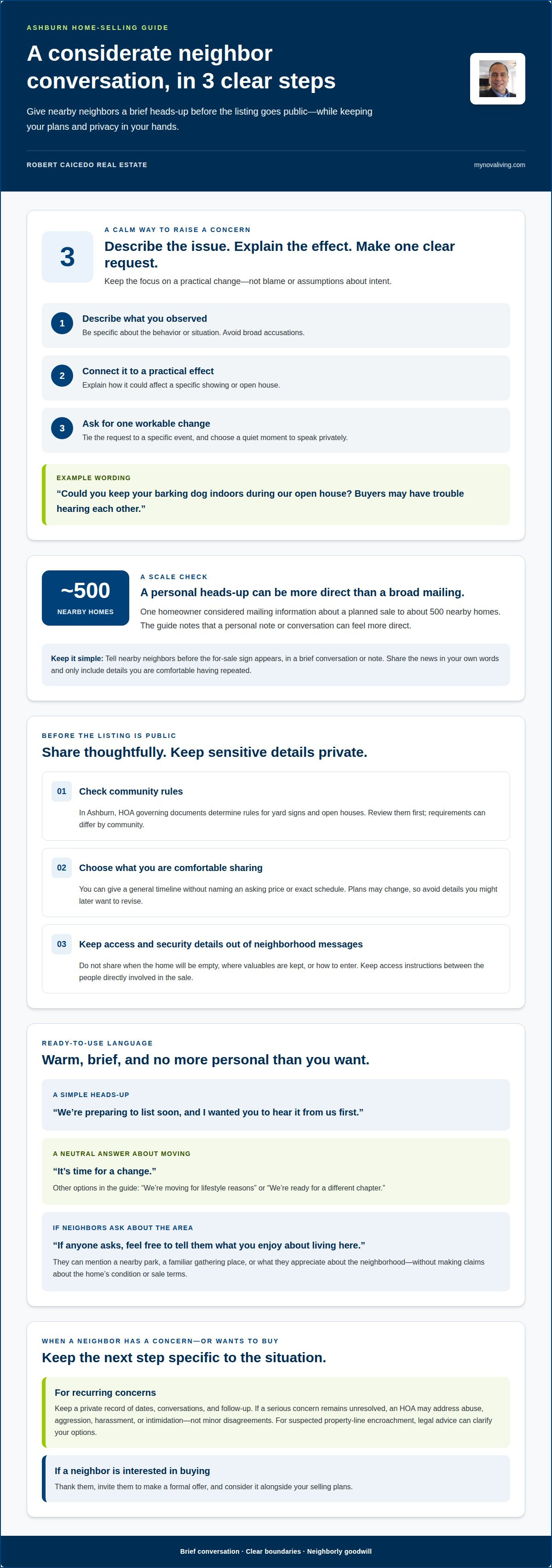
Tell nearby neighbors before the for-sale sign appears, ideally in a brief conversation or note. A simple heads-up gives them context before buyers arrive and lets you share the news in your own words.
In Ashburn, Virginia, your HOA’s governing documents determine the rules for yard signs and open houses. Review them before discussing sign placement or inviting neighbors to an event, and don’t assume every community has the same requirements.
Details to Share With Neighbors
Decide how much you want to share about your asking price, listing date, and open-house plans. Share only what you’re comfortable having repeated. You can give a general timeline without naming a price or exact schedule. For example: “We’re preparing to list soon, and I wanted you to hear it from us first.” This keeps the conversation courteous, protects your privacy, and leaves room for plans to change.
Keep safety in mind when deciding what to reveal. Don’t share when the home will be empty, where valuables are kept, or details about how to enter. Even well-intentioned information can travel beyond the people you tell. Keep access instructions between the people directly involved in the sale, rather than sharing them in a neighborhood-wide message.
Neighbor Word-of-Mouth
Neighbor word-of-mouth means offering someone considering a move a brief, positive description of your home and community. Ask neighbors to speak warmly but briefly if prospective buyers ask about the area. They can mention a nearby park, a familiar gathering place, or what they appreciate about the neighborhood without making claims about your home’s condition or sale terms.
Keep the request simple: “If anyone asks, feel free to tell them what you enjoy about living here.” One homeowner considered mailing information about a planned sale to about 500 nearby homes, but a personal note or conversation can feel more direct. Use real estate details only when you’re ready to share them, and let interested buyers seek formal listing information.
Discussing problems directly with neighbors
A calm, specific conversation can address a neighbor issue before it complicates showings. Describe the behavior, explain its practical effect, then make one clear request. For example: “Could you keep your barking dog indoors during our open house? Buyers may have trouble hearing each other.” This focuses the discussion on a workable change rather than blame or assumptions about intent.
Choose a quiet moment and speak privately, not across the street or in a neighborhood group chat. If you have a friendly relationship, acknowledge it before raising the concern. For example, if your children have enjoyed playdates with the neighbors over the years, you might say: “We’ve enjoyed the kids spending time together. Could we talk about the noise during showings?” Keep your tone steady, even if the situation feels frustrating.
Make your request concrete and connect it to a specific event. If a dog barks during an open house, ask whether it can stay indoors for that gathering. If a shared boundary or overgrown lawn concerns you, describe what you observed and what would help. Avoid broad accusations; a clear request gives your neighbor something practical to respond to.
For a recurring concern, keep a private record of dates, conversations, and follow-up. Neighbor issues generally aren’t considered material defects unless they involve ongoing legal disputes, formal complaints or lawsuits, or documented issues tied to the property. Distinguishing an occasional irritation from a persistent, documented problem can help you understand the situation.
If a direct conversation doesn’t resolve a serious concern, choose your next step based on the issue. A homeowners’ or condominium association may address abuse, aggression, harassment, or intimidation, rather than minor disagreements. For suspected property-line encroachment, legal advice can clarify your options. Keep communication factual and focused on resolution, especially while preparing your home for buyers.
Neutral ways to explain a move
Keep your explanation brief and centered on what you’re comfortable sharing. A neutral response acknowledges the sale without inviting discussion of private decisions.
Neutral Reasons for Moving
A neutral reason describes your plans without inviting debate about personal circumstances. You aren’t required to explain why you’re moving, so choose a phrase that feels natural and protects your privacy. For example, say, “It’s time for a change,” or, “We’re moving for lifestyle reasons.” Either answer is complete without details about work, family, or finances.
You can also say you’re relocating for personal reasons. If a neighbor asks whether something is wrong with the home or community, gently redirect: “Nothing specific, we’re ready for a different chapter.” This keeps the focus on your decision, rather than speculation about Ashburn or your property.
Notes and Conversation Wording
A note or conversation gives neighbors a clear, personal explanation of the upcoming sale. Start warmly, say you’re preparing to move, and close with appreciation. For example: “We wanted to let you know we’re getting ready to sell. We’ve appreciated being your neighbors and wanted to share the news directly.”
For an in-person conversation, use the same structure and give the other person time to respond. If they ask why, repeat a neutral line instead of adding a reason you’d rather keep private. If you’re writing to several neighbors, personalize each greeting and avoid wording that sounds like a sales pitch or asks them to endorse the home.
Match your message to the relationship. A close neighbor may appreciate a personal conversation, while a brief note may suit someone you rarely see. Keep both versions consistent about the sale, and avoid details you may later want to change, such as an exact move date. A calm, concise explanation makes the transition easier to discuss.
Responding when a neighbor expresses interest in buying
A neighbor’s interest can open a useful conversation, but keep your plans and options clear. Thank them, explain how you intend to handle the sale, and don’t agree to pause your listing before receiving a serious offer.
You might say, “Thanks for letting me know. Please make an offer once the home is listed, and we can consider it then.” This sets a clear next step without promising a private sale. It also gives you room to compare the proposal with your selling plans and any interest that follows.
A friendly relationship doesn’t establish whether a buyer is ready to proceed. Before putting a market listing on hold, consider whether the neighbor has made a specific offer and is prepared to move forward. A general comment such as “I might be interested” gives you little to evaluate. Ask for a formal offer through your chosen process rather than negotiating details casually over the fence.
Keep the conversation separate from neighborhood expectations. You can appreciate the neighbor’s interest without promising early access, a special price, or priority. A private approach may reflect genuine interest, but it may also involve an attempt to buy below market value. Evaluate the actual offer and your goals rather than relying on familiarity alone.
If the neighbor wants to discuss terms before listing, say you’re still preparing and will consider a clear offer once the home is on the market. Avoid commitments about timing or withdrawing the listing based only on verbal interest. This preserves your options while allowing the neighbor to participate with a defined offer.
For a sale involving a buyer relocating internationally, cross-border considerations may add another layer to the transaction. Explore support for your home sale when you’re weighing an interested buyer against your broader plans.
The author says this situation came up twice that week, a reminder to assess a private buyer’s seriousness before putting a market listing on hold.
Robert Caicedo Real Estate
Robert Caicedo Real Estate helps connect conversations with neighbors to the broader decisions involved in selling your Ashburn home. Through seller representation, the firm supports you as you prepare for the market, evaluate an interested neighbor’s offer, and decide how to proceed. The focus is a clear process that keeps your priorities in view, from early conversations through your next move.
If you’re weighing a private offer, planning a sale, or considering a purchase after moving, real estate guidance can help you assess your options in context. Contact Robert Caicedo Real Estate to discuss your plans and the representation that fits your next step.
Make your next move with confidence
A conversation with neighbors is one small part of a larger transition. As you decide how to tell neighbors you’re selling your house in Ashburn, keep your next chapter in view, too. The home you leave and the place you choose next are connected decisions, and a clear plan can make each feel more intentional.
Robert Caicedo Real Estate can support your next purchase through Buyer Representation, including if you’re considering a New Construction Home. When you’re ready to talk through your plans, contact Robert Caicedo Real Estate. Take the next step at a pace that feels right for you, and look forward to what comes next.
Frequently Asked Questions
What is the best way to tell neighbors you’re selling your house?
A direct, considerate message works well: tell neighbors you’re preparing to sell and thank them for being part of the community. Choose a private conversation with nearby neighbors you know well, or send an individual note if your schedules rarely align. In Ashburn, focus on your own plans rather than inviting speculation about the home or neighborhood.
When should you tell neighbors you’re selling your home?
Tell close neighbors once your decision to sell is firm and you can share an accurate update. That gives you a chance to speak personally rather than letting them hear about the move unexpectedly. If your timing is unsettled, keep the conversation general and wait to share details until you’re comfortable.
Is it better to tell neighbors before or after signing a listing agreement?
There’s no universal rule that ties neighbor communication to signing a listing agreement. You can give neighbors a personal heads-up before or after signing, depending on when your plans are settled and what you’re ready to share. If you’ve engaged a real estate agent, align public announcements with the marketing plan while keeping personal conversations with neighbors separate.
How do Ashburn real estate agents handle neighbor outreach and coming-soon listings?
An agent can help coordinate communication with neighbors and the planned launch of your home, including whether a message is a private courtesy or a broader promotion. “Coming soon” approaches can differ, so clarify what information will be shared, with whom, and when. Seller representation can help keep those decisions connected to your overall sale strategy.


