

A long inspection report doesn’t mean you should ask the seller to fix everything. Knowing how to handle buyer repair requests after inspection in Sterling starts with separating significant concerns from routine maintenance and cosmetic wear, then checking what your signed agreement allows. That distinction can shape your negotiations and your path to closing.
It’s understandable to worry that raising concerns could affect your purchase timeline. A repair request is a negotiation, not a guarantee of repairs. The right response depends on the inspection findings, your contract terms, and the priorities that matter most to you.
This guide explains how to assess inspection findings, compare possible responses such as repairs or credits, and make a timely, well-documented decision. Robert Caicedo Real Estate represents buyers in Sterling and across Northern Virginia, including Aldie, Leesburg, Middleburg, Ashburn, Reston, and Washington, D.C.
Key Takeaways
- Separate observed conditions from recommendations for further evaluation, then focus on findings that matter to your decision.
- Compare seller repairs, a credit, a price adjustment, or proceeding as-is, while keeping contract terms and other requirements in view.
- Learn how to handle buyer repair requests after inspection in Sterling by grounding your priorities in inspection evidence and communicating within your agreement’s timeline.
- Keep your request focused and practical. The inspection report informs the discussion but doesn’t determine what the seller will accept.
- Buyer representation can help you organize your options and communicate your priorities without promising a particular outcome.
After a Sterling Home Inspection: What a Repair Request Can, and Cannot, Do
An inspection report gives you a clearer picture of a home’s visible condition. It doesn’t automatically require the seller to make repairs, set a repair budget, or determine whether you should proceed. A repair request is a proposal based on the findings. The seller may agree, decline, or suggest another solution. Any outcome depends on the signed purchase agreement and the parties’ negotiations.
A Home Inspection generally involves examining a property and documenting observed conditions, but the report is not a guarantee that every issue will be identified. Read each finding in context. An observed leak, for example, differs from a recommendation to investigate a stain further. One describes what the inspector saw; the other signals that more information may be needed.
Which inspection findings deserve a closer look?
Start with conditions that could affect safety, allow water intrusion, involve the structure, or disrupt an essential system such as heating, cooling, plumbing, or electrical service. Check the report’s wording and supporting observations. Is a defect directly documented, or is the inspector recommending further evaluation? That distinction can shape both what you request and how you describe it.
Consider age and maintenance as well. An older component may be nearing the end of its useful life without having failed. A scuffed wall or dated fixture may affect appearance, but it is different from a condition that threatens safe use or function. Avoid treating every observation as a defect. Focus on the documented facts, possible impact, and anything that remains uncertain.
- Observed condition: What did the inspector actually see or test?
- Potential impact: Could it affect safety, water control, the structure, or an essential system?
- Open question: Does the report recommend further evaluation before you decide?
Why the purchase agreement matters in Virginia
Before sending a request, read the executed agreement and any related inspection addenda. Find the language that applies to inspections, required notices, delivery methods, and deadlines. Don’t assume a general inspection automatically gives you the right to request repairs or change the transaction. Your options depend on the specific contract and circumstances, including any agreed inspection terms.
Keep the calendar close. A missed notice deadline or a request sent in the wrong manner could affect your choices, so organize the report, agreement, and communications before deciding what to send. If a clause is unclear or you need an interpretation of your rights, seek guidance from a qualified Virginia real estate attorney. Your buyer representative can help locate relevant contract provisions, organize findings, and communicate your priorities, but doesn’t replace legal advice.
When considering how to handle buyer repair requests after inspection in Sterling, begin with the home’s documented condition and your signed agreement, not assumptions about what a seller must do. That gives you a grounded starting point for the next conversation.
How to Review the Inspection Report and Build a Focused Request
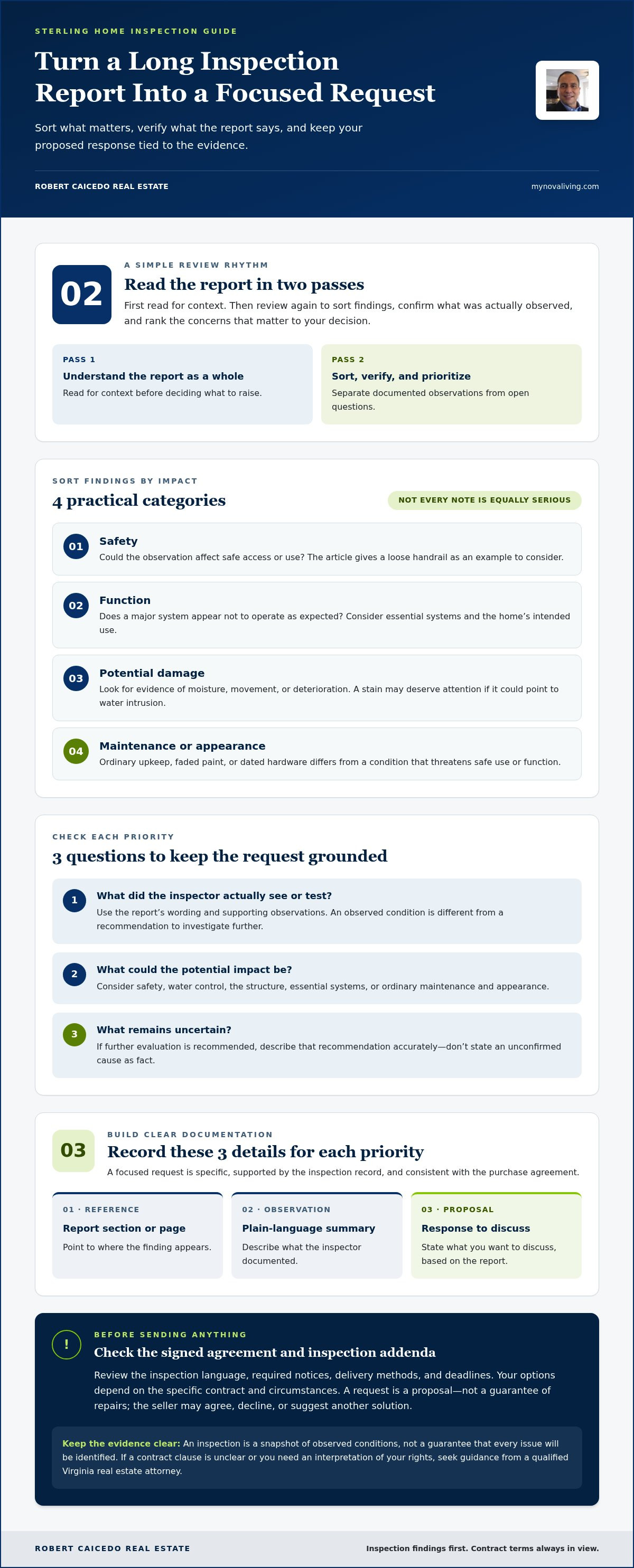
A long report can make every observation feel urgent. Give it structure before deciding what to raise. Read it once for context, then review it again to sort findings, confirm what the inspector actually observed, and rank the concerns that matter to your decision. Then shape a proposed response that fits your agreement.
A focused repair request is specific, supported by the inspection record, and consistent with your purchase agreement. This keeps the conversation grounded in the property rather than frustration or assumptions.
Sort findings by urgency and impact
Group observations into practical categories: safety, function, potential damage, routine maintenance, and cosmetic condition. A loose handrail may raise a safety question; a stain beneath a window may deserve attention because it could point to water intrusion. Faded paint or dated hardware is usually a different kind of concern. These categories help you identify priorities without treating every note as equally serious.
Think about how a finding could affect the home’s use, but don’t assume the report settles every question. An inspector may document a visible condition and recommend further evaluation without diagnosing its cause. Mark those items as unresolved and distinguish them from conditions the report directly describes. An inspection is a snapshot of observed conditions, not a guarantee of the property’s full condition.
- Safety: Could the observation affect safe access or use?
- Function: Does a major system appear not to operate as expected?
- Potential damage: Is there evidence of moisture, movement, or deterioration?
- Maintenance or appearance: Is the item ordinary upkeep or a matter of preference?
Consider your intended use, too. A concern may matter differently depending on how you plan to occupy or use the home. Keep that context in mind, while tying any proposed request to what the report actually supports.
Turn observations into clear documentation
For each priority, note the report section or page, summarize the observation in plain language, and identify the response you want to discuss. If the inspector recommends further evaluation, describe that recommendation accurately rather than presenting an unconfirmed cause as fact. Relevant report excerpts or other supporting documentation can help explain the concern when sharing them is appropriate and permitted.
Keep the wording calm and narrow. Instead of asking the seller to “fix everything wrong,” identify the specific reported condition and state the response you’d like to discuss. Avoid adding unrelated maintenance or cosmetic preferences simply because they appear in the report. A concise request is easier to review and keeps attention on your genuine priorities.
Before sending anything, compare your draft with the inspection terms and notice requirements in your executed agreement. Buyer representation can help you organize findings and communicate priorities clearly. For how to handle buyer repair requests after inspection in Sterling, a steady review process is a useful first step. Buyer representation in Sterling can help you work through the choices with the purchase terms in view.
Repair, Credit, Price Adjustment, or No Request: Compare Your Options
Once you’ve identified your priorities, consider what kind of response could address them. A seller-performed repair may resolve a specific concern before closing. A credit or price adjustment may leave you in charge of arranging work later. You could also proceed without changes if the findings don’t alter your decision. None of these options is automatic. The signed agreement, lender requirements, transaction details, and mutual agreement all matter.
Use this comparison to frame the conversation, not to assume one choice is right for every Sterling purchase.
| Option | Potential advantage | Trade-off to consider |
|---|---|---|
| Seller-performed repair | The concern may be addressed before you take ownership. | Timing, agreed scope, access, and proof of completion may need coordination. |
| Negotiated credit | You may have more control over arranging work after closing. | Credit terms can be affected by lender and closing requirements, and you take on the follow-up. |
| Price adjustment | The purchase price may be revised by mutual agreement. | Financing and appraisal considerations may affect how a change works in your transaction. |
| No request | You avoid adding repair negotiations to the transaction. | You accept the condition and any future coordination or upkeep it may involve. |
When might a repair request be more practical?
A seller-performed repair may be worth discussing when the report documents a clear concern and completing the work before closing addresses your priority. Be precise about the item and desired scope. You can also discuss what evidence of completion would be useful, such as a receipt or other agreed documentation. The seller may decline or propose a different response, and an agreement alone doesn’t guarantee a particular quality or result.
When could a credit or price change be considered?
A credit or price adjustment may suit buyers who prefer to coordinate work themselves or want to discuss an alternative to seller-performed repairs. These are negotiated possibilities, not entitlements. Before settling on one, consider the work you’ll need to arrange after closing and whether the lender, appraisal, or closing process affects the proposed terms. Confirm any agreement in the form required by your contract.
Compare the kind of certainty you want with the responsibility you’re comfortable taking on. A completed repair could reduce immediate follow-up, while a credit or price change may leave you with more control and more coordination. If the parties can’t agree, your next steps depend on the signed agreement and applicable deadlines.
The practical question in how to handle buyer repair requests after inspection in Sterling isn’t simply which option sounds best. It’s which proposal fits the documented concern, your priorities, and the terms of this particular purchase.
A Sterling Buyer’s Step-by-Step Plan for the Inspection Negotiation
A clear sequence helps you make decisions without losing sight of the purchase timeline. Begin with the agreement, not the seller’s response or assumptions about what a Sterling home should include. Then move from inspection evidence to a short list of priorities and communicate through the process set out in your transaction documents.
- Review the agreement. Locate the inspection terms, notice instructions, and dates that apply.
- Assess the findings. Separate documented observations from recommendations for further evaluation.
- Choose priorities. Focus on concerns that matter to your decision and fit your contract options.
- Communicate on time. Send the request using the required method and keep a record of the response.
- Confirm next steps. Document any agreed terms in the form required by the agreement.
Coordinate the decision around contract dates
Mark the inspection, notice, response, and closing dates shown in your executed agreement and related documents. Don’t rely on a general timeline or another buyer’s experience; terms can vary by transaction. If a deadline or clause is unclear, coordinate promptly with your buyer’s agent and seek qualified legal guidance for legal interpretation. Use the current documents for your purchase when reviewing Virginia-specific terms.
Keep the negotiation calm, specific, and documented
Describe the concern in neutral language, refer to the supporting inspection finding, and state the outcome you’d like to discuss. Avoid broad claims about the neighborhood or what homes in Sterling “should” have. A nearby property, online comment, or personal expectation doesn’t establish the condition of the home you’re buying. Broader context about living in Sterling, Virginia can inform your plans, but keep a repair request tied to this property’s evidence.
Keep communications organized. Save the request, the seller’s response, and notes about any conversation. If terms are agreed, make sure the next steps and any required written amendment are clearly recorded. A tidy record helps everyone refer to the same proposal as the transaction moves forward.
For how to handle buyer repair requests after inspection in Sterling, the goal is a timely, property-specific decision, not a negotiation built on assumptions. Buyer representation can help you organize dates, findings, and seller communication. Explore buyer representation in Northern Virginia for guidance through the purchase process, or connect about buyer representation as you consider your next step.
How Buyer Representation Helps You Choose a Confident Next Step
An inspection decision can involve more than the condition itself. You’re weighing the report, the purchase agreement, your priorities, and the effect each possible response could have on the transaction. Buyer representation gives you support as you bring those pieces together and decide how to communicate with the seller.
Your agent can help organize observations into a clear summary, distinguish documented concerns from open questions, and compare possible responses against your goals and timing. That guidance can make a complex report easier to work through. It can’t guarantee that the seller will agree to a request or that negotiations will end in a particular result.
What a buyer’s agent can help you evaluate
Your buyer’s agent can review relevant agreement language with you, help identify questions that may need input from an attorney or another appropriate professional, and organize inspection findings around your priorities. For example, you can discuss whether a proposed seller response addresses the concern you raised or shifts work and coordination to you after closing.
With your direction, your agent can help present your position clearly and keep communication focused on the property and your requested outcome. You remain the decision-maker. The goal is to understand your choices, not to push you toward a repair request or a particular negotiation strategy.
Move forward with clarity in Sterling
Keep the next steps simple: check the terms and dates in your signed agreement, prioritize the findings that matter to you, document your reasoning, and respond within the process your transaction requires. The right choice depends on the property, the inspection evidence, your plans for the home, and the agreement you signed. A Sterling purchase also sits within the broader Northern Virginia market, where transaction details and negotiated terms can differ from one home to another.
That local perspective can help keep the conversation grounded without relying on assumptions about what sellers in the area will accept. Your agent can help you weigh practical trade-offs, prepare questions, and track what has been proposed or agreed. For legal interpretation of contract terms, consult a qualified Virginia real estate attorney.
Understanding how to handle buyer repair requests after inspection in Sterling is ultimately about making a timely, informed choice that fits your purchase. Robert Caicedo Real Estate represents buyers in Sterling and nearby Northern Virginia communities, including Ashburn, Reston, Leesburg, Aldie, and Middleburg. Explore Sterling buyer representation guidance, then reach out to discuss your purchase.
Take Your Next Step With Confidence
The inspection stage can shape how you feel about the home you’re preparing to make your own. Give yourself room to make a considered choice rather than a rushed reaction. The best path forward is the one that reflects your priorities and supports the life you want to build in the home.
Knowing how to handle buyer repair requests after inspection in Sterling is part of making that choice with care. Robert Caicedo Real Estate provides buyer and seller representation for residential transactions in Sterling and Northern Virginia, offering guidance as you consider your next move.
If you’re weighing an inspection response or preparing for a purchase, take the next step with a conversation centered on your goals. Explore buyer representation with Robert Caicedo Real Estate and move toward your Sterling home purchase with greater clarity.
Frequently Asked Questions
Can a buyer ask for repairs after a home inspection in Virginia?
Yes, a buyer can propose repairs or another response, but the seller isn’t automatically required to accept. Start by checking the inspection-related language in your signed agreement, including how a request must be delivered. For example, if the agreement requires a specific notice method, an informal conversation may not satisfy that requirement. Your agent can help you understand the transaction process, while a qualified Virginia attorney can address legal questions about your rights.
What repairs should I request after a home inspection in Sterling?
Prioritize documented concerns that could affect safety, essential systems, or the home’s condition, such as an observed leak or a heating system that doesn’t operate. A note recommending further evaluation differs from a confirmed diagnosis, so describe it accurately. For how to handle buyer repair requests after inspection in Sterling, connect each proposed item to a report finding and your plans for the home, rather than relying on neighborhood expectations.
Should I ask the seller for repairs or a credit?
Choose based on the concern, your preferences, the contract, and any financing or closing requirements. A repair may address the specific item before you take ownership, while a negotiated credit or price adjustment could leave you coordinating the work later. Consider whether you value seller-handled work or prefer to manage the timing yourself. Confirm how a proposed alternative would be documented and handled in your transaction before relying on it.
Can a seller refuse to make repairs after an inspection?
Yes, a seller can decline a proposed request unless the agreement creates a specific obligation or both parties reach a new agreement. A refusal doesn’t, by itself, tell you what options remain. Review the relevant provisions and dates before deciding whether to continue discussions, proceed, or consider another contract option. Keep the seller’s response and related communications with your transaction records, and get advice specific to your agreement before taking action.
How long do I have to submit repair requests in Virginia?
There isn’t one deadline for every Virginia purchase. Your executed agreement and related inspection documents set the applicable timing and notice process. As soon as the report arrives, locate the relevant dates and delivery instructions, then allow time to review findings and prepare your response. Don’t rely on a deadline from another transaction. If the wording or calculation is unclear, contact your agent promptly and seek qualified legal guidance when needed.
Can I negotiate after an inspection if the home is being sold as-is?
You may be able to raise a concern, but an as-is provision can limit what you can request, and its effect depends on the complete agreement and circumstances. Don’t assume the phrase alone explains whether inspection or termination options remain. Review the exact wording, any related addenda, and the applicable dates. If you’re uncertain how those terms affect your choices, discuss the transaction with your agent and get legal advice before responding.
What if the inspection finds a serious problem close to closing?
Notify your agent promptly and gather the relevant report pages, photos, and any follow-up findings so the concern can be assessed against your agreement. For example, a newly reported leak may need quick clarification about its location and whether it’s ongoing. Avoid making a verbal promise or assuming closing dates change automatically. Your available choices depend on the documents and facts, so get transaction-specific guidance before agreeing to a solution or changing plans.


