

The hardest part of selling a family home from afar often isn’t choosing a list date. It’s knowing who can make decisions, how to prepare the property, and how to keep everyone aligned. If you’re thinking, “selling my parents' home in Sterling from out of state,” a clear sequence can make the process more manageable.
You may be coordinating access from another state while family members have different ideas about timing or the home’s condition. Before making property decisions, clarify who has authority to act and gather the information your family needs.
This 2026 guide covers the first steps, from confirming decision-making roles to preparing the home and coordinating updates from a distance. It also explains how local seller representation can bring Sterling-specific perspective to the process. A complimentary home evaluation and market report can help your family understand the property and its local market context before deciding what comes next.
Handle authority, preparation, and communication in order, and you can move forward with greater clarity even when you can’t be there in person.
Key Takeaways
- Before making plans for the property, clarify who has the legal authority to make decisions and sign.
- For selling my parents' home in Sterling from out of state, start with a practical overview of the home and weigh preparation choices against family priorities.
- Use a step-by-step plan to coordinate listing preparation, showings, offer decisions, and closing from a distance.
- Agree on family roles, update preferences, and decision deadlines to keep communication clear throughout the sale.
- Local seller representation, a complimentary home evaluation, and a market report can help your family make informed Sterling-specific decisions.
Selling a Parent’s Home in Sterling From Out of State: What Makes the Process Different?
Your parent’s Sterling home may hold years of memories, while practical decisions now need to be made from another state. You might be sorting through keys and household records by phone, trying to understand the home’s condition from photos, or waiting for several people to weigh in before the next step. Selling my parents' home in Sterling from out of state calls for extra structure because you can’t always see a concern or resolve a question in person.
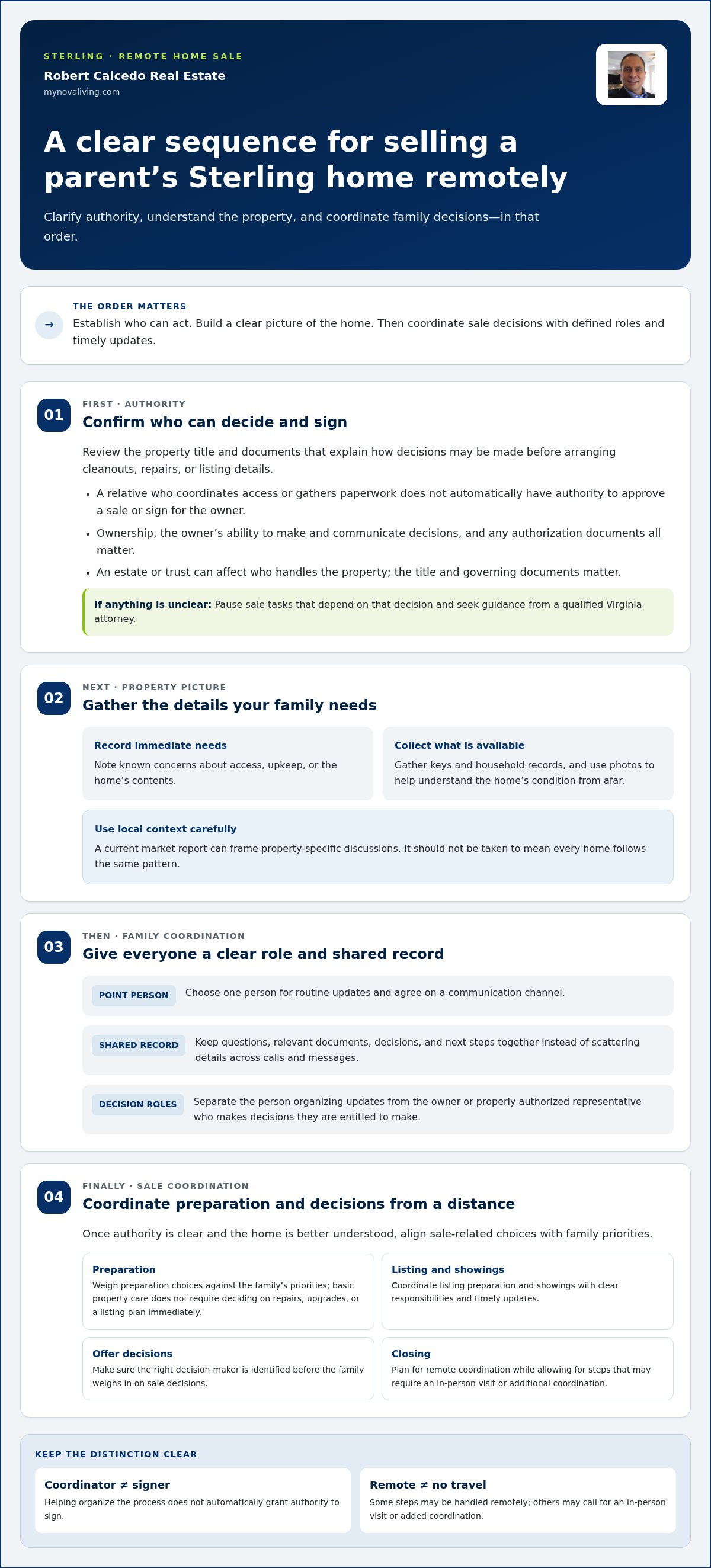
Remote coordination is the focus, not a promise that you’ll never need to travel. The right approach depends on the home, your family’s circumstances, and who has authority to make decisions. Keep the sequence simple: establish who can act, build a clear picture of the property, then coordinate sale decisions with defined roles and timely updates.
What decisions should the family organize first?
Separate immediate property-care needs from the broader decision to sell. The home may need basic attention while your family gathers information, but that doesn’t mean you need to decide on repairs, upgrades, or a listing plan right away. Agree on who needs updates, which communication channel works best, and where everyone will keep shared information.
- Immediate needs: Record known concerns about access, upkeep, or the home’s contents.
- Family communication: Choose a point person for routine updates and a way to flag decisions that need broader input.
- Shared record: Keep questions, relevant documents, decisions, and next steps together so details don’t get scattered across calls and messages.
This small setup can prevent a simple question from causing a delay. If a family member is expected to act for the owner, distinguish that role from simply helping organize the process. A general overview of Power of Attorney can introduce the concept, but the family’s actual authority depends on the relevant documents and circumstances.
Why does Sterling-specific support matter when you live elsewhere?
Distance makes local context useful. A point of contact familiar with Sterling can help you understand the property’s surroundings and keep sale-related conversations grounded in its location, rather than relying only on secondhand impressions. The living in Sterling, VA guide offers community context, while a current market report can help frame property-specific discussions without assuming every home follows the same pattern.
Local seller representation can give your family a clearer way to organize sale questions and decisions while you’re away. Robert Caicedo provides real estate services in Sterling and surrounding markets, including Aldie, Leesburg, Middleburg, Ashburn, Reston, and Washington, D.C. Some steps may be handled remotely, while others may require an in-person visit or additional coordination. Once authority is clear and the home is better understood, you can make the next decisions with less guesswork and a shared plan.
Confirm Who Has Authority to Sell Before Preparing the Sterling Home
Before arranging cleanouts, repairs, or listing details, identify who has the right to make decisions and sign documents for the Sterling home. The answer may be straightforward if your parent owns the property and is handling the sale. It may require more care if someone else is acting on their behalf or ownership is connected to an estate or trust. For selling my parents' home in Sterling from out of state, sorting out this distinction early can keep family members from moving ahead on assumptions.
Start with the property’s title and the documents that explain how decisions may be made. A relative who coordinates access, gathers paperwork, or keeps everyone informed doesn’t automatically have authority to agree to a sale or sign for the owner. If anything is unclear, pause sale preparations that depend on that decision and get guidance from a qualified Virginia attorney. The right answer depends on the actual documents and circumstances.
If your parent is living, identify who can make the sale decisions
If your parent owns the home and can make and communicate their own decisions, they may lead the sale choices. If a family member is expected to act for them, don’t assume that helping with calls or property logistics gives that person signing authority. Ownership, your parent’s capacity, and any authorization documents all matter. Ask a qualified legal professional to address questions about capacity, authorization, or whether a document applies to a home sale.
Keep the roles distinct: one person can coordinate updates, another can help collect records, and the owner or properly authorized representative makes the decisions they’re entitled to make. Clear roles reduce the chance of conflicting instructions and help everyone know whose approval is needed before committing to a sale step.
If the home is part of an estate or trust
An estate or trust can change who handles the property. An executor or personal representative may have a role in an estate, while a trustee may act for a trust, but the title and governing documents matter. Don’t assume probate is always required or that one document by itself is enough to authorize a sale. Have the current Virginia requirements and the specific paperwork reviewed before setting sale tasks in motion.
Gather what the family can locate, then make a list of questions for legal review. Useful starting points include:
- Current title or deed information showing how ownership is held.
- Any will, trust paperwork, or court-issued estate documents relevant to the home.
- Any power-of-attorney or other authorization documents that may apply.
- The names of people involved and the decisions each person believes they can make.
These records help clarify the path, but collecting them isn’t the same as determining who has authority. Once a qualified professional has explained who may act and what approvals are needed, you can plan preparation and sale decisions with a firmer foundation. For Sterling-focused seller representation as you organize those next steps, explore Sterling seller representation.
Prepare a Sterling Home for Sale Without Making Every Trip in Person
A useful preparation plan starts with facts, not a renovation list. For selling my parents' home in Sterling from out of state, gather what the family already knows about the property, then decide what needs attention based on its condition and your goals. A complimentary home evaluation and a market report can help frame those decisions without assuming repairs or upgrades are automatically worthwhile.
Choose a preparation approach that fits the home and family
First, establish how the home is being used. Is it occupied, vacant, or still serving as a family member’s home? That affects access, timing, and who can share reliable information. Separate immediate access or safety concerns from optional cosmetic work, then weigh each proposed task against the effort and coordination it requires. Don’t commit to repairs before the property and the seller’s priorities are understood.
Compare approaches by what they ask of the family, not by assuming that more work always leads to a better result. A limited approach may mean organizing known property details and addressing only needs the family considers essential. More extensive preparation may involve additional decisions, scheduling, and local coordination. Use questions like these to guide the conversation:
| Preparation approach | Questions to consider | Remote coordination needs |
|---|---|---|
| Limited preparation | What needs attention for access, safety, or the family’s goals? | Who can describe the home and help clarify the immediate priorities? |
| More extensive work | Which improvements, if any, align with the family’s timing and preferences? | Who will coordinate decisions, share progress, and communicate questions? |
The table is a way to organize a discussion, not a recommendation to choose one route. The home’s condition, the family’s capacity to coordinate tasks, and the intended sale plan all matter.
Coordinate property details from a distance
Build one shared property overview before deciding what to do. Collect available maintenance records, known details about the home, and practical access information. If several relatives are involved, designate one family contact for routine updates where practical, while keeping important decisions visible to everyone who needs to weigh in. A shared list of open questions can prevent scattered messages from turning into conflicting instructions.
Then use a current Sterling market report to ground pricing discussions in local information rather than assumptions based on another neighborhood or a family member’s memory. Robert Caicedo offers complimentary home evaluations and market reports for sellers. These resources can help your family understand the property and its market context as you consider a preparation plan. Keep the next step manageable: document what’s known, identify what remains uncertain, and decide which questions need a local perspective before authorizing work.
Coordinate Showings, Offers, and Closing Remotely, One Step at a Time
Once the family is ready to move ahead, a shared process can keep distance from becoming a source of confusion. For selling my parents' home in Sterling from out of state, decide in advance who receives updates, who gathers questions, and who has authority to make each decision. Calls and electronic messages can help everyone stay informed, but they don’t guarantee that documents can be signed remotely.
- Prepare listing details. Gather accurate property information, confirm the home’s showing readiness, and decide how the family will review key listing details. Keep unresolved questions in one shared place.
- Set showing expectations. Agree on how access will be coordinated and who should receive showing updates. Set a practical update rhythm so the out-of-state seller isn’t left piecing together information from separate conversations.
- Review responses and offers. Share offer details with the people who need to weigh in. Compare the terms and their fit with the family’s priorities, not just the headline figure. Record questions and the final decision so everyone can follow the same plan.
- Track agreed next steps. Keep a simple record of deadlines, outstanding questions, and who is responsible for each response. If family members need time to discuss a decision, agree on a reasonable decision window before an offer or other deadline arrives.
- Coordinate closing. Start organizing identity, title, and signing questions as the transaction progresses. Confirm arrangements with the relevant professionals rather than assuming a particular remote option will apply.
Keep showings and offer decisions organized
Make communication predictable. Choose one person to receive routine updates and share them with the family, while ensuring the person authorized to decide remains involved. Before reviewing offers, revisit the priorities the family agreed on, such as timing or particular terms. A written comparison and a clear record of questions can make a difficult decision easier to discuss across time zones.
Plan closing logistics before the final paperwork arrives
Signing and notarization arrangements depend on the transaction and applicable requirements. Ask the relevant professionals early about identity, title, document delivery, and signing logistics so there’s time to understand what is needed. Electronic communication can make coordination easier, but don’t treat it as confirmation that remote signing or notarization will be available. Travel may still be necessary.
Local seller representation can help keep Sterling sale discussions and updates organized while you’re managing decisions from elsewhere. Explore seller representation for a Sterling home sale.
Choose Local Sterling Seller Representation and Set Your Next Steps
Selling a family home from another state can feel like a series of disconnected calls, questions, and decisions. Local seller representation gives your family a Sterling-focused point of contact for sale discussions while you stay involved from wherever you are. Robert Caicedo provides comprehensive real estate services for selling homes, helping families bring the property’s details and their goals into one conversation. You don’t need every answer prepared before taking that first step.
For selling my parents' home in Sterling from out of state, begin with what you know and what you’re hoping to understand. A clear overview helps make the conversation useful, even if some details are still unfolding.
What to bring to an initial seller conversation
Gather the Sterling property address, any known ownership details, and the family’s preferred way to share updates. Note whether your parent is living in the home, it’s vacant, or estate questions remain. You can also outline your hopes for timing and preparation. Treat these as goals to discuss, not promises about what the sale will involve or when it will happen.
- Property basics: Address and any details the family already has about the home.
- Family coordination: Who should receive updates and how everyone prefers to communicate.
- Current circumstances: Whether the home is occupied, vacant, or connected to estate questions.
- Initial goals: Questions about timing, preparation, and what the family wants to understand first.
If information is incomplete, say so. A short list of open questions can be just as useful as a folder of records. It gives the family and its local representative a practical place to begin.
Get a local view of the home and its market
A complimentary home evaluation can help frame a seller discussion around the property. It gives your family a starting point for considering the home and possible next decisions, without making preparation or sale outcomes automatic. Market reports provide local context for Sterling and help ground pricing conversations in current information rather than assumptions drawn from another area.
These resources can be helpful when family members are weighing different plans. Bring questions about the home’s condition, priorities, and possible next steps. A local perspective can help organize the discussion, while the family has room to consider what fits its circumstances.
When you’re ready to discuss - whether a simple question or a serious inquiry - don’t hesitate to request more information or call. Robert Caicedo: 703-220-7032.
Take the First Step Toward a Clearer Plan
Selling my parents' home in Sterling from out of state doesn’t require you to solve every question at once. Choose one useful next step: gather the property address, agree on who should be part of the first conversation, or write down the decision your family most needs help thinking through. A focused start can turn a complicated situation into a plan you can shape together.
You can move forward at a pace that respects your family’s circumstances. Keep the conversation open, make room for questions, and let each decision build on the one before it. A local perspective can help you consider the Sterling home with greater clarity, even while you’re coordinating from elsewhere.
When you’re ready to discuss - whether a simple question or a serious inquiry - don’t hesitate to request more information or call Robert Caicedo at 703-220-7032. Your family’s next step can begin with a conversation, and you don’t have to have every detail settled before you start.
Frequently Asked Questions
Can I sell my parents’ Sterling home if I live in another state?
Yes, living outside Virginia doesn’t by itself prevent a sale, but it also doesn’t give you authority to act for your parent. Confirm who owns the home and who may make decisions or sign. For example, a child coordinating calls may not be the person authorized to accept an offer. Gather the title and relevant documents, then confirm the applicable requirements with qualified professionals. A local seller representative can help coordinate real estate communication.
Do I need probate to sell my parent’s home in Virginia?
Not necessarily. Whether probate applies can depend on how the property is titled and the estate’s circumstances, so don’t base the decision only on the fact that your parent has died. Collect available title, will, trust, and estate paperwork, and have a qualified Virginia legal professional explain what applies. Avoid scheduling sale steps that assume a particular person can sign until the authority question has been addressed.
Can I sell my parent’s home if my siblings and I disagree?
Family disagreement doesn’t have one automatic answer. First clarify who owns the property and who has authority to act. Then identify the specific points causing friction, such as timing, clearing belongings, or whether to prepare the home. Keep the discussion focused on decisions and record outstanding questions. If ownership or legal authority is disputed, seek qualified legal guidance. A real estate representative can explain sale-related choices but can’t resolve legal disputes.
How can I keep a vacant Sterling home in good condition while it is for sale?
Start with a written plan for access, property checks, and how updates will reach the family. Note known concerns, such as a maintenance issue already reported by a relative, and keep relevant records together. Decide who is responsible for each agreed task and how completion will be communicated. Don’t assume renovation is needed just because the home is vacant. Base preparation decisions on its observed condition and the seller’s goals.
Do I have to travel to Sterling to close on my parents’ home?
Not every seller must be physically present, but whether remote signing or notarization is possible depends on the transaction, documents, and applicable requirements. Don’t assume an electronic signature or remote notarization will be accepted. Once a closing is being planned, raise your location and signing needs with the relevant closing professionals. They can explain the arrangements for that transaction, including whether travel or another signing plan may be needed.
How are taxes handled when selling an inherited home in Virginia?
Tax treatment depends on the home’s ownership history, estate details, and each seller’s circumstances, so a general answer can’t determine what your family may owe. Keep records related to the property and estate, along with documents that may help explain ownership history. Before making financial decisions, discuss the situation with a qualified tax professional. Avoid relying on another state’s examples or assuming that every inherited-home sale receives the same tax treatment.
How long does it take to sell a parent’s home from out of state?
There’s no single timeline for a Sterling home sale. The time involved can depend on confirming authority, the home’s condition, how quickly family decisions are made, buyer activity, and closing requirements. For example, unresolved questions about who can approve a sale may affect when listing preparations begin. Keep documents and decision-makers organized, and treat any timeline estimate as specific to the property and transaction, not a promise based on a general online guide.


