

A construction site next door can shape a showing, but it doesn’t define your home’s story. If you’re selling a house next to construction in DC, it’s understandable to worry that noise, dust, blocked views, or changed access will put buyers off. The useful first step is to find out what’s happening and assess its actual effects, rather than guessing or glossing over them.
This guide explains how to check available project details, prepare your home for showings, and build a selling plan that addresses disruption honestly while bringing your property’s strengths forward. You’ll learn where the DC Department of Buildings’ Scout database may help, how to consider buyers’ likely concerns, and what to weigh when planning showings and pricing.
You’ll also find practical ways to present your home and its surroundings, including how to describe possible neighborhood changes without promising an outcome. Thoughtful preparation and tailored seller representation can help you manage nearby construction as one factor in your sale, not a verdict on your home’s saleability.
Key Takeaways
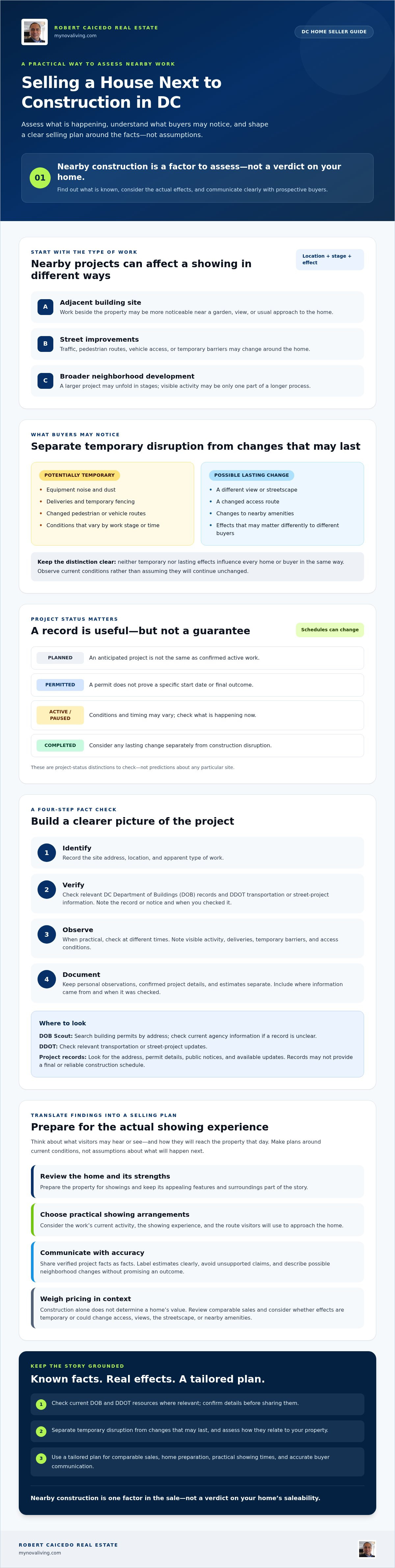
- Nearby work might involve an adjacent building site, street improvements, or broader neighborhood development. Each can affect buyers differently.
- When selling a house next to construction in DC, check current DC Department of Buildings and DDOT resources where relevant. Confirm schedules and procedures before sharing them.
- Construction alone doesn’t determine a home’s value. Consider whether its effects are temporary or could change access, views, the streetscape, or nearby amenities over time.
- A tailored selling plan can help you review comparable sales, prepare the home, choose practical showing times, and communicate accurately with buyers.
Selling a House Next to Construction in DC: What Buyers May Notice
Selling while nearby work changes a familiar DC street can feel unsettling. You may wonder whether buyers will focus on the home or the site next door. Nearby construction is a factor to assess, not an automatic barrier. Start by identifying the type of work and how it relates to your home and its surroundings.
Nearby construction might mean work on an adjacent property, a street project that changes traffic or access, or larger neighborhood development. Real estate development can involve multiple stages, so visible activity may be only one part of a longer process. Buyers’ reactions depend on a project’s stage, visibility, scale, and proximity to the property. A site around the corner may matter less during a showing than work beside a garden or a temporary change to the home’s usual approach.
Which construction impacts are most noticeable during a home sale?
Separate temporary disruption from changes that could last. Short-term effects may include equipment noise, dust, deliveries, temporary fencing, and altered routes for pedestrians or vehicles. Their impact can vary by time and stage of work. Check current activity and any relevant work hours instead of assuming the same conditions will continue. Confirm details with an appropriate official source or project contact. A lasting change, such as a different view, access route, or streetscape, merits separate consideration. Neither type of impact affects every home or buyer in the same way.
Why does the project’s stage matter to DC home sellers?
A project that is planned is different from one with confirmed permits, active work, a pause, or completed construction. Records and direct observations can clarify what is known, but a permit alone doesn’t prove a specific start date or final outcome. Schedules can change. Keep a simple note of details you may share, including where you found them and when you checked. If a project’s status is unclear, say so rather than presenting an estimate as a guarantee.
When selling a house next to construction in DC, distinguishing confirmed details from expectations helps keep buyer communication grounded. It also lets you prepare for the actual showing experience: what visitors might hear or see, and how they’ll reach the property that day. Before setting your marketing and sale plan, assess the project and its effects systematically.
How to Assess a Construction Project Near Your DC Home
A clear picture of the project helps you plan without treating rumors as facts. Use four steps: identify the site, check available records, observe how the work affects your property, and document what you learn. This gives you a practical basis for showing arrangements and buyer conversations. It also helps distinguish temporary disruption from changes that may last.
Where can sellers check DC construction and street-project information?
Start with the DC Department of Buildings (DOB) for building-related records and DDOT for transportation or street-project information. DOB’s Scout database can be used to search building permits by address. Agency resources and procedures may change, so check their current information and contact the relevant agency if a record is unclear.
For a nearby site, look for its address, permit details, public notices, and relevant DDOT updates. Records may help clarify a project’s scope or status, but they may not provide a final or reliable construction schedule.
How can sellers document the effect on their property?
Keep dated notes that distinguish what you observe personally from what a public record or project representative confirms. If practical, check the property at different times and note visible activity, delivery patterns, temporary barriers, and access conditions. Describe what you experience without making unsupported claims about noise levels or air quality.
Use this checklist to keep your findings organized:
- Identify: Record the site address, location, and apparent type of work.
- Verify: Check relevant DOB and DDOT resources, and note the record or notice and when you accessed it.
- Observe: Note what changes near your home and when, without assuming the same conditions will recur.
- Document: Keep personal observations, confirmed project details, and estimates separate.
Share verified project facts as facts, and clearly label estimates or neighborhood speculation. A planned date, an active permit, and a neighbor’s prediction don’t carry the same weight. Recheck details before including them in listing materials or discussing the project with prospective buyers.
If you’re selling a house next to construction in DC, organized notes can help you and a real estate professional assess the project in the context of your home’s specific setting. You can discuss your DC home’s selling plan with a professional and decide which verified details are useful to your approach.
Does Nearby Construction Lower a DC Home’s Value or Saleability?
Nearby construction doesn’t establish a fixed change in a home’s value or determine whether it will sell. Its influence depends on the property, the project, and what buyers encounter. Temporary noise or delivery activity may affect the showing experience differently from a lasting change to access, a view, the streetscape, or nearby amenities.
That distinction matters. A temporary inconvenience may be limited to certain hours or stages of work, while a permanent change can shape how buyers experience the location over time. Neither automatically determines the outcome. For a broader look at how development takes shape, explore Northern Virginia land development insights.
Which factors can shape buyer perceptions and offers?
Buyers may weigh a project’s visibility and distance, when work takes place, whether access is affected, the home’s condition, and what competing listings offer. Priorities differ, too. One buyer may focus on a clear route to the property; another may care more about a view or the character of the surrounding street.
For that reason, avoid applying a generalized “construction discount.” A local comparative market analysis can consider relevant sales and listings alongside differences in location, features, condition, and timing. No two properties are perfectly comparable, but this review offers a more grounded starting point than assuming every nearby project has the same effect.
How can sellers set a grounded pricing strategy?
Review comparable properties carefully. Consider whether a sale or listing had similar access, views, condition, and surroundings, and when it occurred in relation to the construction activity. A nearby sale can provide context without being a direct match. Current competing listings matter as well, because buyers may compare your home with other available options.
Construction should inform the pricing conversation, not determine the price by itself. Consider how the project affects presentation, what questions it may raise, and whether its impact appears temporary or lasting. A real estate professional can help weigh those details against the home’s strengths and relevant market evidence as part of a tailored seller representation plan.
If you’re selling a house next to construction in DC, a property-specific review can help you make a measured pricing decision without assuming a particular discount or sale outcome. Keep the project in view, then let comparable evidence and the home’s full picture guide your plan.
How to Prepare and Show a DC Home Beside an Active Construction Site
Thoughtful preparation helps buyers see your home clearly, even when nearby activity draws attention. Focus on what you can control: the home’s presentation, a straightforward route to the door, well-planned showing times, and accurate answers about what you’ve verified. You don’t need to disguise the surroundings. Aim to create an inviting first impression while representing the setting honestly.
What should sellers do before photography and showings?
Use this checklist to make each visit feel considered and easy to navigate:
- Refresh the home: Clean and declutter, open window coverings where appropriate, and make the most of natural light. Tidy the entrance and outdoor areas to strengthen curb appeal.
- Confirm access: Check whether construction affects parking, sidewalks, entrances, or the usual route to the property. Share practical directions if needed.
- Plan timing: When practical, schedule photography and showings for times when access is clear and the home presents well. If confirmed work is expected to be especially disruptive, discuss alternate times with your listing professional.
- Review presentation: Ask your listing professional to consider photography angles that highlight the home’s features while representing its setting accurately.
- Prepare project notes: Keep current, verified information and its source handy so you can respond consistently to buyer questions.
Schedules and site activity can shift, so check relevant details close to a planned showing instead of relying on an old estimate. A clear route and a calm, uncluttered interior won’t remove nearby work, but they can help visitors focus on the home and understand its context.
How should sellers discuss construction with prospective buyers?
Prepare a brief fact sheet with the project’s location, details you’ve confirmed, where those details came from, and when you checked them. Distinguish public-record information from personal observations and estimates. If you don’t know an answer, say so and offer to verify it. Avoid predicting completion dates or promising that disruption will stop by a particular time.
Keep your answers balanced. Buyers may ask about access, visible work, or how long a project will continue. Respond with verified information rather than neighborhood speculation. If a question concerns disclosure obligations or a buyer’s legal rights, don’t guess. Refer it to a qualified DC real estate or legal professional, and verify current guidance before making statements about what must be disclosed.
For selling a house next to construction in DC, seller representation can help coordinate preparation, timing, and buyer communication around your property’s circumstances. Discuss your DC home’s selling plan with a local real estate professional.
Build a Selling Plan with a DC Real Estate Professional
A clear plan turns project information into practical decisions. With seller representation, you can coordinate preparation and marketing while considering how nearby work may affect timing, pricing, showings, and buyer questions. Start with verified facts, assess the property itself, review relevant comparable sales, and shape the marketing around both the home’s strengths and its setting.
Development context may help buyers understand how an area is changing, but it shouldn’t be presented as a guaranteed benefit or outcome. For a related perspective on how buyers may assess newly built homes and surrounding development, explore new construction homes in Northern Virginia.
What should you ask when choosing a listing professional?
Ask how they’ll assess project information and select comparable properties, including how they’ll account for differences in location, condition, features, and timing. Discuss how confirmed access conditions may affect showing schedules, how buyer questions about construction will be handled, and how the marketing will highlight the home’s strengths without obscuring its surroundings.
Clarify boundaries, too. A real estate professional can help shape listing strategy and buyer communication, but legal or technical questions may require a qualified attorney, relevant agency, or other appropriate professional. Ask how questions outside the scope of real estate representation will be referred.
What are the first steps before listing?
Gather addresses for nearby projects, dated observations, and reliable public information you’ve found. Then review the home’s condition, likely buyer audience, and current comparable sales with your representative. Together, you can set an approach to preparation, pricing, photography, showings, and buyer communication.
Keep the plan flexible. Project activity and schedules can change, so decide how you’ll recheck details and adjust showing arrangements or messaging if confirmed conditions shift. This matters when selling a house next to construction in DC, because the specific impact depends on the home and the project rather than a standard formula.
You don’t need to resolve every uncertainty before starting the conversation. Discuss your property, nearby work, and the details you’ve verified with a real estate professional. A tailored review can help you choose thoughtful next steps at a pace that suits your selling plans.
Make Your Next Move with a Clear Plan
Nearby construction calls for a thoughtful response, not assumptions. Verify project information and keep observations separate from estimates. Consider whether buyers are likely to notice temporary activity or longer-term changes to access, views, or the surrounding streetscape. Then weigh those details alongside your home’s condition and relevant comparable sales.
Selling a house next to construction in DC can feel uncertain, but a flexible plan can help you prepare the home, schedule showings thoughtfully, and answer buyer questions carefully. Robert Caicedo Real Estate provides seller representation, with local coverage that includes Washington, DC, as well as Aldie, Leesburg, Middleburg, Ashburn, Sterling, and Reston. A real estate professional can help tailor pricing, presentation, and marketing to your property’s circumstances.
Ready to talk through your home and its surroundings? Discuss your DC home sale with Robert Caicedo Real Estate. Get in touch to review your property and plan your next steps.
Frequently Asked Questions
Does construction next door make a house harder to sell in DC?
It can affect buyer interest, but construction next door doesn’t automatically make a DC home harder to sell. Buyers may notice noise, dust, deliveries, blocked views, or access changes, and their reactions depend on the project and the property. Verify what’s happening, prepare for the showing experience, and compare the home with relevant local sales and listings. Construction is one factor in the selling plan, not a certain outcome.
Can I sell my DC house while construction is happening nearby?
Yes, you can plan to sell while nearby construction is underway. Before listing, confirm available project information, assess how the activity affects your home and access, and consider practical showing times. Keep answers to buyers grounded in verified details, and don’t promise a completion date unless a reliable source confirms it. Seller representation can help tailor pricing, preparation, and marketing to your home’s circumstances.
How can I find out what is being built near my DC home?
Start with the DC Department of Buildings and DDOT, depending on whether the work involves a building site or transportation and street changes. DOB’s Scout database can help you search building permits by address. Check current agency tools for relevant permits, public notices, or project updates, and contact the appropriate agency if information is unclear. Save the source and date you checked, since public records may not establish a final construction schedule.
Do I have to disclose nearby construction when selling a house in DC?
Disclosure obligations depend on the property and the facts, so don’t assume nearby construction is either exempt or always a separately required item. DC sellers may have duties to disclose known information about a home’s condition, and a project’s effects could raise questions about material facts. Disclose accurately and don’t conceal known impacts. Before listing, ask a qualified DC real estate or legal professional to confirm current requirements for your situation.
Should I wait until construction is finished before listing my DC home?
Not necessarily. Waiting may make sense if current activity seriously affects access or presentation, but schedules can change, so don’t base your decision on an unconfirmed completion date. Compare likely showing conditions now with the home’s needs, your timeline, and relevant sales and listings. A real estate professional can help weigh the trade-offs and create a plan that can adapt if verified project conditions shift.
How should I prepare my house for showings next to a construction site?
Make the home feel bright, clean, and easy to explore. Tidy the entrance and outdoor areas, confirm the route to the property, and check for known access restrictions before each showing. When practical, choose times when the home presents well and confirmed work is less disruptive. Prepare concise notes with verified project details and sources. Answer buyer questions honestly, and refer legal or technical questions to a qualified professional.
Can nearby construction affect a home’s value in Washington, DC?
It can influence buyer perceptions, but nearby construction alone doesn’t establish a fixed change in value. Buyers may weigh the project’s visibility, timing, and effect on access, views, or the streetscape alongside the home’s condition and other available properties. When selling a house next to construction in DC, review comparable sales and current listings with a real estate professional. Avoid assuming a standard construction discount or a guaranteed future benefit.


