
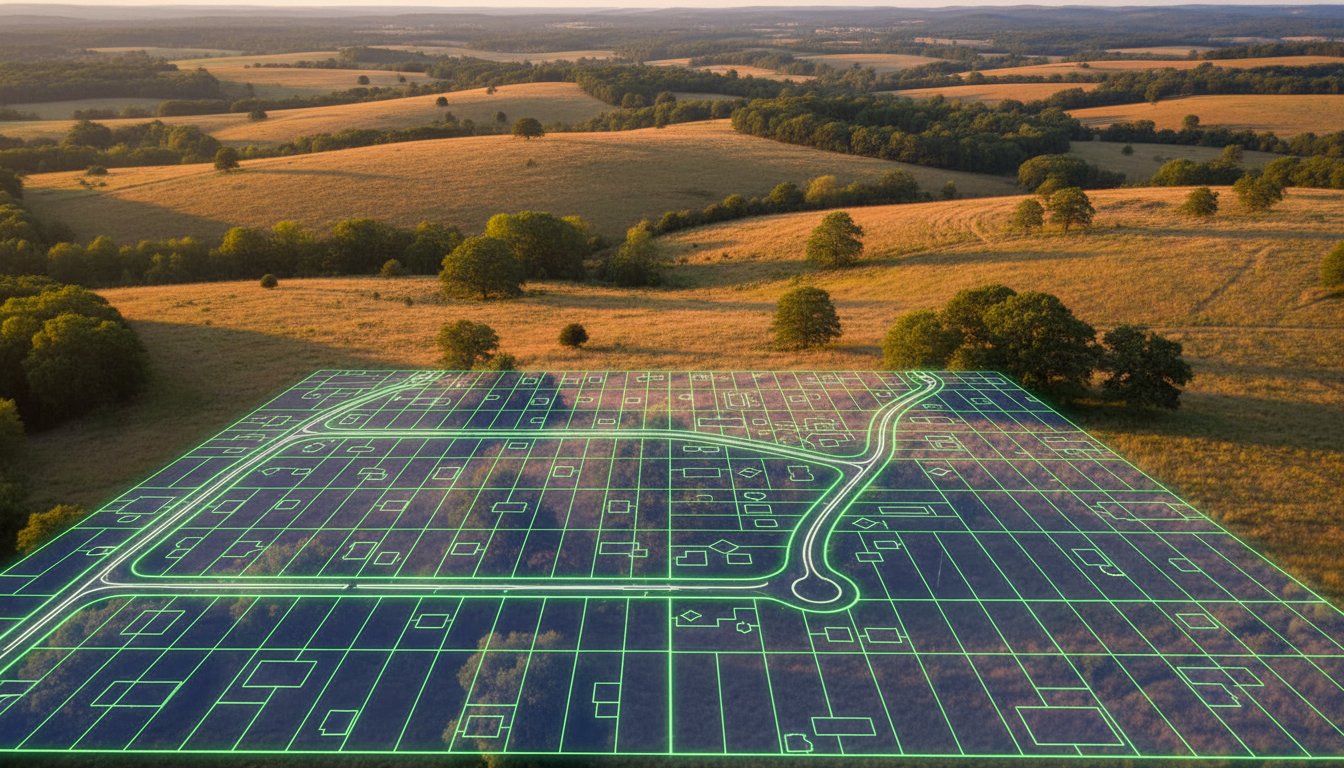
By 2026, the demand for thoughtfully designed living spaces in Northern Virginia is projected to outpace current housing inventory by 15% according to regional growth forecasts. You know that finding the right opportunity in this vibrant market often feels like solving a puzzle with missing pieces. Between the opaque zoning regulations in Fairfax County and the shifting land use policies in Loudoun, the path to successful land development can feel unnecessarily complex. It's frustrating when long entitlement timelines and high entry costs stall your vision for a modern community.
We're here to change that narrative. You'll discover a clear, strategic roadmap that transforms these local hurdles into a competitive advantage for your portfolio. This guide provides the tools you need to secure a higher ROI through smart land use while building a lasting community impact. We'll explore everything from the initial acquisition phase to the final sale, ensuring you have total confidence in every local NOVA ordinance you encounter.
Key Takeaways
- Unlock the potential of Northern Virginia’s tech corridor and learn how to position your portfolio for sophisticated, long-term growth.
- Navigate the high-stakes world of land development by understanding the journey from raw acreage to a curated residential community.
- Demystify the complexities of local zoning and entitlements to ensure your projects move forward with confidence and clarity.
- Protect your vision with a professional due diligence checklist designed to identify opportunities and mitigate risks before you acquire.
- Connect with a premier network of experts to transform raw land into a seamless, modern living experience that enhances the local landscape.
Why Land Development in Northern Virginia Remains a Premier Investment
Land development in Northern Virginia represents more than a simple real estate transaction. It's a sophisticated value-add strategy that defines the region's future. In 2026, savvy investors view raw land as a canvas for high-yield "Living" environments rather than just a commodity. You aren't just buying acreage; you're securing a stake in the most resilient economy in the United States. This approach allows you to capture appreciation while building the infrastructure that supports a modern, tech-driven workforce. By focusing on the feeling of home, you can transform a physical site into a vibrant community asset.
The Economic Landscape of NOVA Development
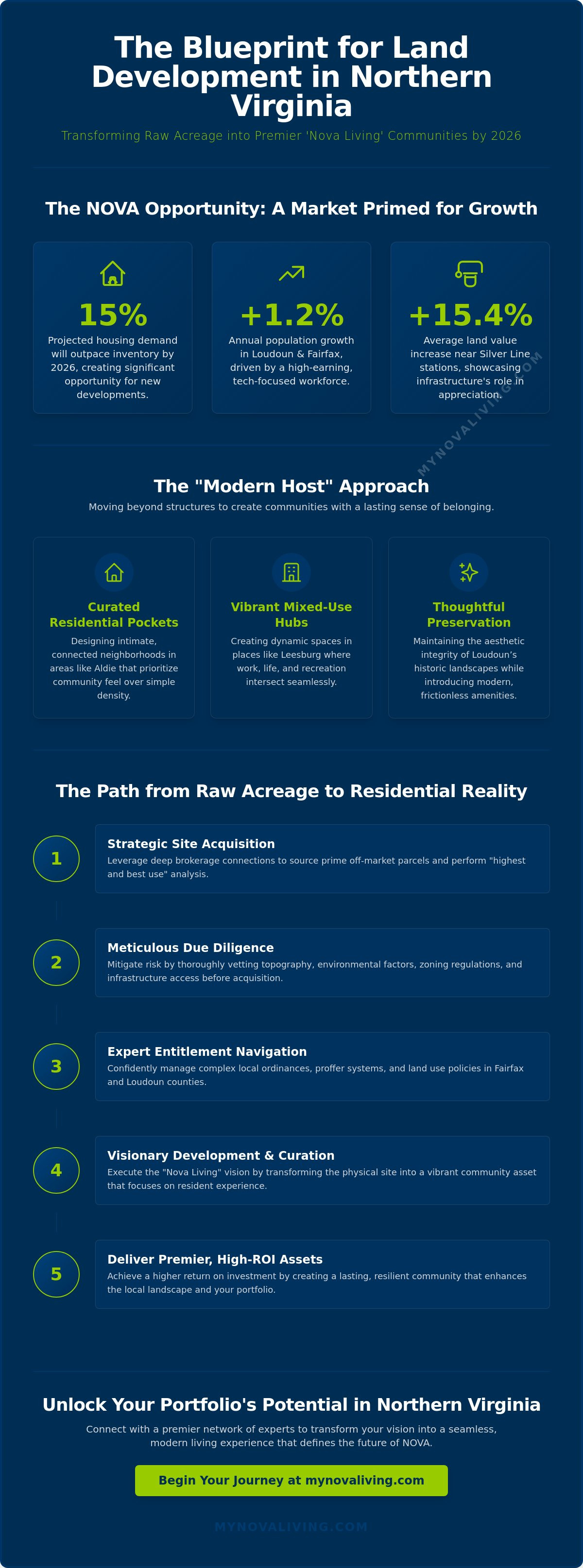
Loudoun and Fairfax Counties continue to lead the Mid-Atlantic with a projected 1.2% annual population growth through 2026. This influx of high-earning residents creates a constant, hungry demand for both housing and retail. The Silver Line extension, which has been fully operational for several years, has increased land values within a half-mile of its stations by an average of 15.4% compared to 2023 benchmarks. Before starting a project, it's vital to grasp what land development entails regarding the conversion of raw land into functional, built environments. Land development is the transformation of landscape to meet community needs.
The tech corridor's appetite remains insatiable. Data center capacity in the Ashburn and Leesburg areas reached a record 3,200 megawatts by the start of 2026. This industrial growth pushes residential needs further west into the countryside. You'll find the most exciting opportunities in areas like Aldie and Leesburg. Local expertise in these specific sub-markets is non-negotiable. Mitigating risk requires a deep understanding of local proffer systems and environmental ordinances that can stall a project for months if handled incorrectly. You need a partner who understands the nuances of the local soil and the local council.
From Investment to Community Impact
We embrace the "Modern Host" approach to land development. This philosophy moves beyond high-density blocks to create curated spaces where people genuinely want to spend their lives. You're looking for a feeling of home, not just a square footage calculation. In Middleburg, this involves a delicate balance. Developers must preserve the historic character of the village, which dates back to 1787, while introducing the modern, frictionless amenities that today's residents demand. It's about creating a seamless experience between the old world and the new.
Thoughtful development creates the "Nova Living" standard of quality. It's a commitment to a lifestyle that prioritizes well-being and social connection. By focusing on the resident's experience, you ensure your investment remains vibrant and resilient against market fluctuations. This standard is achieved through several key focus areas:
- Curated Residential Pockets: Designing neighborhoods in Aldie that feel intimate and connected.
- Vibrant Mixed-Use Hubs: Creating spaces in Leesburg where work, life, and play intersect seamlessly.
- Thoughtful Preservation: Maintaining the aesthetic integrity of Loudoun's historic horse country while adding value.
You're not just building units; you're facilitating a sense of belonging. This focus on the human element is what differentiates a standard project from a premier investment. Experience the ease of a development process that puts the community first, ensuring your portfolio grows alongside the region's prosperity. When you prioritize the resident, the financial returns follow naturally.
From Raw Acreage to Residential Reality: A Case Study in NOVA
Imagine a 10-acre wooded parcel in Sterling. Right now, it's just a quiet stretch of greenery, but for a savvy investor, it's a blueprint for a vibrant neighborhood. Transforming raw land into a residential destination requires a mix of local intuition and technical precision. This case study explores how a typical 2026 project moves from a simple plot to a curated living space through strategic land development.
Site Acquisition and Vision
Success starts with finding the right ground. Most prime land development opportunities in the Ashburn and Aldie corridors never hit the public market. You find them through deep-rooted brokerage connections. For a 10-acre site in Sterling, we evaluate the "highest and best use" by analyzing neighboring density and infrastructure. An initial site assessment is vital. Identifying topography challenges, such as 15 percent slopes or hidden drainage issues, happens in these early weeks. These details determine if your vision for a luxury enclave is physically and financially viable before you commit capital.
The Entitlement Journey
The path from vision to reality runs through local government offices. You must align your project with the Comprehensive Plan to ensure the county supports your density goals. This involves detailed coordination with planning commissions and civil engineers. In areas like Reston, community sentiment plays a major role. You'll manage public hearings where neighbors voice opinions on traffic and aesthetics. Understanding Loudoun County's land development process helps you set realistic expectations for your investors. Expect a timeline of 14 to 22 months from your initial application to achieving shovel-ready status. It's a marathon of patience and professional advocacy.
The Financial Outcome
The value shift in Northern Virginia is dramatic. Raw land in high-growth corridors might trade for a specific baseline price per acre. Once you secure entitlements and install basic infrastructure like roads and utilities, that value climbs significantly. Developed lots often sell to builders for three to four times the original raw land cost. This margin rewards the risk taken during the entitlement phase. When you build with a focus on resident well-being, the final product becomes more than a house; it becomes a home. If you want to see how these finished spaces look when managed with care, explore our curated living communities to see the standard we set for modern residents.
Navigating Zoning and Entitlements in Aldie, Leesburg, and Beyond
Your vision for a new community starts with the map. In Northern Virginia, success depends on aligning your project with the local Comprehensive Plan. While zoning dictates what you can build today, the Comprehensive Plan reveals what the county wants to see tomorrow. Investors who study these long-term blueprints find it much easier to secure approvals for ambitious projects.
You'll encounter common classifications like R-1 for low-density residential or PD-H (Planned Development Housing) for those vibrant, mixed-use neighborhoods that modern residents crave. Commercial overlays often add layers of design standards to ensure a seamless look across the streetscape. Understanding these nuances helps you avoid costly delays during the initial land development phase.
Securing a rezoning in Loudoun or Fairfax often involves "Proffers." These are voluntary contributions developers make to fund local infrastructure, such as the $120 million Ashburn Recreation and Community Center or specific road improvements. It's a collaborative way to ensure your project strengthens the existing community and gains the support of local supervisors.
If you're looking at Middleburg or Leesburg, prepare for a curated approach. These towns protect their heritage through strict architectural reviews. Every finish and material must feel authentic to the local 18th-century aesthetic, ensuring new growth respects the historical soul of the region.
Loudoun County vs. Fairfax County Regulations
Explore the possibilities within Loudoun's Transition District, a 22,000-acre area designed to buffer urban Ashburn from the rural west. In Ashburn, expect density requirements to favor transit-oriented heights near the Silver Line. Meanwhile, Fairfax County's land development process focuses heavily on infill and revitalizing older commercial corridors into modern living spaces. Each jurisdiction has its own Unified Development Ordinance (UDO) that dictates specific setbacks and open space requirements you must follow.
The Permitting and Approval Process
In 2026, site plan reviews focus intensely on sustainability and smart technology. County engineers look for advanced stormwater management and energy-efficient layouts. You must also manage Resource Protection Areas (RPAs), which typically require a 100-foot vegetated buffer from streams to protect the local watershed. Entitlements are the legal rights to develop land for a specific use. Securing these rights is the most critical milestone in your land development journey. It transforms a simple plot of dirt into a high-value asset ready for construction. This phase requires patience and precision, but the result is a project that stands the test of time.
The Essential Due Diligence Checklist for NOVA Land Acquisitions
Success in land development starts long before the first shovel hits the dirt. You need a clear roadmap to navigate Northern Virginia’s unique landscape and protect your capital. This process isn't just about checking boxes; it's about uncovering the soul of the property and ensuring it can support a vibrant community. Follow these five steps to secure your investment's future.
- Step 1: Title and Boundary Survey. Ensure clear ownership and identify any restrictive easements. You don't want to discover a hidden utility line running through your primary building envelope after you've closed.
- Step 2: Environmental Phase I Assessment. Identify potential contamination or protected wetlands early. Northern Virginia's landscape is beautiful but complex, and protecting local ecosystems is a top priority for 2026 projects.
- Step 3: Utility Feasibility. Confirm access to public water and sewer. In today's market, high-speed fiber is just as vital as electricity. Your residents expect a seamless, connected lifestyle.
- Step 4: Geo-technical Analysis. Test the soil stability. Northern Virginia contains pockets of marine clay that can shift, so you must ensure the ground is ready for solid residential foundations.
- Step 5: Financial Feasibility. Calculate your hard costs for construction against the soft costs of architecture and legal fees. A thoughtful budget is the foundation of a stress-free project.
Environmental and Historical Constraints
Northern Virginia protects its heritage and its water with passion. The Chesapeake Bay Preservation Act affects many properties, creating Resource Protection Areas that can limit where you build. If you're looking at land in Middleburg or Leesburg, historical surveys are a standard part of the journey. These towns value their 18th-century roots, and identifying archaeological sites early prevents delays. In urban centers like Sterling and Reston, you'll focus on managing stormwater runoff. Modern requirements often favor underground systems to keep the surface beautiful and functional.
Infrastructure and Utility Access
Building in the rolling hills of Aldie offers an aspirational lifestyle, but it requires careful planning for utility extensions. You'll need to coordinate closely with local providers to bring modern amenities to more secluded spots. Every project also requires a VDOT entrance permit to ensure safe access from state-maintained roads. This step is crucial for maintaining the flow of the neighborhood. By planning for "smart home" infrastructure from day one, you create a living space that feels ready for the future. It's about building a place where people truly feel at home.
Ready to see how thoughtful design transforms a property? Explore our curated living spaces and see the Nova Living standard in action.
Maximizing Your Portfolio with Professional Land Development Consulting
Transforming raw acreage into a high-yield asset requires more than a simple transaction. It demands a curated vision. Robert Caicedo acts as your strategic bridge, turning Northern Virginia’s complex zoning and topographical challenges into streamlined investment successes. You benefit from the Spring Hill Real Estate network, which connects you to a global pool of capital and a local database of high-net-worth buyers. This isn't just about selling property. It's about specialized Investment Property Consulting that builds multi-generational wealth through land development.
The "Modern Host" approach means we've already thought of the details that others overlook. From analyzing soil reports to navigating the latest 2026 environmental regulations, we handle the technicalities so you can focus on the results. We treat your investment with the same care we give to a luxury residence, ensuring every step feels thoughtful and intentional. Our goal is to alleviate the stress of the entitlement process, replacing it with the excitement of seeing your portfolio grow in one of the nation's most vibrant markets.
The Value of Expert Representation
Generic agents often miss the nuances of pro-formas or entitlement risks. A dedicated consultant understands that your parcel isn't just soil; it's a future community. We position your developed lots directly in front of top-tier home builders, ensuring your exit strategy is robust. This high-level positioning is why many investors see a 15% to 20% increase in project valuation before a single shovel hits the ground. Our strategic marketing highlights the lifestyle potential of your land, making it irresistible to developers who value quality and modern design.
- Strategic Positioning: We market your lots to builders who specialize in high-end, modern living.
- Global Reach: Our international real estate services provide a seamless entry for global investors eyeing the DC metro market.
- Expert Negotiation: We bridge the gap between technical land requirements and profitable investment outcomes.
Start Your Development Journey Today
The 2026 market rewards those who start their preparation today. Most successful projects in Fairfax or Loudoun County require at least 14 months for permitting and site work. We help you audit your portfolio now to ensure your land is shovel-ready when market demand peaks. Every project we touch carries the "Nova Living" seal. This represents a specific standard of quality, modernity, and thoughtful design that attracts premium buyers. It's about creating a sense of home and belonging in a vibrant landscape.
Your journey toward a curated, high-quality investment starts with a single, site-specific consultation. We'll look at your property's unique potential and map out a path that prioritizes your well-being and financial goals. Don't leave your land's future to chance when you can have a partner who understands the rhythm of the Northern Virginia market. It's time to move past the technicalities and start building your legacy.
Build the Future of Northern Virginia Living
Success in the 2026 market requires more than just capital; it demands a deep understanding of local nuances. You've explored how navigating the complex zoning laws of Loudoun and Fairfax County determines the ultimate viability of your project. By applying the rigorous due diligence standards we've discussed, you turn raw acreage into a vibrant community that residents are proud to call home. This strategic approach to land development ensures your portfolio remains resilient and high performing in an evolving landscape.
Robert Caicedo brings a global perspective backed by deep local roots to every investment. Affiliated with Spring Hill Real Estate since its establishment in 2005, Robert offers the sophisticated expertise needed to master the specific entitlements of Aldie and Leesburg. Experience a seamless transition from vision to reality with a partner who prioritizes your long term success and the well being of the community. Partner with Robert Caicedo for Expert Land Development Consulting. Your vision for the next great Northern Virginia neighborhood is within reach.
Frequently Asked Questions
What is the first step in the land development process in Northern Virginia?
Your first step is conducting a comprehensive feasibility study to evaluate zoning and environmental constraints. You'll need to verify if your vision aligns with the 2026 Comprehensive Plan for your specific county. This initial phase identifies physical and legal barriers before you commit capital. It's about creating a seamless path forward for your investment from day one.
How long does it typically take to get land entitlements in Loudoun County?
You should expect the entitlement process in Loudoun County to take between 12 and 24 months. This timeline includes your pre-application meetings, public hearings, and final Board of Supervisors approval. Recent data from 2024 shows that complex rezoning cases often lean toward the 24 month mark. Planning for this duration ensures your project remains financially viable and avoids unexpected delays.
What is the difference between a byproduct of land development and real estate development?
Land development is the horizontal process of preparing the earth and infrastructure, while real estate development focuses on vertical construction. Think of land development as the curated foundation that includes grading, utilities, and roads. Real estate development is the final stage where you build the vibrant homes or commercial spaces. Both are essential to creating a thoughtful community where people feel they belong.
Are there specific environmental regulations for land development near the Potomac River?
Yes, you must adhere to the Chesapeake Bay Preservation Act which mandates 100 foot Resource Protection Area buffers. These regulations protect water quality by limiting land disturbance near the Potomac River and its tributaries. In Fairfax County, 10% of the land falls under these strict environmental guidelines. Navigating these rules carefully ensures your project respects the local ecosystem while meeting modern sustainability standards.
Can I develop land in Middleburg if it has a historic easement?
You can develop land in Middleburg with a historic easement, but your plans must receive approval from the Virginia Outdoors Foundation or the local land trust. These easements often restrict density to one dwelling per 50 acres to preserve the area's heritage. You'll work within these thoughtful constraints to maintain the aesthetic charm of the region. It's a delicate balance between modern living and historic preservation.
What are proffers, and why are they important for Northern Virginia developers?
Proffers are voluntary contributions you offer to a locality to offset the impact of your new project on public infrastructure. Since the 2016 Virginia General Assembly reforms, these must specifically address impacts like increases in local school enrollment or traffic volume. They're vital because they help you gain community support and official approval. Proffers ensure your development adds value to the existing neighborhood.
How do I determine the highest and best use for my raw land?
You determine the highest and best use by analyzing what's legally permissible, physically possible, financially feasible, and maximally productive. This four step appraisal process ensures your land development strategy yields the strongest return on investment. You'll look at 2026 market trends to see if a multifamily complex or a boutique retail space fits the current demand. It's about finding the perfect purpose for your property.
Is it better to sell raw land or develop it before selling to a builder?
You'll typically see a 30% to 40% increase in value if you secure entitlements before selling to a builder. Selling raw land is faster, but developing it yourself captures the entitlement premium that builders are willing to pay for ready to use lots. If you prefer a seamless, lower risk exit, selling raw is the way to go. If you want to maximize your profit, finishing the site is your best move.


