

Closing doesn’t always mean the seller moves out that day. A rent-back agreement lets the seller stay in the home for an agreed period after the sale closes, usually in exchange for rent. If you’re weighing what a rent-back agreement is and whether it’s a good idea in Ashburn, the key is balancing the seller’s moving needs with the buyer’s timeline and lender requirements. Sellers usually can’t remain for more than 60 days under a rent-back arrangement, though the details can vary.
It’s easy to see the appeal of a rent-back agreement in Ashburn: extra time can ease the move between homes, especially if construction or closing plans shift. But the buyer owns a home they can’t immediately occupy, so clear terms matter to both sides.
This guide explains how rent-backs work, when they may make sense, and what to negotiate, including the stay’s length, rent, security deposit, insurance, and what happens if the seller doesn’t leave on time. You’ll get a clearer picture of the trade-offs and how to agree on a workable timeline before closing.
Key Takeaways
- Compare post-closing occupancy with alternatives such as a short-term rental or temporary lodging, then weigh the added move against your closing timeline.
- Set the move-out date, rent, deposit, maintenance duties, insurance responsibilities, and holdover terms in writing before closing.
- Construction delays, an out-of-state move, and limited housing or moving options can make extra time in the home useful.
- Understand how the agreement sets daily rent and what happens if the seller stays past the agreed date, so both sides can plan with fewer surprises.
What is a rent-back agreement?
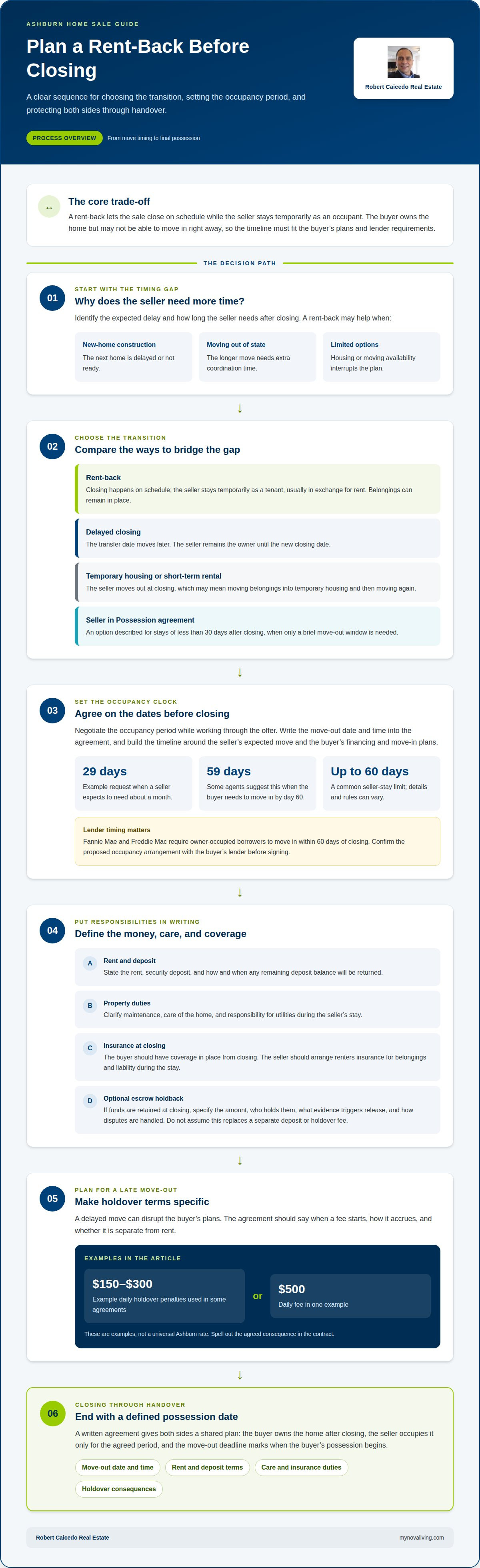
A rent-back is a written rental agreement that lets a seller stay in the home after closing in exchange for rent. In Ashburn, the length of the stay affects the buyer’s move-in plans, insurance, and financing.
Seller Occupancy After Closing
The seller’s post-closing occupancy begins after ownership transfers, while the former owner remains temporarily in the home. For an Ashburn seller, a stay of up to 60 days is a common limit, though rules can vary by state. The agreement should set the move-out date, rent, security deposit, and responsibilities. That clarity helps the buyer plan for possession and establishes when the seller’s role as occupant ends.
Rent-Backs Compared With Delayed Closings
A rent-back lets the sale close on schedule, then gives the seller a short stay as a tenant. A delayed closing changes the transfer date itself, so the seller remains the owner until the later date. For example, if the seller’s new home isn’t ready by the planned closing, both parties can weigh a rent-back against postponing closing. The choice determines who owns the home during the extra time.
Other options include temporary housing, a short-term rental, or a Seller in Possession agreement for stays under 30 days. Each option affects the move differently: temporary housing requires another move, while a rent-back keeps belongings in place. A leaseback can suit a brief gap, but the buyer’s lender may limit occupancy. Fannie Mae and Freddie Mac require owner-occupied borrowers to move in within 60 days of closing.
Insurance needs to change at closing. The buyer should have coverage in place from the closing date, while the seller should arrange renters insurance for belongings and liability during the stay. The written agreement can also define maintenance duties and the security deposit. These terms clarify who is responsible while the buyer owns the home and the seller occupies it.
When selling in Ashburn, compare the expected move date with the buyer’s financing and housing plans before choosing a rent-back. If the seller needs more time than agreed, extending occupancy after closing can leave both sides with fewer options. An agreement made before closing sets a defined transition instead of an open-ended stay.
Negotiating timelines, deposits, and holdover penalties
Set the occupancy period while negotiating the offer, not after closing. A seller expecting about a month may request 29 days, while some agents suggest 59 days when the buyer needs to move in by day 60. Build in a few extra days beyond the seller’s expected move, since asking for an extension after closing can weaken the seller’s position. The buyer’s lender and occupancy requirements should shape the proposed timeline.
Write the move-out date and time into the contract, along with rent, maintenance duties, and what happens if the seller stays past the deadline. A deposit gives the buyer funds to address specified obligations, but the agreement should state how and when any remaining balance will be returned.
Holdover terms matter because a delayed move can disrupt the buyer’s plans. Some agreements use daily penalties of $150 to $300, while one example sets a $500 daily fee. These are examples, not a universal Ashburn rate. Spell out when the fee starts, how it accrues, and whether it is separate from rent. Clear wording gives both sides a defined consequence if the agreed deadline passes.
An escrow holdback is another possible contract term: funds are retained at closing and released under conditions written into the agreement. Specify the amount, who holds it, what evidence triggers release, and how disputes are handled. Don’t assume an escrow holdback replaces a separate security deposit or holdover fee. Buyers should also confirm the proposed occupancy arrangement with their lender before signing, since lender limits can affect the acceptable length. Put these details in writing so expectations stay clear from closing through handover.
Seller situations that may call for a rent-back
A rent-back can bridge a gap when the seller’s next home or moving plans aren’t ready by closing. Whether it makes sense depends on the reason for the delay, the time needed, and the buyer’s plans.
Seller-in-Possession Agreements
A Seller in Possession agreement can cover a seller’s stay of less than 30 days after closing. It offers a shorter post-sale arrangement when the seller needs a brief window to move, rather than a longer rental period. For example, sellers facing a moving-truck shortage may need a few extra days to clear the home. The agreement should define the end date and occupancy terms, so the buyer knows when possession begins.
A longer rent-back may suit a different transition. If construction on the seller’s new home is delayed by two months, the seller may need more time than a short possession agreement allows. Other common reasons include moving out of state, limited housing inventory, or an interruption in construction. Each situation affects how long the seller expects to stay and whether the buyer can accommodate the delay.
Seller Benefits and Risks
For sellers, staying after closing can reduce the pressure to coordinate a sale, purchase, and move on the same day. It may also avoid moving belongings into temporary housing and then moving them again. The trade-off is that the seller becomes an occupant in a home owned by the buyer. The written terms should cover rent, utilities, care of the property, and the final move-out date.
Before agreeing, sellers should consider how the occupancy period fits their next-home timeline and the buyer’s mortgage. A delay in leaving can disrupt the buyer’s plans, while leaving early may mean paying for unused rental time, depending on the agreement. Clear dates and responsibilities help both parties understand the arrangement. A rent-back works best when the seller’s expected move date is realistic and the buyer can accept temporary occupancy.
How rent-back agreements work
A rent-back gives the seller temporary possession after closing, under written payment and occupancy terms. If you’re asking what a rent-back agreement is and whether it’s a good idea in Ashburn, weigh the move timeline, lender requirements, and responsibilities during the stay.
Calculating Rent or an Occupancy Fee
In Ashburn, the parties can base rent or a daily occupancy fee on the buyer’s carrying costs or the home’s market rent. One method divides monthly principal, interest, taxes, and insurance by 30 to find a daily figure. Another divides monthly market rent by 30. The chosen method matters because it determines the amount due for each day of possession.
Write the rent calculation, payment schedule, and treatment of partial periods into the agreement. For example, specify whether the seller pays upfront or on set dates. Clear terms help prevent disagreements about the amount due if occupancy ends earlier than planned.
Utilities, Maintenance, and HOA Fees
In Loudoun County, the agreement should assign utilities, maintenance, repairs, and HOA fees to the responsible party. The written terms should name who pays each expense during the seller’s possession. This matters because ownership transfers at closing, even though the seller remains in the home.
Separate recurring bills from repair responsibilities. State who reports a repair, arranges the work, and approves it. Photographs taken before occupancy can help document the home’s condition. The buyer’s insurance should begin at closing, while the seller should arrange renters insurance for belongings and liability.
For homeowners considering what a rent-back agreement is and whether it’s a good idea in Ashburn, the practical test is whether the written terms match the actual transition. Set a handover process, document the property’s condition, and record any agreed repairs. A real estate attorney can explain how the agreement’s terms apply to each party. Clear records make the final transfer of possession easier to manage.
Robert Caicedo Real Estate
Robert Caicedo Real Estate can help you consider a rent-back as part of your sale or purchase, including how the proposed stay fits the transaction’s timing and terms. With seller or buyer representation, you can discuss the practical trade-offs from your side and shape negotiations around your move and possession plans.
If a new build is part of your transition, representation for new construction homes can help connect the purchase timeline with your selling plans. The goal is a clear path between homes, with expectations discussed before closing rather than left to the final days.
For guidance on your Ashburn sale or purchase and its rent-back terms, contact Robert Caicedo Real Estate.
Plan Your Next Move With Clarity
Deciding whether a rent-back agreement is a good idea in Ashburn starts with your next-home timeline. Before making or accepting an offer, consider how much flexibility you need and which trade-offs you can accept. A carefully planned transition can help you move forward without rushing a major decision. The right arrangement depends on the details of your transaction.
Use that conversation to clarify your priorities, identify any timing concerns, and make sure the agreement reflects the move you’re planning. Whether you’re selling, buying, or coordinating a new-construction purchase, Robert Caicedo Real Estate can help you approach the transaction with a clear plan. Contact Robert Caicedo Real Estate to discuss your next step. A thoughtful plan can make the move ahead feel more manageable and more like home.
Frequently Asked Questions
Are sale-leaseback companies safe?
There isn’t one safety answer for every sale-leaseback company; the contract and transaction structure matter. Review the sale price, rent, fees, lease term, and conditions that could end your occupancy. Sale-leaseback operators faced state attorney general enforcement matters in Massachusetts, Michigan, New York, Oregon, and Washington during 2023 through 2026. That history makes careful review of the specific offer especially important.
Can I sell my house and stay for a few months?
Yes, a buyer and seller can agree to post-closing occupancy, but the permitted period depends on the agreement and the buyer’s financing. A stay of up to 60 days is a common rent-back limit in the United States, with rules varying by state. A longer stay may be treated as a tenancy or affect an owner-occupied loan, so the parties should settle the arrangement before closing.
Do I still get the capital-gains tax exclusion if I rent back my house after selling?
Renting back after a sale doesn’t automatically remove eligibility for the home-sale capital-gains exclusion. According to the Internal Revenue Service, eligible homeowners may exclude up to $250,000 in gain, or $500,000 for married couples filing jointly. The seller generally must have owned and used the home as a main home for at least two of the five years before the sale.
What happens if the seller doesn’t move out on time?
The seller may owe the holdover amount specified in the written agreement, and the buyer may face a delayed move-in. For example, the contract can define when a daily charge begins and how it applies after the move-out deadline. It should also clarify how the buyer and seller will communicate about a delay. Don’t assume an extension is automatic; the agreed terms determine the next steps.
What net proceeds should I expect from a sale-leaseback?
Net proceeds vary with the offer, fees, and any amount needed to pay off existing debt. Sale-leaseback operators commonly price offers at 85-95% of fair market value before fees; after fees, proceeds often amount to 78-90% of fair market value. Treat these as broad reported ranges, not a quote. Compare the written offer and total costs with your expected proceeds from a conventional sale.
What’s the difference between a rent-back and a sale-leaseback?
A rent-back is usually a short stay by the seller in the home after selling it to the buyer. A sale-leaseback involves selling the property to an operator and renting it back under a longer lease. Sale-leaseback programs typically run for one to five or more years, rather than covering only the brief transition between homes. The ownership change and occupancy term make the arrangements distinct.


