

Selling without a realtor means taking responsibility for the paperwork, disclosures, and closing details yourself. The legal risks of selling a house without a realtor in Virginia are easier to manage when you complete the state-specific seller disclosures, put the agreed terms in a purchase agreement, and arrange for the deed transfer documents to be prepared for closing. For homes built before 1978, federal law requires a lead-based paint disclosure, according to the U.S. Environmental Protection Agency.
Want to sell your home yourself without missing a crucial step? This guide explains the legal risks of selling a house without a realtor in Virginia, including paperwork, disclosures, and the deed transfer at closing. It also outlines how an attorney or title company can help you review the transaction and prepare for closing.
Key Takeaways
- Map out the sale paperwork and key responsibilities before you list, so you can manage the process with fewer surprises.
- Arrange for an attorney or title company to help review closing documents and handle deed transfer details.
- Prepare clear disclosures about known defects and provide them before the purchase agreement is finalized.
- If the home was built before 1978, include the federally required lead-based paint disclosure in your sale paperwork.
Attorney and title company assistance
- Consider having a real estate attorney review the purchase agreement before you accept an offer and the closing documents before you sign them. A review can flag unclear terms, missing details, or provisions that differ from what you and the buyer agreed. Compare key points, such as the closing date and included fixtures, against your negotiations.
- Use the review to resolve questions while the agreement can still be clarified. Ask the attorney to explain each obligation, deadline, and contingency in plain language. Check that the buyer and seller names, property description, sale terms, and signatures are consistent across the documents. Mismatches can cause confusion at closing or disputes about what each party accepted.
- Discuss closing support with a real estate attorney or title company. Either can help organize the closing process and reduce legal risk in a for-sale-by-owner (FSBO) transaction. Share the accepted agreement and relevant paperwork so the professional can identify documents that need attention. Keep a written record of questions, corrections, and the final versions each party signs.
- Budget for legal review using the right context. Ask what the work covers, such as agreement review, closing-document review, or assistance at closing. Choose the scope that addresses your transaction’s needs, then send documents early enough for careful review before signing.
Closing paperwork and deed transfer
- Use the signed purchase agreement as your transaction checklist. Note the agreed sale price, closing date, included items, and conditions, then compare each detail with the closing documents. If the agreement says the washer stays, for example, make sure later paperwork doesn’t contradict that term.
- Gather the records connected to the home and sale in one organized file. Keep the purchase agreement, disclosure forms, written amendments, and communications about changed terms together. Label final documents clearly so the closing professional can work from a consistent record and spot discrepancies before signing.
- Coordinate the deed transfer with the title company or attorney handling closing. The deed-transfer documents convey ownership, and the title company or attorney prepares them as part of closing. Share the accepted sale terms and transaction details promptly, then follow the professional’s instructions for reviewing and signing the documents.
- Review the deed carefully before signing. Compare the buyer and seller names, property description, and transaction details with the sale paperwork. If a name appears differently across documents, raise the mismatch with the closing professional before signing. Don’t assume an apparent inconsistency can be corrected after the transfer.
- Track documents that still need action. Make a simple list of each document, the person responsible, and its status, such as prepared, reviewed, or signed. Keep completed paperwork and written amendments together so you can distinguish final versions from drafts during closing.
- Before closing, compare the final paperwork with the terms you accepted. Confirm that agreed changes appear in the appropriate documents and that no draft remains in the signing set. Ask the attorney or title company preparing the transfer documents about any unclear deed language. A consistent file helps keep the ownership transfer aligned with the sale agreement.
FSBO legal and paperwork risks
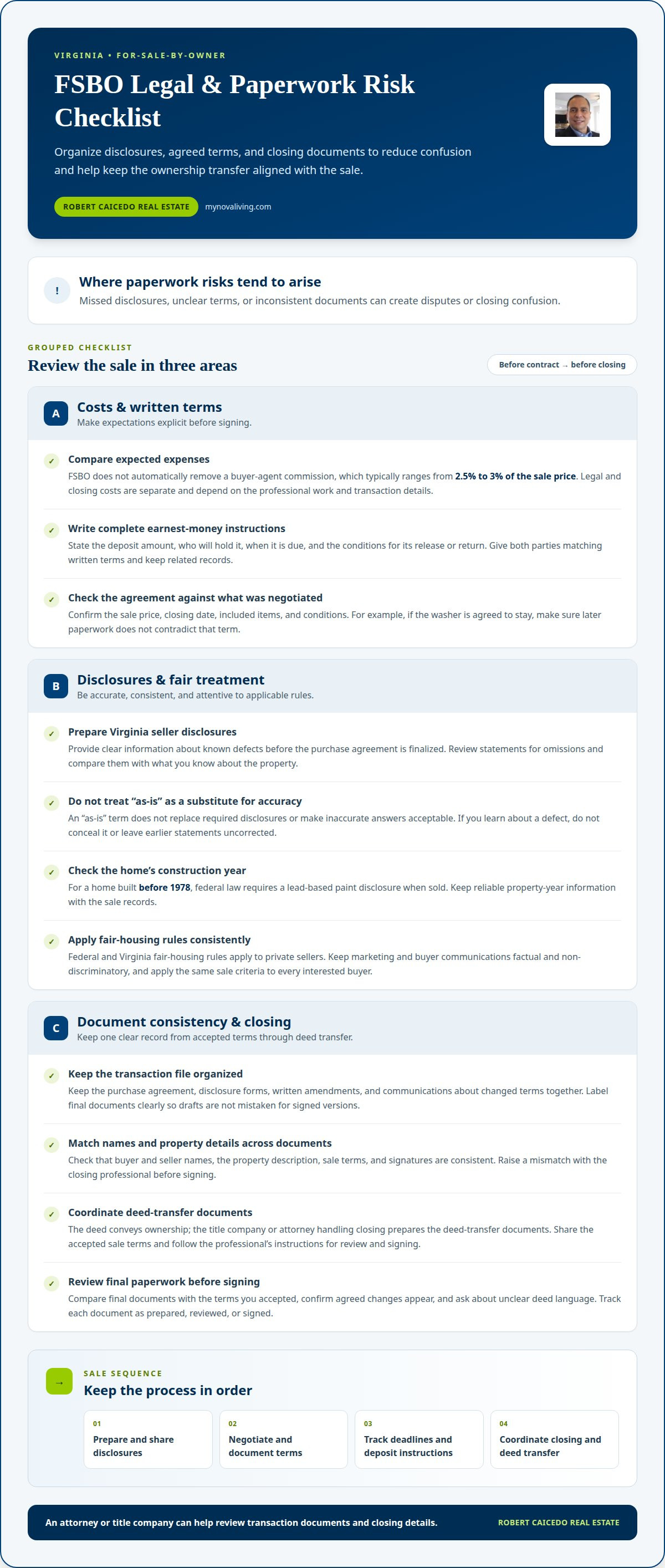
The legal risks of selling a house without a realtor in Virginia often involve missed disclosures, unclear terms, or inconsistent paperwork. Use a clear process to organize the sale and address these risks.
- Compare expected expenses before setting your sale terms. FSBO doesn’t automatically remove a buyer-agent commission, which typically ranges from 2.5% to 3% of the sale price. Legal and closing costs are separate, and depend on the professional work and transaction details involved.
- Put earnest-money instructions in the purchase agreement. Specify the deposit amount, who will hold it, when it is due, and the conditions for its release or return. Give both parties matching written terms, and keep a record of the deposit and related communications.
-
Review Disclosure and Defect Duties
It is prudent to provide buyers with information about known defects before the contract. Don’t assume an “as-is” term replaces required disclosures or makes inaccurate answers acceptable. Before signing, review your statements for omissions and compare them with what you know about the property.
-
Follow Fair Housing Rules
Keep property marketing and buyer communications factual, consistent, and non-discriminatory. Federal and Virginia fair-housing rules apply to private sellers. Describe the home and its features, avoid language or decisions that exclude or discourage people based on protected characteristics, and apply the same sale criteria to every interested buyer.
-
Avoid Misrepresentation and Nondisclosure
Check every statement about the property against what you know before sharing it with a buyer. Incomplete seller disclosures can lead to post-closing litigation. If you learn about a defect, don’t conceal it or leave earlier statements uncorrected. Keep accurate disclosure and communication records to help prevent disputes about what you told the buyer.
- Move through the sale in sequence: prepare and share disclosures, negotiate and document the purchase terms, track deadlines and deposit instructions, then coordinate closing paperwork and the deed transfer. An attorney or title company can help review transaction documents and closing details.
Lead-based paint disclosure requirements
- Confirm the home’s year of construction before preparing sale documents. According to the U.S. Environmental Protection Agency, homes built before 1978 are subject to a federal lead-paint disclosure requirement when sold. Use a reliable property record to establish the construction year, then keep that information with the transaction file.
- Flag the disclosure requirement early in your FSBO paperwork. If the home was built before 1978, plan for the lead-paint disclosure as part of the sale documents rather than leaving it until closing. This gives you time to organize the relevant paperwork alongside the purchase agreement and other transaction records.
- Keep lead-related paperwork distinct and easy to find. Create a clearly labeled section in your sale file for the required disclosure, and store its documents with the home’s other records. For example, separate lead-paint documents from general property information so you can locate them when assembling the buyer’s transaction file.
- Match the disclosure paperwork to the home being sold. Check that the property identification and construction-year information refer to the same residence throughout your file. Resolve inconsistent descriptions before sharing the documents. Clear identification helps prevent confusion with paperwork for another property or transaction.
- Track when you provide the lead-paint disclosure. Add it to your document checklist, note the date it was provided, and keep a copy with the transaction records. Store that record with the signed purchase agreement and related correspondence so you can follow the paperwork trail if questions arise.
- Before finalizing the document package, check that it includes the lead-paint disclosure and the correct property details. Keep the completed paperwork accessible to the closing professional handling the transaction. This final review can catch a missing or misplaced document before the sale moves forward.
Robert Caicedo Real Estate: Seller Representation
Robert Caicedo Real Estate provides Seller Representation for homeowners who want professional guidance through a sale. If managing buyer conversations, evaluating offers, and keeping the transaction moving feels like more than you want to handle alone, representation can offer support while you remain part of each decision.
Bring your priorities and questions to the conversation, including the timing and terms that matter most to you. If you’re weighing a private sale against representation, discuss what support would help you move forward with clarity. A focused conversation about your home and plans is a practical next step.
Contact Robert Caicedo Real Estate or visit mynovaliving.com to start the conversation.
Choose the Next Step That Fits Your Plans
A private sale is one way to manage your move, but it isn’t the only option. Consider how much of the process you want to handle yourself, which decisions you’d like support with, and what kind of transition you envision after the sale. Those priorities can help you decide whether to continue independently or work with a real estate professional.
The legal risks of selling a house without a realtor in Virginia deserve careful consideration alongside your timing, goals, and comfort with managing the transaction. If you’re planning your next move, Robert Caicedo Real Estate offers Seller Representation, Buyer Representation, and support with New Construction Homes. Talk with Robert Caicedo about your sale and what comes next in Aldie, Leesburg, Middleburg, Ashburn, Sterling, Reston, or Washington, D.C.
Contact Robert Caicedo Real Estate to talk through your real estate plans and choose a thoughtful next step.
Frequently Asked Questions
What disclosures are required when selling a house in Virginia without a realtor?
Virginia FSBO sellers should complete the applicable state seller disclosures and provide information about known defects before the purchase contract. Keep a copy of each disclosure and note when you delivered it. For example, if you discover a roof leak while preparing the home for sale, make sure the disclosure accurately reflects what you know before the buyer signs.
What Virginia laws govern lead-based paint disclosures for home sales?
For a Virginia sale, the federal lead-paint disclosure requirement applies to homes built before 1978, according to the U.S. Environmental Protection Agency. Establish the home’s construction year and include the relevant disclosure paperwork in the sale file if it falls within that range. Keep the completed document with the transaction records so it can be matched to the correct property.
What are the risks of mishandling a purchase contract in a Virginia FSBO sale?
A purchase contract can cause confusion or disputes if its written terms don’t match what the buyer and seller agreed. Review the property description, sale terms, deadlines, and conditions before signing. If the parties agree to include an appliance, for instance, make sure the contract says so. Keep signed amendments with the original agreement to maintain a clear record of changes.
Do Virginia home sellers need a real estate attorney, and what can an attorney handle?
FSBO sellers can benefit from having a real estate attorney review the purchase agreement and closing documents, even if they prepared most of the paperwork themselves. An attorney can explain unclear terms and help address inconsistencies before signing. A title company can also assist with closing and deed-transfer documents. Share the accepted agreement and transaction paperwork early enough for careful review.
What are the Virginia recording, deed, and transfer tax requirements when selling a home?
The deed transfers ownership, and the title company or attorney prepares the deed-transfer documents for closing. Keep the signed deed and related closing paperwork together. Ask the closing professional to explain any recording and transfer-tax items in your transaction documents, then compare those entries with the final sale paperwork to catch mismatches before the closing file is complete.
How do FSBO closing costs and legal fees compare with realtor commissions in Virginia?
FSBO sellers typically still pay the buyer-agent commission, usually 2.5% to 3% of the sale price.


