

Polybutylene pipes don’t automatically make a Reston condo unsellable or mean you must replace the plumbing before listing. If you’re asking how to sell a home with polybutylene pipes in a Reston condo, start by confirming what’s in the unit and gathering the information buyers are likely to ask about. Your options depend on the pipes’ condition, available records, condo responsibilities, and your priorities as a seller.
It’s understandable to worry that buyers, insurers, or lenders may raise concerns, or that a plumbing question could affect your move. But replacing everything isn’t the only path. Virginia sellers who know their property has polybutylene pipes should disclose that information. In a condo, you’ll also need to clarify which pipes are within your unit, what the association maintains, and which records can help answer buyer questions.
This guide explains how to document the plumbing, check relevant condo records, and compare three practical choices: replace before listing, sell as-is with disclosure, or negotiate with a buyer. You’ll also learn when a plumbing assessment may help and how to prepare for questions without taking on work you may not need. Clear information can help you choose a sale strategy that fits your Reston home and your next move.
Key Takeaways
- Polybutylene pipe presence alone doesn’t confirm a leak or existing damage. Separate what’s known from what still needs verification.
- Build a property fact file and check condo documents to understand plumbing responsibilities before describing the pipes to buyers.
- Learn how to sell a home with polybutylene pipes in a Reston condo by comparing the trade-offs of replacing the pipes, selling as-is, or negotiating with a buyer.
- Coordinate plumbing information and association records before preparing listing language or responding to inquiries.
- Assess offers beyond the headline number, including contingencies, inspection requests, timing, and how new findings may affect your disclosures.
Selling a Reston Condo With Polybutylene Pipes: What the Issue Means
Polybutylene is a plastic material used in residential water supply systems, especially in homes built from the late 1970s through the mid-1990s. It drew concern because the material can deteriorate over time, potentially leading to leaks or breaks. The Polybutylene overview explains its history and properties, but the material alone doesn’t tell you whether a particular pipe is leaking or damaged now.
For a sale, keep four things distinct: confirmed material, observed condition, documented repairs, and unknowns. An invoice for a past repair doesn’t necessarily establish the condition of every pipe, and no visible leak doesn’t confirm the condition of concealed piping. Treat this as a fact-finding process, not an automatic instruction to replace the plumbing. Clear records can help you make an informed decision about how to sell a home with polybutylene pipes in a Reston condo.
How to identify polybutylene pipes in a condo
Start with existing plumbing, inspection, renovation, and insurance records. Look for references to pipe material, leaks, or completed work. Visible gray, blue, or black plastic piping, or a “PB2110” marking, can be a clue, but appearance alone isn’t definitive proof. Ask a qualified plumbing professional to confirm the material and assess accessible piping. If pipes are concealed behind walls or ceilings, ask what can and can’t be verified without opening those areas.
Why Reston condo buyers may ask about plumbing
Buyers may ask whether leaks have occurred, what repairs were made, how the plumbing has been maintained, and what remains uncertain. In a condo, responsibility may also depend on where a pipe is located and whether it serves only your unit or connects to shared building systems. Review the declaration, bylaws, maintenance records, and available association materials rather than assuming who is responsible for a particular line.
Keep pipe material, documented condition, and disclosure separate. You may know the material but have no record of a leak, or have a repair invoice without confirmation of all remaining pipework. State what your records establish, describe known issues accurately, and don’t present an unanswered question as a confirmed fact. This gives buyers useful context without overstating either the concern or the reassurance.
What to Verify Before Listing a Reston Condo With Polybutylene
Before choosing repairs or preparing listing details, create a fact file that separates confirmed information from unanswered questions. This gives you a reliable reference for disclosures and buyer inquiries about how to sell a home with polybutylene pipes in a Reston condo.
- Confirmed details: Pipe material and location, if documented or professionally confirmed.
- Known issues: Any leaks, water damage, or plumbing concerns you’re aware of.
- Completed work: Repairs, replacements, and related invoices or permits you can locate.
- Open questions: Areas that haven’t been inspected or details you can’t verify from available records.
Keep the supporting evidence with each note. For example, a contractor invoice may show that work was completed in one area, but it may not establish the material or condition of every pipe in the condo. Don’t describe the plumbing as fully inspected or problem-free unless the available records or a qualified assessment support that wording.
Records and inspections to gather before marketing
Collect prior inspection reports, plumbing invoices, permits, repair records, renovation documents, and relevant insurance correspondence. If you’re considering an assessment, ask a qualified plumbing professional what it can establish, which areas are accessible, and what will remain unknown. A limited visual review may not answer questions about concealed piping, so describe the assessment’s scope and findings precisely.
Disclosure rules are jurisdiction-specific. Check current Virginia requirements with an appropriate real-estate professional or attorney rather than relying on guidance for another state. For comparison only, this official bulletin from a state real estate commission discusses polybutylene disclosures in North Carolina. It isn’t a substitute for Virginia guidance.
Questions to ask the Reston condo association
Don’t assume the association or the unit owner is responsible for a pipe based on its location alone. Review the declaration and bylaws, then ask how they allocate responsibility for unit piping and common elements. Request available building-wide plumbing notices, maintenance records, project information, or claims relevant to your unit.
Also ask which resale documents are available and when they can be provided to prospective buyers. Keep the association’s responses with your records, and distinguish written confirmation from details that remain unverified. This can help you coordinate property information, disclosures, and buyer discussions as part of seller representation.
If you’re preparing a Reston condo sale, seller representation for your sale can help you organize property details and buyer conversations while plumbing questions are addressed by the appropriate professionals.
Replace, Sell As-Is, or Negotiate? Compare Your Reston Condo Sale Options
There isn’t one required path for every condo with polybutylene piping. Base your decision on verified plumbing information, condo rules, your timeline, and advice from the relevant professionals. Buyer expectations can differ, and an insurer or lender may raise case-specific questions. Confirm those concerns for your transaction instead of assuming the pipes will block a sale or that replacement will resolve every issue.
| Option | Preparation and documentation | Buyer questions and trade-offs |
|---|---|---|
| Replace before listing | Confirm the pipe scope, responsibility, approvals, and work requirements before authorizing plumbing work. Keep contracts, permits, and completion records. | Buyers may ask what was replaced and whether any piping remains. Work may address a documented concern, but it takes coordination and doesn’t guarantee a higher price or faster sale. |
| Sell as-is | Prepare accurate disclosures and organize available records about the material, known issues, and prior work. | Buyers may seek an evaluation, ask follow-up questions, or factor uncertainty into their offer. “As-is” describes the proposed condition. It doesn’t permit concealing known information or disregarding applicable disclosure requirements. |
| Negotiate with a buyer | Share relevant documentation and review proposed contract terms with your real-estate professional and, when appropriate, an attorney. | A buyer may request further evaluation or propose a remedy as part of negotiations. The final terms depend on the parties’ agreement and should be clearly documented. |
When pre-sale plumbing work may be worth exploring
Consider work if a qualified professional documents an active problem, the association identifies a relevant requirement, or your timeline and priorities support completing the project before marketing. Before proceeding, clarify which piping is involved, who has authority over it, and what approvals or coordination the condo requires. Don’t authorize work in a shared building system until the scope and responsibility are clear.
How an as-is sale or buyer negotiation can work
An as-is listing can still attract buyers, but buyers may ask about inspection access, previous leaks, and gaps in the available records. After reviewing the information, a buyer could request further evaluation or propose different terms. Respond consistently, and revisit your understanding if new findings emerge.
The right route depends on verified facts, seller priorities, and buyer response. If you’re weighing how to sell a home with polybutylene pipes in a Reston condo, compare the coordination and likely questions involved in each option, then choose with appropriate professional advice. Replacement is one possibility, not an automatic first step.
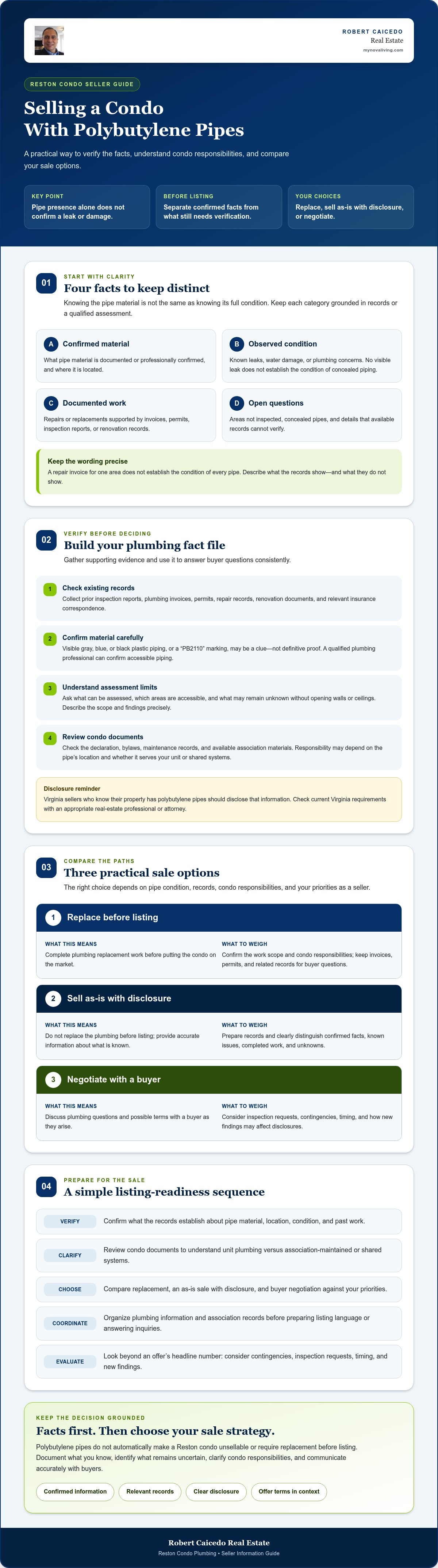
A Step-by-Step Plan to Prepare Your Reston Condo for Listing
A thoughtful listing starts with a clear record of what you know, not a guess about what buyers might ask. Use this sequence to coordinate plumbing information, condo records, and disclosure details before describing the property or responding to inquiries.
- Confirm what’s known. Review existing inspection and renovation records for references to pipe material, location, leaks, and prior work. Separate documented facts from your observations, estimates, and unanswered questions.
- Gather supporting documents. Organize plumbing reports, repair invoices, permits, insurance correspondence, and relevant building records. Note the date and scope of each document so it’s clear which area or work it covers.
- Ask the association for information. Review the declaration and bylaws, and request available maintenance records, plumbing notices, project details, and resale materials. Don’t assume the association or unit owner is responsible for a particular pipe until the governing documents or an appropriate source clarifies it.
- Resolve important unknowns. Ask a qualified plumbing professional what an assessment can confirm and what remains inaccessible. Direct responsibility or legal questions to the appropriate professional rather than presenting an assumption as a finding.
- Verify disclosure requirements. Confirm current Virginia forms, requirements, and timing with an appropriate real-estate professional or attorney before completing disclosures. Keep a copy of the final materials with the supporting records.
- Prepare consistent buyer-facing language. State the confirmed material, documented condition, known repairs, and remaining unknowns. Avoid broad assurances such as “no plumbing issues” unless the evidence supports that statement.
- Use the same facts in every conversation. Prepare a concise response for showings and inquiries. If new information comes in, review the listing language and disclosure materials with the appropriate professional so your communication remains accurate and consistent.
Create a clear plumbing and disclosure file
Make the file easy to scan. A simple summary can identify each document, its date, the area it covers, its findings, and any follow-up needed. Mark estimates as estimates and unanswered questions as unresolved. This helps prevent a partial repair record or limited assessment from being mistaken for a complete plumbing evaluation.
Prepare listing details and buyer conversations
A factual summary might identify polybutylene piping in a specified area, describe documented repairs, and note which details haven’t been confirmed. Tailor the wording to the evidence in your file. Seller representation can help organize property information and buyer discussions. Plumbing assessments and legal guidance should come from the relevant professionals.
For help preparing property information and buyer conversations for your Reston sale, explore Reston seller representation.
Selling Your Reston Condo: Manage Offers, Disclosures, and Next Steps
Once offers arrive, look beyond the headline price. Compare the complete terms and how each buyer plans to proceed. A higher offer with more conditions may suit you differently from a lower offer with a timeline or inspection process that better matches your priorities.
- Contingencies: Review the conditions that give the buyer time to inspect, review documents, or take other contract steps.
- Inspection requests: Note whether the buyer wants the plumbing evaluated and how any requested follow-up would be handled.
- Timing: Consider proposed milestones and whether they allow time to provide condo records or respond to new questions.
- Buyer concerns: Weigh questions about pipe material, prior work, and responsibility alongside the rest of the offer.
Terms and transaction requirements vary. Don’t assume a particular lender, insurer, or buyer will respond the same way as another. Ask the buyer to clarify concerns, and seek qualified advice about contract language, disclosure duties, or disputed responsibility rather than promising approval or a particular closing schedule.
Responding to inspections and buyer concerns
Read inspection findings carefully. Separate genuinely new evidence, such as a reported leak in an area not previously documented, from information already in your records. If a finding changes what you understand about the plumbing, discuss an accurate response with your seller’s agent and, as appropriate, a qualified plumbing professional or attorney.
Possible next steps may include clarifying the report, arranging further professional review, or negotiating a response within the contract. Keep communications consistent with the evidence and applicable disclosure guidance. No one can guarantee that a buyer will accept the findings or that financing, insurance, or the transaction will proceed on a particular schedule.
How a local seller’s agent can make the process clearer
A seller’s agent can help you consider listing strategy, coordinate property and association documentation, compare offer terms, and organize buyer discussions. That support can help you identify which questions need a factual response and which call for another professional’s review. Plumbing assessments and repairs belong with qualified plumbing professionals; legal questions belong with an attorney.
For how to sell a home with polybutylene pipes in a Reston condo, steady communication matters as much as the initial plan. Keep the records close, revisit earlier assumptions if new evidence appears, and evaluate each offer in light of your priorities.
If you’re preparing to sell a Reston condo and would like guidance on seller representation, discuss your property information, listing approach, and buyer communication with Robert Caicedo Real Estate.
Prepare Your Reston Condo Sale With Confidence
Polybutylene pipes don’t automatically require replacement before you sell. Start with what records and any qualified assessment can confirm, check condo documents for responsibility and building information, then decide whether to replace, sell as-is, or negotiate based on your priorities and buyer response.
Understanding how to sell a home with polybutylene pipes in a Reston condo comes down to clear documentation and accurate communication. Keep confirmed facts separate from assumptions, follow current Virginia disclosure guidance, and revisit your records if an inspection brings new information to light.
Seller representation can help you organize property details, consider offer terms, and manage buyer conversations. Robert Caicedo Real Estate provides seller representation in Reston and is affiliated with Spring Hill Real Estate, LLC, established in 2005. The firm serves clients in Aldie, Leesburg, Middleburg, Ashburn, Sterling, Reston, and Washington, D.C. For guidance on shaping a clear approach to your condo sale, discuss a clear selling plan for your Reston condo.
With the right information and a plan that fits your priorities, you can move forward thoughtfully and keep your next chapter in view.
Frequently Asked Questions
Can I sell a Reston condo with polybutylene pipes?
Yes, a Reston condo with polybutylene pipes can be sold. The material’s presence doesn’t, by itself, prove there’s an active leak or current damage, and replacement isn’t automatically required before listing. To understand how to sell a home with polybutylene pipes in a Reston condo, gather plumbing records, document known issues and repairs, check condo responsibilities, and prepare accurate disclosures. Seller representation can help organize property information and buyer conversations.
Do I have to replace polybutylene pipes before selling?
Not automatically. Whether to replace them depends on verified condition, documented plumbing problems, condo requirements, your timeline, and buyer or transaction concerns. Ask a qualified plumbing professional what an assessment can confirm, then check governing documents before authorizing work that may involve shared systems. You can also consider selling as-is with accurate disclosure or negotiating terms with a buyer. Get appropriate professional advice before deciding on repairs or contract language.
Do I have to disclose polybutylene pipes when selling a home in Virginia?
Yes. Virginia sellers who know their property has polybutylene pipes should disclose their presence. The pipes may not be leaking, but their material can be pertinent information for a buyer. Use current Virginia disclosure forms and guidance, and ask an appropriate real-estate professional or attorney about your specific duties and timing. Describe what you know accurately, including documented leaks or repairs, and don’t present an assumption as a confirmed finding.
Who is responsible for polybutylene pipes in a Reston condo?
Responsibility depends on the condo’s governing documents and the pipe’s location and function. Don’t assume that piping inside your unit belongs to you or that every shared line is the association’s responsibility. Review the declaration and bylaws, and ask the association how its documents address unit piping and common elements. Request relevant maintenance records or plumbing notices, then get qualified guidance if responsibility remains disputed or unclear.
Should I sell my Reston condo as-is or replace the pipes first?
Choose based on the documented condition, your priorities, condo rules, timing, and likely buyer response. Replacement may address a known issue, but it requires clear scope and responsibility and doesn’t guarantee a higher price or faster sale. An as-is sale can leave room for buyer questions or negotiation, but it doesn’t excuse withholding known information. Compare both approaches with your real-estate professional and seek plumbing or legal advice when needed.
Will polybutylene pipes stop a buyer from getting a mortgage?
Not necessarily. Many lenders may approve a mortgage when polybutylene pipes aren’t leaking, but requirements can vary by lender and transaction. An active leak identified during an appraisal may pause the loan process until repairs are completed. Insurance questions may also affect a buyer’s plans. Don’t promise that financing or coverage will be approved; encourage buyers to confirm their specific requirements with their lender and insurer.
How can I tell whether my condo has polybutylene pipes?
Start with plumbing, inspection, renovation, and repair records. Visible gray, blue, or black plastic pipes, or a “PB2110” marking, may be clues, but appearance alone doesn’t confirm the material or its condition. Ask a qualified plumbing professional to assess accessible piping and explain what can’t be checked if pipes are concealed. Keep the findings with your sale records, noting the areas assessed and any remaining uncertainty.


