

A discreet sale still needs a well-supported price. Selling a luxury property in Spring Valley, DC discreetly starts with assessing the home’s condition and comparing it with recent sales of similar properties. Then weigh targeted improvements against an as-is sale and shape the pricing and marketing plan around your priorities.
You can protect your privacy while presenting the home in a way that helps serious buyers understand its value. That balance depends on deliberate decisions about preparation, pricing, what information to share, and how to arrange showings.
This guide covers those decisions, from assessing condition and considering renovations to setting an asking price and planning a confidential sale. It offers a practical framework for choosing a thoughtful path forward in Spring Valley.
Key Takeaways
- Assess the home’s condition and weigh targeted updates against the appeal of selling as-is.
- Use recent sales of comparable Spring Valley properties to shape a strategic asking price.
- Plan how the sale will be presented and managed to support your privacy priorities.
- Explore how investment property consulting and seller representation can guide your decisions.
Home condition, renovation, and presentation
- Assess the property’s condition before choosing a price or making improvements. A strategic pre-listing inspection can surface issues for repair, disclosure, or negotiation. In Washington, DC, sellers complete a property condition disclosure covering known material defects. Federal law requires a lead-based paint disclosure for homes built before 1978, according to the U.S. Environmental Protection Agency.
- Prioritize work that changes how buyers experience the home. Address visible deferred maintenance, then weigh repairs against the property’s design, lot, and likely buyer expectations. Renovated homes in cited housing data spent about 10 fewer days on the market than other older homes. That comparison can inform planning, but it doesn’t mean every renovation will improve your sale outcome.
- Match the presentation to the home’s character and neighborhood. In sought-after DC areas such as Kalorama and Observatory Circle, move-in-ready condition, architectural character, and outdoor space may support a premium. In Spring Valley, preserve distinctive features and make each room easy to understand. High-quality photography, professional video tours, and floor plans help buyers assess the property before arranging a visit.
- Use local market signals to shape your preparation. In the 90 days ending September 30, 2026, Upper Northwest Washington detached houses had a 99.3% sale-to-list ratio, and 26% sold above asking. These different measures reflect separate periods, not a direct comparison.
- Plan for negotiation as well as presentation. Spring and early summer are traditionally active selling seasons in Washington, DC, but buyers still weigh condition and offer terms. In DC, sellers typically pay deed transfer tax, while buyers pay recordation tax; the allocation is negotiable. Other seller closing costs depend on the transaction terms and property-specific obligations.
Comparative market analysis and strategic pricing
- Build a comparative market analysis from recent sales of similar Spring Valley homes. Compare property type, size, condition, lot, architectural character, and location. A neighborhood-wide average can hide the differences between a renovated residence, a new build, and a home needing work. Give the closest comparable sales the most weight, then account for features buyers can see and use.
- Use current listings for context, not as proof of value. Asking prices can span a wide range, but a listing is not a completed sale. When selling a luxury property in Spring Valley DC discreetly, base the asking price on comparable sales and likely buyer demand.
- Compare property types separately. In the 90 days ending September 30, 2026, Upper Northwest Washington condos had a median 80 days on market and 7.4 months of supply. Townhouses had a 45-day median and 4.4 months of supply. Those segments differ from detached luxury homes, so their figures shouldn’t set a Spring Valley house price. Use the closest property type and buyer pool.
- Consider which buyers are most likely to value the property. Someone seeking a finished home may respond to updated interiors and outdoor space; a design-focused buyer may prioritize architectural details. Investors may weigh rental history and future use. When selling a luxury property in Spring Valley DC discreetly, tailor private outreach to the home’s strongest attributes while limiting unnecessary exposure.
- Place Spring Valley within the broader capital market without letting regional numbers dictate a hyperlocal price. The Greater Capital Area recorded 4,591 active units and a 0.44 contract ratio in April 2026. Property-specific zoning, title matters, easements, or recorded covenants may affect renovation or development potential. Review these considerations before setting buyer expectations, especially if the property’s future use is part of its appeal.
Planning a confidential sale
- Set privacy boundaries before preparing to market the home. Decide which details can be shared, who may receive property information, and how inquiries should be handled. Early materials, for example, might describe the home’s general features and neighborhood, with fuller details shared later with qualified prospects. Write down your preferences so every conversation follows the same approach.
- Choose a Washington, DC real estate agent experienced with luxury homes and discreet sale strategies. Look for clear plans for private buyer outreach, inquiry handling, showing arrangements, and offer communication. Which agents specialize in discreet or off-market luxury sales? Seek an agent who can explain these steps and tailor the approach to your privacy priorities, rather than relying on a public-facing launch by default.
- Plan the timeline early. Long-term DC luxury homeowners are advised to begin sale planning six to twelve months before the intended listing date. Use that time to organize property records, confirm decision-makers, set presentation boundaries, and discuss timing. If the home has rental history, include it in planning because it may affect the sale.
- Agree on showing procedures and buyer communication before outreach begins. Set appointment rules, identify rooms or personal details to keep private, and decide how you’ll receive updates. A single communication channel and consistent approval process can make inquiries easier to manage and limit unnecessary exposure.
- Prepare for closing as carefully as for the first buyer conversation. In Washington, DC, financed residential purchases typically settle 30 to 45 days after contract ratification. Compare contingencies, financing conditions, and proposed closing timelines alongside the offer amount. A buyer’s preferred schedule may affect your next move, so define acceptable timing before negotiations begin.
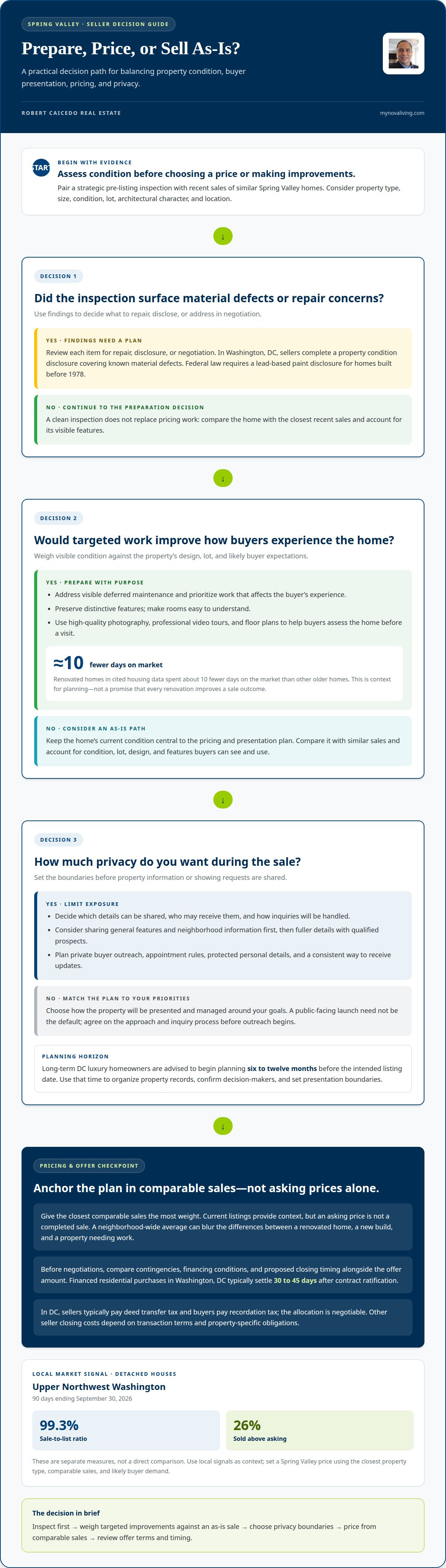
Preparing a property versus selling as-is
- Separate essential repairs from optional upgrades. Start with inspection findings and group items by safety, function, or appearance. A leaking roof or unreliable system may raise different concerns for buyers than dated finishes. Get repair estimates and compare the likely benefit with the time, disruption, and expense. This gives you a practical basis for choosing focused preparation instead of a full renovation.
- Address visible deferred maintenance before photography or buyer visits. Fresh paint, working fixtures, clear pathways, and a cared-for garden help buyers assess the home’s condition. Keep improvements in keeping with the property’s architecture; a contemporary finish may not suit every established Spring Valley residence. Document completed work and retain relevant records for buyer discussions and the contract process.
- Consider an as-is strategy when the lot or development potential matters more than finished interiors. A Spring Valley lot may appeal to a developer, while buyers seeking a move-in-ready home may value completed updates. Clearly describe the property’s condition and known issues in marketing and negotiations. An as-is sale still calls for thoughtful pricing and an accurate account of the home.
- Use market evidence to evaluate the trade-off. Fixer-uppers sold for 7.3% less than comparable homes in the cited housing data, the largest discount in three years. That figure is context, not a guaranteed adjustment for a specific Spring Valley property. Compare the cost and scope of proposed work with nearby sales and the likely buyer’s priorities before committing.
- Choose the approach that fits your timing and privacy goals. Preparation can help present a polished home, but renovations require decisions and coordination. Selling as-is can simplify the work, especially when the lot may attract developer interest, but buyers will still assess the home’s condition. Set expectations early, document your strategy, and reflect it consistently in the marketing, conversations, and contract terms.
Plan your property preparation and sale strategy around the home’s condition, lot, and intended buyer.
Robert Caicedo Real Estate: Investment Property Consulting
Robert Caicedo Real Estate offers Seller Representation and investment property consulting for owners weighing the financial and practical choices around a Spring Valley sale. Turn to this guidance when assessing whether to prepare the property, sell it as-is, or consider its investment potential alongside a confidential sale plan.
Seller Representation can help you shape the sale strategy, evaluate offers, and negotiate with your priorities in view. If you’re also considering another property, Buyer Representation and New Construction Homes may support your next step. The right path depends on your goals, timing, and transaction.
For a thoughtful conversation about your property and possible next steps, contact Robert Caicedo Real Estate.
Make your next move with intention
A discreet approach to selling a luxury property in Spring Valley, DC gives you room to align the transaction with what comes next. Consider where you plan to live, how you want to manage your next purchase, and whether a new-construction home fits your plans. These decisions can shape your transition from one residence to another.
Robert Caicedo Real Estate offers Seller Representation, Buyer Representation, and assistance with new construction homes. Whether you’re preparing to sell or planning your next purchase, a conversation can help clarify which path fits your priorities.
When you’re ready to discuss your plans, contact Robert Caicedo Real Estate. Your next chapter can begin with a considered step.
Frequently Asked Questions
How long do luxury homes in Spring Valley typically take to sell?
Spring Valley homes had a median 26 days on market in April 2026, but that figure covers the neighborhood overall, not luxury properties alone. A distinctive home’s timing can depend on price, condition, buyer demand, and how widely it’s marketed. For a discreet sale, limited exposure may change the pace by narrowing the pool of buyers who learn about the property.
How do pocket listings and private marketing work in Washington, DC?
A pocket listing is generally marketed privately rather than promoted through broad public channels. The seller and agent can agree on approved outreach, such as sharing property details with selected prospective buyers. An initial presentation might use limited images and general location details. Decide in advance what information can be shared, who may receive it, and how inquiries will be handled.
What are the DC rules for publicly marketing a home versus keeping it off-market?
The practical difference is marketing reach: public promotion makes a listing broadly visible, while an off-market approach limits its audience. Before choosing, document your marketing preferences in the listing agreement and clarify how applicable MLS and brokerage policies affect them. This helps you weigh privacy against exposure before promotion begins.
How can a seller vet buyers and protect privacy during showings?
Set a consistent screening and appointment process before any visit. Ask prospective buyers to provide relevant purchase-readiness information through their representatives, then schedule showings individually rather than allowing unscheduled access. Secure personal documents, valuables, and family photographs, and decide which rooms may be photographed. Share the exact address and detailed materials only through the agreed process.
What are the pros and cons of an off-market sale versus an MLS listing?
An off-market sale can limit public visibility and make outreach more controlled, but fewer buyers may hear about the home. An MLS listing can broaden exposure and attract more potential interest, while making property details more widely available. The right approach depends on your privacy priorities, timing, and appetite for broad competition. Discuss both options before choosing a marketing plan.
How should a Spring Valley luxury property be priced for a discreet sale?
Anchor the asking price in recent comparable sales, then account for differences in condition, lot, design, and buyer appeal. Private marketing may provide less public feedback, so a well-supported starting price matters. Review comparable properties with similar features instead of relying on asking prices alone. Decide in advance what buyer response would prompt a pricing adjustment or a broader marketing approach.


