

Waiving your general inspection contingency doesn’t automatically waive a separate radon contingency. In Fairfax and Loudoun County, radon testing is typically addressed in its own contract provision, with a 5-to-7-day testing period. This Virginia home inspection contingency guide explains how the terms you sign shape your options.
It’s easy to assume that an “as-is” offer or a waived inspection closes every door. The key is to distinguish between separate contingencies and read the deadlines and rights set out in your contract.
This Virginia home inspection contingency guide explains how inspection and radon timelines work, which findings deserve attention, and how repair requests, credits, termination rights, and as-is terms can affect your decision. It offers a practical framework for weighing protection against a more competitive offer while keeping your priorities in view.
Key Takeaways
- Check whether your radon provision is separate from the general inspection contingency before deciding what to waive.
- Use the inspection report to distinguish safety or structural concerns from routine maintenance and cosmetic issues.
- Understand how your contract handles repair requests, credits, deadlines, and termination before negotiating.
- Compare the added risk of an as-is offer with alternatives such as keeping an inspection right while narrowing its timeline or terms.
- Read the signed agreement closely: it determines which inspection rights you keep and when they expire.
Does waiving the home inspection affect my radon contingency in Fairfax or Loudoun County?
Not automatically. Fairfax and Loudoun County contracts commonly treat the general inspection and radon testing as separate contingencies. Waiving one does not, by itself, remove the other. The signed clauses and deadlines determine your rights.
A typical Virginia home inspection period is set by the contract. Many agreements provide 7 to 14 calendar days, but the written deadline controls. Schedule the inspection early enough to leave time to review the findings and decide what to do.
Radon testing has its own clock. In Fairfax and Loudoun County, radon testing contingencies are standard, and the testing period typically spans 5 to 7 days. A short-term test takes 2 to 4 days, so delaying the appointment can leave little time to respond before the clause expires.
Virginia buyers can negotiate different inspection terms. A clause may allow an inspection for information only, permit requests for repairs or credits, or let the buyer terminate under specified conditions. A void-only clause, for example, allows inspection and cancellation but gives up repair and credit requests. In a competitive offer, shortening the inspection period can preserve inspection rights while making the timeline more attractive to a seller.
The buyer who orders a private general inspection typically pays the inspector. Specialized inspections have separate costs, so consider which risks matter for the property rather than assuming one general report covers everything.
For Fairfax or Loudoun, consider radon testing alongside the general inspection. Termite or wood-destroying organism inspections can identify damage or activity. Rural and older homes may have private wells or septic systems that need separate evaluations. Homes built before 1978 also have a specific disclosure consideration: according to the U.S. Environmental Protection Agency, federal lead-based paint disclosures apply to these homes.
Virginia is a caveat emptor state, and sellers aren’t legally required to volunteer information about most known defects. Seller property disclosures are separate from your contractual inspection rights. A disclosure doesn’t replace an inspection, and an inspection clause doesn’t erase a separate radon provision. Review both before deciding whether to waive, retain, or narrow either contingency.
When the report arrives, focus on consequential findings, such as a foundation concern. Then decide whether to negotiate repairs, request a credit, or use a termination right allowed by your contract. Watch the deadline: missing it may end your option to terminate based on inspection findings.
Inspection reports and defect prioritization
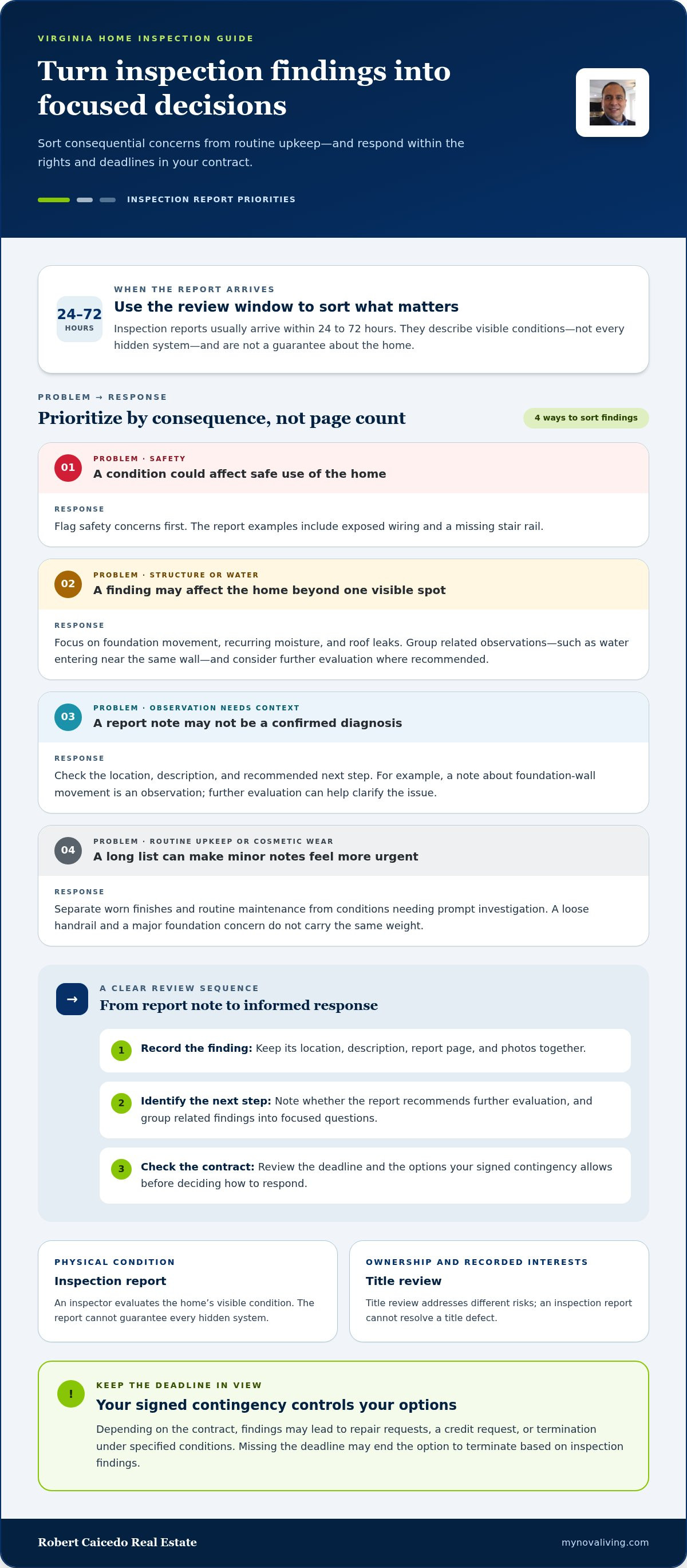
A Virginia inspection report is a snapshot of visible conditions, not a guarantee about every hidden system. Reports usually arrive within 24 to 72 hours, giving you time to sort urgent findings from routine upkeep. Start by separating safety concerns, structural issues, active leaks, and aging components from cosmetic wear. A loose handrail and a major foundation concern don’t carry the same weight.
Review each finding alongside its location, description, and recommended next step. If the report notes movement in a foundation wall, distinguish the inspector’s observation from a confirmed diagnosis. A recommendation for further evaluation helps identify what needs attention before your contingency deadline. Keep the relevant pages and photos together so your questions to the seller refer to specific observations.
- Address safety first: Flag conditions that could affect safe use, such as exposed wiring or a missing stair rail.
- Assess structure and water: Focus on foundation movement, recurring moisture, or roof leaks that may affect other parts of the home.
- Separate upkeep from defects: Note worn finishes or routine maintenance separately from conditions requiring prompt investigation.
Prioritize findings by consequence, not by the report’s page count. A long list of minor maintenance notes can look alarming, while one structural concern may deserve closer review. The report describes observed conditions, not a repair estimate; an evaluation by a specialist can clarify the issue.
Let the contract timeline guide your response. Identify the deadline, review the report promptly, and group related findings into clear questions. For example, if several notes concern water entering near the same wall, consider them together rather than as unrelated cosmetic items. This gives you a focused basis for discussing a response instead of sending the seller an unfocused list of maintenance suggestions.
Inspection reports and title review address different risks. An inspector evaluates the home’s visible condition; title review concerns ownership and recorded interests affecting the property. An inspection report cannot resolve a title defect. Title concerns are separate from physical repairs and may need to be addressed before closing. If a title concern arises during the transaction, handle it separately from physical repairs and track its resolution alongside the closing timeline.
Keep a concise priority list: the finding, its possible impact, the report page, and the decision it affects. This helps you compare a safety issue with routine wear, identify what needs follow-up, and make a considered buying decision before your contractual deadline.
Repair requests, closing-cost credits, and contract termination
Inspection findings may lead to a repair request, a closing-cost credit, or a decision to end the contract. Your signed contingency clause sets the options available and the deadline for using them.
Repair Negotiations and Credits
A repair request asks the seller to address specific inspection findings; a credit asks for an agreed amount toward eligible closing costs. The seller typically has 3 to 7 days to respond to inspection concerns, so a focused request can keep negotiations moving. Identify the report finding, describe the requested solution, and put the agreement in writing. A seller may accept, reject, or propose another arrangement.
Choose a remedy that fits the problem. For a confirmed water heater or sewer issue, a repair before closing may address the defect directly. A credit can give the buyer more control after closing, but it must fit the purchase contract and applicable loan terms. Don’t assume every lender permits the same credit structure.
Escrow Holdbacks and Repair Costs
An escrow holdback is a written arrangement that reserves funds after closing for agreed work that remains unfinished. It can help address timing, but the parties must define the amount, work, release conditions, and responsibility in the contract. Treat it as a negotiated option, not an automatic right.
Cost context can help you weigh a request. Water intrusion needs its own evaluation because the source and resulting damage shape the scope.
Separate cosmetic preferences from conditions that could affect financing or safe occupancy. FHA and VA loans commonly require termite clearance and may require health or safety items to be addressed before closing. These lender conditions can influence which repairs need attention before the transaction can proceed, including for buyers in Northern Virginia.
Insurance is a separate consideration from a seller’s repair agreement. A repair credit doesn’t establish that a property meets an insurer’s requirements. Keep insurance-related conditions distinct in your planning, and record the agreed repair scope and completion evidence in the contract documents.
If negotiations stall, the contract determines whether you can terminate. Under a standard Northern Virginia purchase agreement with an inspection contingency, buyers can elect to void the contract within the specified window if repair negotiations reach an impasse. For example, a buyer with a 10-day inspection period should not wait until the final day to review a counteroffer. Track the deadline, send any required notice as the contract directs, and understand the earnest-money terms before ending the agreement.
As-is purchases and waiving inspection contingencies
An “as-is” offer and a waived inspection contingency are related, but they aren’t identical. In Virginia, the contract language determines whether you can inspect, request a remedy, or terminate based on findings. Virginia law doesn’t require buyers to obtain a home inspection, so waiving a contingency is a contract choice with real consequences. Use this Virginia home inspection contingency guide to consider the trade-offs before accepting an as-is term.
Without a usable inspection contingency, you may have less ability to withdraw if an inspection uncovers a defect. Missing the contractual deadline can also remove your option to terminate based on inspection findings. That matters if an inspection reveals a foundation problem, damaged plumbing, or water intrusion.
“As-is” commonly signals that the seller isn’t agreeing to make repairs as a condition of sale. It doesn’t explain what your inspection clause permits. For example, your contract could allow an inspection for information while limiting repair or credit requests. Read the as-is language alongside the contingency clause, including deadlines and notice requirements. This Virginia home inspection contingency guide helps distinguish the property’s sale condition from the inspection rights written into your agreement.
- Keep the contingency: Retain the contractual inspection rights and options it provides.
- Limit the contingency: Shorten the inspection period by a few days instead of removing it entirely.
- Waive the contingency: Proceed without the inspection-based protections provided by that clause.
A shorter timeline can make an offer more competitive while preserving an opportunity to inspect. A pre-offer inspection may also help you assess visible conditions before submitting an offer. Access and available time shape what can be reviewed. Neither approach is the same as keeping every contractual inspection right.
Virginia is described as a caveat emptor state. Sellers aren’t legally required to volunteer information about most known property defects. Your own review matters: an older roof, plumbing concern, or sign of moisture may affect your willingness to proceed. Seller disclosures are separate from the inspection rights in your contract, so consider both when evaluating the home.
Earnest money depends on the agreement and how you use its terms. Under the standard Northern Virginia purchase agreements described here, buyers who void a contract using inspection-contingency rights can recover their earnest money deposits. Waiving that contingency removes that particular contractual route. It doesn’t determine the outcome of every possible dispute or other contract condition.
Before accepting an as-is offer, weigh the property’s apparent condition against the repair risk you can comfortably carry. If an unexpected foundation or plumbing repair would disrupt your plans, keeping inspection access or narrowing the timeline may better fit your priorities.
Virginia home inspection contingency rights
Virginia inspection rights come from the purchase agreement, not one statewide inspection-period rule. Many contracts provide 7 to 14 calendar days, while the signed agreement sets your exact deadline. In Northern Virginia, inspection contingencies commonly allow 7 to 10 days to negotiate repairs or credits before settlement. Treat the written dates as boundaries for testing, reviewing findings, and sending required notices.
Your clause defines what the inspection protects. A standard contingency may allow you to inspect, negotiate repairs or credits, or terminate under its terms. A void-only clause allows inspection and cancellation but removes the right to request seller repairs or credits. An informational-only inspection can reveal conditions without giving you repair negotiation rights. Understand these distinctions before making an offer, not after the report arrives.
Deadlines shape the practical value of those rights. Home inspection reports usually arrive within 24 to 72 hours, but specialist testing may take longer. In Fairfax and Loudoun County, radon provisions commonly remain separate from general inspection clauses. Check whether each contingency has its own end date and notice procedure. One clause’s deadline doesn’t automatically extend another’s.
Termination rights also depend on following the agreement. Under standard Northern Virginia purchase agreements, buyers who void using inspection-contingency rights can recover earnest money deposits. If you miss the inspection deadline, you may lose the option to terminate based on inspection findings. Keep copies of notices and record when they were sent. A verbal conversation with the seller isn’t a substitute for a notice required by the contract.
Competitive conditions don’t automatically require buyers to waive every inspection protection. A Northern Virginia buyer may shorten the inspection period rather than remove the contingency. This can preserve an opportunity to review the property while offering the seller a tighter timeline. The signed agreement determines the actual period and available remedies.
For sellers, the agreement clarifies what the buyer can request and when. A seller may respond to concerns, negotiate a repair or credit, or decline a proposed change. The written contingency still determines whether the buyer may proceed or terminate. During a sale, keeping responses and amendments in writing helps both sides track the same terms and closing timeline.
Before signing, identify the inspection period, permitted remedies, termination process, and earnest-money provisions. Then compare those terms with the property and your tolerance for repair risk. For support weighing inspection terms alongside your purchase or sale, explore real estate representation.
Robert Caicedo Real Estate: Seller Representation
Robert Caicedo Real Estate offers Seller Representation to help you prepare for inspection-related negotiations while selling your home. When a buyer’s report raises concerns, clear communication about the requested repairs, credits, and contract deadlines can help keep decisions organized. For buyers, Buyer Representation can help you weigh inspection terms and findings against your priorities before moving forward. The right support depends on whether you’re preparing a property for market or evaluating a purchase.
If you’re considering New Construction Homes or evaluating an investment purchase, understanding the property and its contract terms can also inform your next steps. Bring your questions about inspection provisions, report findings, or seller responses into the conversation.
Contact Robert Caicedo Real Estate to discuss your real estate plans, or visit mynovaliving.com.
Make Your Next Move With Clarity
Your next step is to make inspection terms part of a broader decision about the home you want and the risks you’re prepared to carry. Use this Virginia home inspection contingency guide as a starting point, then consider your priorities before signing or responding to an offer. A clear plan can help keep the transaction aligned with what matters to you.
Robert Caicedo Real Estate offers Seller Representation and Buyer Representation for clients preparing to sell or considering a purchase. Its New Construction Homes offering may suit buyers planning a move into a newly built home. The right support starts with your goals and the decisions ahead.
Contact Robert Caicedo Real Estate to discuss your real estate plans. Take your next step with intention and move toward a home that feels right for you.
Frequently Asked Questions
What is a void-only inspection contingency in Virginia?
A void-only contingency lets you inspect the property and cancel under the clause, but not request seller repairs or credits. Read the exact wording to understand how to deliver notice and protect any termination right.
Why is the home inspection especially important in Virginia?
An inspection can help you assess a home before committing to its condition and future upkeep. Virginia is described as a caveat emptor state, and sellers aren’t legally required to volunteer information about most known defects. Visible moisture, for instance, may prompt questions about water intrusion, while a foundation concern could merit further evaluation. A report gives you observations to weigh alongside disclosures and contract terms.
Can I do a pre-offer inspection in Northern Virginia?
Yes, a pre-offer inspection can help you evaluate visible conditions before submitting an offer. In Northern Virginia, buyers may have only a 24-48 hour window before offers are due, so access and scheduling can shape what’s practical. A walk-through can help identify concerns such as roof wear or plumbing issues, but it doesn’t replace a later inspection contingency unless your offer expressly provides those rights.
Do sellers have to agree to repairs?
An inspection request doesn’t automatically require a seller to accept the buyer’s proposed repairs. The seller can agree, make a different proposal, or refuse. For example, the parties might discuss a repair for an active leak or a credit instead. The signed purchase agreement and any later written amendment govern what each side must do before closing.
How long after a home inspection can I cancel or negotiate terms?
Your contract’s inspection deadline controls. Virginia purchase contracts commonly provide 7 to 14 calendar days, but the signed agreement sets the actual period and required notice method. A report may arrive within 24 to 72 hours, leaving time to evaluate findings and communicate before the deadline. If you miss the deadline, you may lose the option to terminate based on inspection findings.
What is a home inspection contingency in Virginia real estate?
An inspection contingency is a negotiated contract provision that sets how an inspection affects the buyer’s choices during the purchase. The clause can define whether the buyer may seek repairs or credits, terminate under stated conditions, or inspect for information only. For example, a buyer might retain the right to cancel while agreeing not to request minor repairs. The signed terms, not the label alone, determine the available options.
What does Virginia's standard residential purchase contract say about inspection contingencies?
Don’t assume one inspection right applies to every Virginia purchase agreement. The signed contract sets the inspection period, permitted requests, notice procedure, and any termination option. In the standard Northern Virginia agreements described here, a buyer may void within the specified contingency window if repair negotiations reach an impasse. Review the actual clause before relying on that option.
Can Virginia homebuyers cancel or renegotiate after an inspection, and what deadlines apply?
Yes, if the signed contingency gives the buyer those options and the buyer follows its notice terms. A buyer might request a repair, propose a credit, or terminate under the clause; the seller doesn’t have to accept a proposed change. Many contracts set 7 to 14 calendar days for inspection, but the agreement controls. In described standard Northern Virginia agreements, buyers who void under inspection rights can recover earnest money.


