

What if the legal hurdles that keep most investors awake at night were actually the keys to unlocking your property’s maximum value? You've worked hard to build your portfolio, and it's natural to feel the weight of the RENTAL Act of 2025. Selling a rental property in Washington DC shouldn't feel like a legal gamble, yet many owners worry that tenant non-cooperation or missed filing deadlines will derail their exit strategy. It's a valid concern, especially with the significant TOPA changes that went into effect on December 31, 2025.
Secure your equity by mastering the latest exemptions for new construction and 2-4 unit properties. We'll help you transform a high-stakes transaction into a smooth, high-value exit. This guide provides the strategic clarity you need to handle complex notices and manage the 1.45% recordation tax implications while extracting your hard-earned equity. We'll walk through the specific timelines for the 1031 exchange process and the new data submission requirements, ensuring your investment moves forward with total confidence and ease.
Key Takeaways
- Decode the latest TOPA exemptions to streamline your exit and protect your investment timeline.
- Evaluate your property’s "highest and best use" to ensure you extract maximum equity at the point of sale.
- Master the art of selling a rental property in Washington DC while maintaining positive tenant dynamics and seamless property access.
- Elevate your market presence by framing your investment as a curated lifestyle environment for modern professionals.
- Partner with specialized consultants to navigate complex RAD and TOPA filings with effortless precision.
Navigating the Washington DC Rental Sales Landscape in 2026
Washington DC moves with an energy unlike any other city. It's a place where historic charm meets modern ambition, creating a real estate market that remains incredibly resilient. As we move through 2026, the District continues to reward investors who view their properties as more than just assets. They see them as essential parts of a vibrant community. However, the path to a successful exit has changed. The introduction of the RENTAL Act of 2025, which became effective on December 31, 2025, has added layers of sophistication to the selling process. You aren't just listing a building; you're orchestrating a high-stakes transition that requires a deep understanding of Landlord-tenant law and local regulations.
Choosing to sell now, rather than waiting for a vacancy, offers distinct financial advantages. With the median family income for the area reaching $163,900 in 2025, the pool of qualified buyers looking for stable, income-producing assets is deep. By selling a rental property in Washington DC while it's occupied, you demonstrate the property's immediate value and cash-flow potential. This approach requires specialized Seller Representation to ensure that every tenant interaction is handled with grace and every legal filing is precise. It's about turning potential friction into a polished, professional transaction that protects your equity.
The 2026 DC Market Pulse
Inventory remains tight in iconic neighborhoods like Capitol Hill and Logan Circle. This scarcity creates a competitive environment where well-maintained, "turnkey" investment properties are highly prized. Buyers in 2026 aren't just looking for square footage; they're seeking curated lifestyle environments that are ready for immediate occupancy or continued rental. The DMV area has solidified its reputation as a hub of stability, drawing interest from domestic and international investors who value the District's long-term appreciation over short-term market swings.
The "Sale with Tenant" Reality Check
There's a persistent myth that you must wait for a lease to end before you can successfully sell. The reality is quite different. While the type of lease—whether it's a fixed-term agreement or a month-to-month arrangement—will influence your specific timeline, both are manageable with the right strategy. Selling a rental property in Washington DC with active renters is a standard practice for sophisticated investors. It requires clear communication and a firm grasp of the latest 2026 TOPA exemptions. We focus on creating a frictionless experience for your tenants, which in turn creates a more inviting atmosphere for your potential buyers. When tenants feel respected and informed, the entire sales cycle becomes more predictable and significantly more profitable.
Mastering TOPA: The Tenant Opportunity to Purchase Act
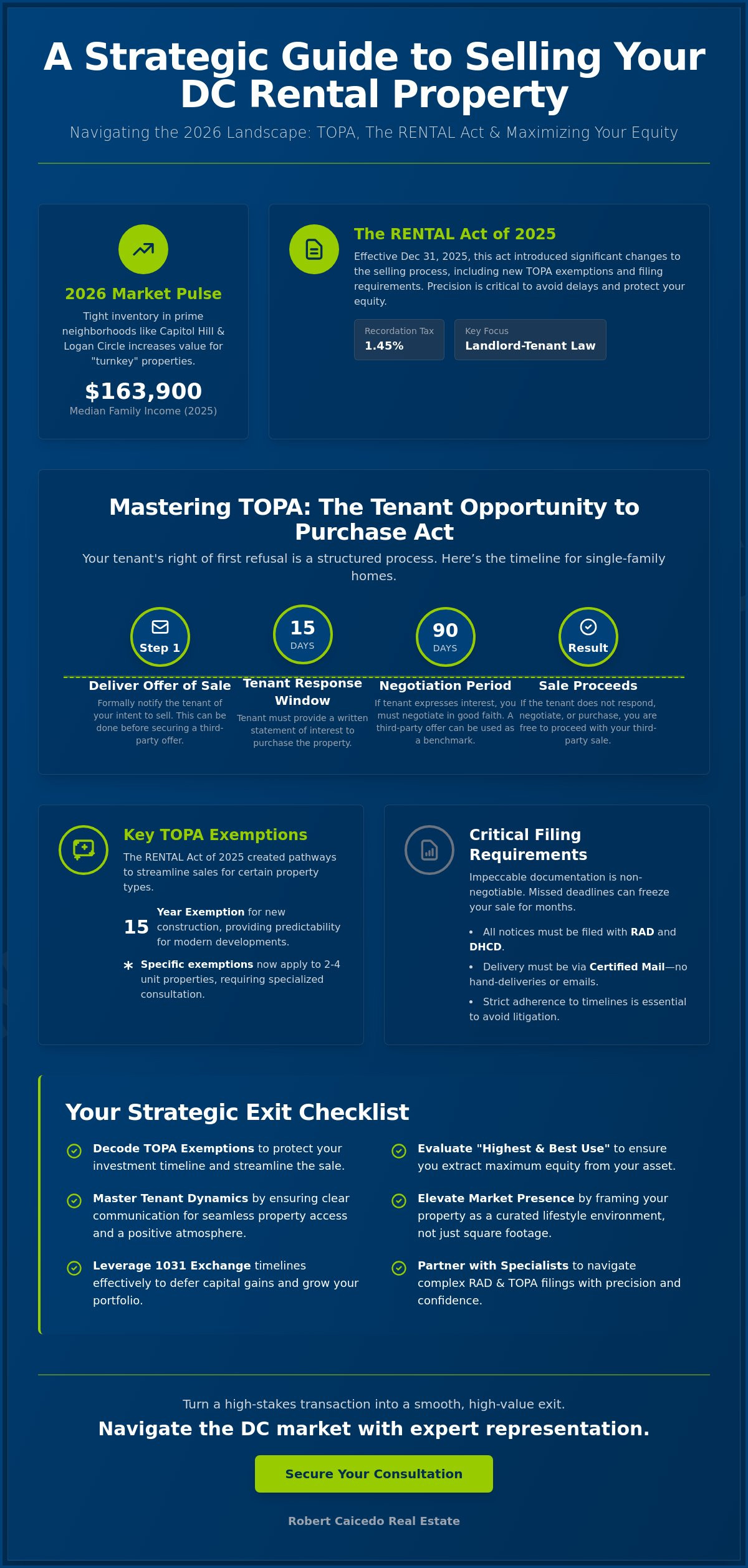
Mastering the nuances of the Tenant Opportunity to Purchase Act (TOPA) is what separates a stressful transaction from a sophisticated exit. At its core, TOPA grants your tenants the right of first refusal. This means they have the legal opportunity to purchase the home before you finalize a sale with an outside buyer. While this might sound daunting, it's a structured process that ensures your timeline remains intact when managed with precision. The distinction between property types is vital. The RENTAL Act of 2025 introduced a 15-year exemption for new construction, making selling a rental property in Washington DC much more predictable for modern developments. However, for older assets, the rules remain stringent. Missing a single filing deadline can freeze your sale for months or lead to costly litigation. Your equity deserves a clean, frictionless exit.
The TOPA Timeline for Single-Family Homes
The process for single-family residences is relatively fast-paced but requires strict adherence to dates. First, you must deliver an official Offer of Sale. You can do this even before you have a third-party contract in hand. Once the tenant receives this notice, a 15-day response window begins. During this time, the tenant must provide a written statement of interest if they intend to pursue the purchase. If they move forward, you're required to negotiate in good faith for at least 90 days. It's essential to protect the terms of your third-party offer during this period. We help you stay organized so that every milestone is met without compromising your leverage.
Compliance and Filing Requirements
Success in the DC market depends on impeccable documentation. Every notice you send must be filed with the Rental Accommodations Division (RAD) and the Department of Housing and Community Development (DHCD). Don't rely on hand-delivery or casual emails. You must use certified mail to create a legal paper trail. Another layer of complexity involves tenant "assignments." In many cases, tenants may assign their purchase rights to a third party, such as a non-profit developer. This can shift the dynamics of your sale overnight. This is where expert investment property consulting becomes your greatest asset. We manage these filings on your behalf, ensuring that your transition from owner to successful seller is as fluid and energy-filled as the District itself. By considering every detail of the DHCD requirements early, we replace typical industry stress with a sense of curated ease.
Financial Strategy: Maximising ROI on Your DC Investment
Shift your perspective from maintaining a property to optimizing a portfolio. In the 2026 market, success isn't just about collecting rent; it's about knowing when to capture your gains. Selling a rental property in Washington DC requires a financial strategy that looks beyond the closing table. You must evaluate the "highest and best use" of your asset. This might mean marketing the property as a developer's dream rather than a simple residential unit. By aligning your exit with the Tenant Opportunity to Purchase Act (TOPA) requirements early, you clear the path for a 1031 exchange that can supercharge your wealth.
Reinvesting your DC equity into high-growth Northern Virginia markets like Aldie or Ashburn is a move many sophisticated investors are making this year. These areas offer a different rhythm of growth and modern infrastructure that appeals to the region’s high-income demographic. It’s an opportunity to trade older, high-maintenance units for fresh, energy-filled assets that require less oversight and offer more predictable yields. We help you navigate these transitions with an eye for curated, high-quality experiences that prioritize your financial well-being.
Portfolio Rebalancing for 2026
Compare your current DC rental yields against the potential of new construction in Loudoun County. While DC offers historic prestige, NoVa provides a frictionless environment for capital appreciation. Use strategic buyer representation to identify your next acquisition before you even list your DC property. This proactive approach ensures your 1031 exchange timeline remains tight and your tax liabilities stay deferred. We focus on identifying "value-add" opportunities that align with your long-term vision.
Land Development and Zoning Potential
Your urban lot might be worth more than the structure sitting on it. DC’s evolving Accessory Dwelling Unit (ADU) laws have created a surge in value for properties with deep lots or alley access. Sharing land development insights with potential buyers can significantly increase your asking price. By highlighting the potential for increased lot coverage or additional units, you appeal to high-end builders ready to pay a premium for development-ready dirt. Selling a rental property in Washington DC in 2026 is about selling the future, not just the past.
The Art of the Sale: Preparing Tenant-Occupied Spaces
Selling a rental property in Washington DC demands a delicate balance between rigid legal obligations and aspirational marketing. You aren't just selling four walls; you're offering a curated lifestyle environment that resonates with the District’s ambitious urban professionals. While previous sections focused on the technicalities of TOPA, this phase is about the emotional resonance of the home. Transforming a tenant-occupied space into a high-impact listing requires a shift in perspective. You must move away from the cold, transactional nature of property management and toward a warm, community-centric presentation that invites potential buyers to see themselves in the space.
Sometimes, a strategic incentive is the most effective way to ensure your property shines. A "Cash for Keys" conversation, when handled with sophistication and empathy, can lead to a vacant, pristine property that commands a premium price. If your tenants remain in place, your focus must stay on professionalism and respect. Managing showings with a deeply attentive guide ensures that the resident feels valued while the buyer experiences the energy and fluidity of the home. Every interaction is an opportunity to reinforce the high-quality experience your investment represents.
Staging and Curb Appeal with Renters
Capture the interest of modern buyers by focusing on quick wins that elevate your property's chic, urban appeal. In historic neighborhoods like Shaw or Georgetown, simple additions like designer planters or updated exterior lighting create an immediate sense of intentionality. Inside, utilize virtual staging to show the property's full potential without disrupting your tenant’s daily life. This allows you to present a stylish, fluid layout that appeals to high-end tastes while maintaining the resident's privacy. It’s an effortless way to bridge the gap between a lived-in reality and an aspirational future.
Tenant Relations: The Secret to a Fast Sale
Draft a "Notice of Intent to Sell" that builds rapport rather than resentment. By framing the sale as a collaborative journey, you encourage your tenants to keep the space in "show-ready" condition. Consider offering practical incentives like professional cleaning services or a modest rent credit for their cooperation during the 2026 sales cycle. Remember that DC law requires a 24-hour notice rule for property access. Respecting this boundary demonstrates your reliability and keeps the process frictionless. To ensure every detail of your marketing and tenant coordination is handled with organized precision, explore our bespoke Seller Representation services. We manage the complexities so you can focus on your next big move.
Strategic Representation with Robert Caicedo Real Estate
High-volume brokerages often lose the individual's story in a sea of transactions. We choose a different path. Our boutique consulting approach prioritizes your well-being and the emotional resonance of your investment. When selling a rental property in Washington DC, you deserve a partner who sees the intentionality behind your portfolio. We navigate the maze of TOPA and RAD filings on your behalf, transforming a complex legal requirement into a frictionless experience. It's about precision, timing, and a deep understanding of the District's unique energy. We replace typical industry stress with a sense of curated ease.
We combine local roots with a global reach. Our expertise in International Real Estate allows us to tap into diverse investor pools, ensuring your property is seen by those who value quality and a specific standard of living. This isn't just about a sale. It's about securing your long-term wealth through sophisticated representation that considers every functional benefit and aesthetic choice. We treat your exit as a strategic maneuver designed to extract maximum equity while maintaining the chic, urban appeal that defines the DC market.
Beyond the Listing: Investment Consulting
We analyze your property as a commercial asset rather than just a structure. This high-level perspective allows us to unlock hidden value that traditional agents often overlook. Our deep experience with new construction homes and land development gives us a unique edge in the 2026 market. We know how to position your DC property to appeal to luxury buyers and institutional investors alike. By focusing on contemporary relevance and ease of use, we ensure your exit is as profitable as it is smooth. Every detail is considered, from initial zoning potential to the final marketing narrative.
Your Next Step in the DMV
Your journey doesn't end at the closing table. Many of our clients transition from the fast-paced energy of DC rentals to the serene elegance of luxury living in Middleburg. Whether you're looking to rebalance your portfolio or find a genuine sense of place in the hunt country, we create customized exit strategies tailored to your tax and lifestyle goals. We've already considered every detail of your transition. Contact Robert Caicedo today for a confidential portfolio review and discover how selling a rental property in Washington DC can be the start of your most exciting chapter yet. Let us help you navigate the busy environment of the DMV with effortless reliability.
Secure Your Legacy in the District
Your journey through the 2026 market has reached a pivotal moment. You've gained the clarity needed to navigate the RENTAL Act and identified how to transform your asset into a high-value exit. Selling a rental property in Washington DC is no longer a source of stress when you prioritize intentionality and legal precision. By mastering TOPA exemptions and embracing lifestyle-driven marketing, you've positioned your portfolio for a smooth, energetic transition that maximizes your hard-earned equity.
Partner with a guide who understands the emotional resonance of your investment. As a Strategic Land Development Specialist with Global Real Estate Reach, Robert Caicedo brings expert insights to sophisticated DMV investment portfolios. We handle the complex filings and global outreach, ensuring your transition is as fluid and chic as the city itself. Maximize your investment exit with Robert Caicedo Real Estate and step into your next chapter with total confidence. The path to your next great acquisition starts with a single, well-executed move.
Frequently Asked Questions
Do I have to give my tenant the first right to buy my DC home?
Yes, the Tenant Opportunity to Purchase Act generally requires you to offer your tenant the first right to buy. However, the RENTAL Act of 2025 introduced significant exemptions you should explore. Properties built within the last 15 years are now exempt from these requirements. When selling a rental property in Washington DC, you must still provide written notice of this exemption to your tenants to ensure a frictionless transition.
How long does the TOPA process take in Washington DC in 2026?
Expect the timeline to shift based on your property type. Single-family home tenants have 15 days to respond to your initial offer. If they decide to move forward, you'll enter a 90-day negotiation period. Multi-unit buildings involve more complex stages that can extend the process by several months. Staying organized with your filings is the best way to keep your exit on schedule and maintain momentum.
Can a tenant assign their TOPA rights to a third party?
Yes, tenants have the legal right to assign their purchase rights to a third party. This assignment often involves a non-profit organization or a specialized developer who may then step into the tenant's shoes to negotiate. It's a layer of complexity that can shift the dynamics of your sale quite quickly. Having a deeply attentive guide helps you manage these transitions with total confidence and ease.
What happens if I sell my DC rental without filing the proper TOPA notices?
You risk significant legal delays and potential lawsuits that could stall your closing for months. Title companies typically won't finalize a sale without proof of full TOPA compliance. If you fail to file the proper notices with the Rental Accommodations Division, the tenant could legally challenge the sale. This could lead to the transaction being voided or requiring an expensive settlement to clear the title.
Is "Cash for Keys" legal in Washington DC?
Voluntary move-out agreements, often called "Cash for Keys," are perfectly legal and widely used. These agreements allow you to provide a financial incentive in exchange for the tenant vacating the property before the sale. It's an effective strategy for selling a rental property in Washington DC when you want to deliver a vacant, turnkey residence. Always ensure these agreements are documented and filed correctly with the RAD.
How much notice must I give a tenant before a property showing in DC?
You are legally required to provide at least 24 hours' notice before any property showing. Respecting this window is more than just a legal duty; it's about maintaining a positive energy in the home. When tenants feel respected, they're more likely to keep the space in a show-ready condition. This cooperation is essential for creating a curated, high-quality experience for potential buyers during the sales process.
Can I sell my rental property if the tenant has a fixed-term lease?
You can absolutely sell your property with a fixed-term lease in place. The lease is a binding contract that stays with the property, meaning the new owner must honor the existing terms and rent amount. This scenario often appeals to investors seeking immediate cash flow. If your buyer wants to move in personally, you'll need to coordinate the timing around the lease expiration date to ensure a smooth handoff.
Does TOPA apply to single-family homes in DC?
Yes, TOPA applies to single-family homes, though the requirements are less intensive than those for apartment blocks. You must deliver an official Offer of Sale and allow the tenant 15 days to state their intent. While the 2018 TOPA Single-Family Home Exemption Act removed many hurdles, the 2026 landscape requires careful verification of your property's specific status to avoid any title delays or unexpected legal hurdles at closing.


