

In Virginia, the word "mandatory" is often the most misunderstood term in a real estate transaction. You might feel a wave of panic as you flip through a 50-page inspection report, but the reality of what repairs are mandatory after a home inspection in VA is governed by your buyer's loan type and basic safety codes rather than the report itself. Since Virginia remains a "Buyer Beware" state, you aren't legally required to address every cosmetic flaw or aging appliance found during the process.
It's natural to feel overwhelmed when a potential deal feels like it's hanging by a thread over a minor technicality. You deserve a transition that feels like a curated experience, not a stressful list of chores. This guide clarifies exactly which repairs are non-negotiable for FHA or VA loans and which ones are simply conversation starters. We will break down the latest 2026 regulatory shifts, from new septic inspection definitions to roofing insurance protections, so you can move toward your closing date with absolute confidence and ease.
Key Takeaways
- Leverage Virginia’s "Buyer Beware" status to maintain control over your repair list and protect your equity.
- Identify the specific lender-driven criteria that define what repairs are mandatory after a home inspection in VA for government-backed loans.
- Prioritize the "Big Four" safety categories to resolve hazards before they jeopardize your path to the closing table.
- Master the repair addendum process to respond to buyer requests with strategic poise and clarity.
- Experience how Robert Caicedo Real Estate transforms your property into a high-quality environment that discourages minor nitpicking.
The Reality of 'Mandatory' Repairs in Virginia's Real Estate Market
When you receive a thick inspection report for your home in Alexandria or Arlington, it's easy to feel like every line item is a legal demand. You might assume the state has a checklist of requirements you must meet before a deed can transfer. However, the reality is quite different. In Virginia, no state law mandates specific repairs based solely on the findings of a private home inspection. The process is a private negotiation between two parties, not a regulatory enforcement action.
Understanding what repairs are mandatory after a home inspection in VA requires a shift in perspective. In our local market, "mandatory" is a term defined by your contract and your buyer's lender, not by the Virginia General Assembly. While the Virginia Residential Property Disclosure Act (VRPDA) requires sellers to provide certain disclosures, it fundamentally reinforces a "buyer beware" environment. As of July 1, 2026, these disclosures even include specific notices regarding military installations and use-value assessments, but they still don't force your hand to pick up a hammer. You are selling a lifestyle and a curated environment; the inspection report is simply a technical snapshot of that space.
Virginia is a 'Buyer Beware' State
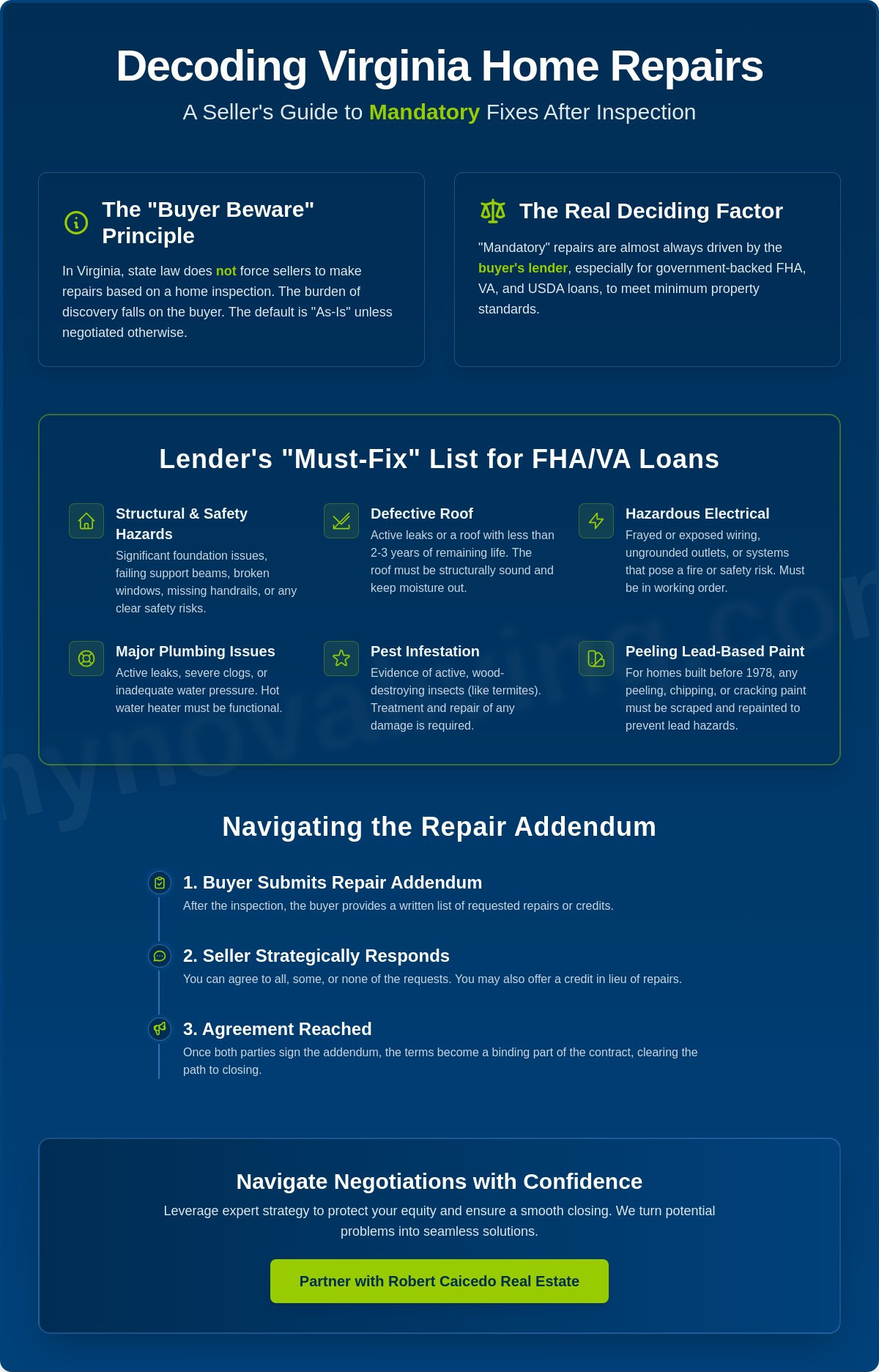
Virginia remains one of the few states that adheres to the "Caveat Emptor" or "Buyer Beware" principle. This legal doctrine places the burden of discovery squarely on the buyer's shoulders. They're responsible for performing due diligence and uncovering any defects before the closing date. For you, this means the default setting for any sale is "As-Is" unless you specifically agree otherwise in writing. Even with the housing stock in Virginia aging, with over 25% of homes now older than 50 years, the responsibility to find issues belongs to the person buying the home, not the person selling it.
Contractual Obligations vs. Legal Mandates
While the law is on your side, the Northern Virginia Association of Realtors (NVAR) contract usually introduces the inspection contingency. This is the buyer's most significant lever. It creates a temporary window where the buyer can negotiate for repairs or credits. You will typically encounter two types of contingencies. A "Void Only" contingency allows the buyer to either accept the home or walk away entirely. A "Negotiation" contingency opens a dialogue where the buyer provides a list of requested fixes. This is where you determine what repairs are mandatory after a home inspection in VA based on your desire to keep the deal moving toward a frictionless closing. You aren't fixing things because a law says you must; you're fixing them to ensure your curated lifestyle experience reaches its next resident.
Safety First: Non-Negotiable Hazards and Code Violations
Safety is the ultimate luxury. While we've established that Virginia is a "Buyer Beware" state, specific hazards quickly transform from "negotiable" to "deal-breaker." When determining what repairs are mandatory after a home inspection in VA, most buyers and their agents focus on the "Big Four" systems: electrical, plumbing, HVAC, and the roof. These aren't just technical components; they're the foundation of a frictionless living experience. If these systems fail, the home's emotional resonance fades, replaced by the stress of immediate maintenance.
Active leaks or visible mold growth suggest a home hasn't been maintained with intentionality. In the high-end markets of Northern Virginia, a single water stain on a ceiling can erode a buyer's confidence in the entire property. Similarly, structural stability is non-negotiable. Foundation issues or failing support beams threaten the sanctuary you've built. While the Virginia Residential Property Disclosure Act outlines what you must share, fixing these major hazards is often the only way to keep a sophisticated buyer at the table. If you're looking for expert guidance on positioning your home for success, partnering with a dedicated seller representative can help you identify these red flags before they become obstacles.
Radon and Environmental Hazards in Northern Virginia
Environmental safety is a top priority for families moving to communities like Leesburg and Ashburn. Radon gas, a naturally occurring radioactive element, is particularly prevalent in Northern Virginia's rocky soil. Most local contracts include a radon contingency. If testing shows levels at or above the 4.0 pCi/L threshold, mitigation is almost always expected. For those selling historic homes in Alexandria, lead-based paint disclosures remain a critical requirement for any structure built before 1978. These aren't just boxes to check; they're essential steps in ensuring your home remains a high-quality environment for its next resident.
Fire and Electrical Safety Standards
Electrical systems must do more than just work; they must be safe. Common red flags in NoVA inspection reports include double-tapped breakers or ungrounded outlets. These might seem like minor technicalities, but they represent significant fire risks. Virginia code requires functioning smoke and carbon monoxide detectors on every level of the home. Beyond simple outlets, certain outdated electrical components, such as Federal Pacific or Zinsco panels, often require immediate replacement. These brands have a documented history of failure. Most buyers won't accept the risk of an uninsurable electrical system, making these replacements a practical necessity for a successful, effortless sale.
Lender Requirements: FHA, VA, and USDA Loan 'Must-Fix' Items
While a standard home inspection provides a roadmap for your buyer, a lender's appraisal inspection serves a different master. It's designed to protect the bank's investment. When you're determining what repairs are mandatory after a home inspection in VA, you must look closely at the buyer's financing. If they're using a government-backed loan, the appraiser acts as a secondary inspector. They aren't just looking at value; they're ensuring the property meets specific FHA's minimum property standards. These aren't suggestions. If the home fails to meet these criteria, the lender simply won't release the funds.
This dynamic is increasingly relevant in our local market. In fiscal year 2026, the VA loan program grew by 27%, with 528,343 loans issued across the country. Gen Z veterans are leading this charge, accounting for 38% of all VA loan activity this year. For sellers in Northern Virginia, this means a high probability of encountering "Safe, Sound, and Sanitary" requirements. These repairs are mandatory because they're a condition of the loan approval. You have the right to refuse, but doing so typically ends the transaction. Choosing to make these fixes ensures a frictionless path to the closing table and protects the home's status as a high-quality lifestyle environment.
FHA and VA Loan Deal-Breakers
FHA and VA appraisers follow a strict health and safety checklist. Peeling or chipping paint is a major hurdle, especially for the 25% of Virginia homes built before 1978, due to lead-based paint risks. Other common "must-fix" items include missing handrails on stairs, broken window panes, and excessive moisture in crawlspaces. If an appraiser flags these issues, a follow-up visit is required. In 2026, the typical reinspection fee for a VA loan is $150. Addressing these small details before the appraiser arrives saves you time and keeps the momentum of your sale moving forward.
The Wood-Destroying Insect (WDI) Inspection
Virginia's climate is unfortunately perfect for termites and other wood-destroying pests. Because of this, most lenders require a clear WDI report, often using the NPMA-33 form. In Northern Virginia, the buyer usually pays for this inspection, but the seller is almost always expected to cover the cost of treatment if active infestation is found. If the report shows structural damage from past activity, the lender will likely require a professional repair before they'll close. It's a standard part of the process that ensures the home remains a secure, intentional space for its next resident.
Navigating the Virginia Inspection Contingency and Repair Addendum
The NVAR (Northern Virginia Association of Realtors) contract sets a rhythmic, time-sensitive pace for your sale. Once the inspector packs up their tools, the buyer typically has a set number of days to deliver their Home Inspection Repair Addendum. This document is their formal wish list. It's often accompanied by a report that can exceed 50 pages of technical jargon. Don't let the volume of data overwhelm you. Your journey toward a frictionless closing depends on how you handle the next few days. Under the updated septic inspection laws effective July 1, 2026, the 10-day limit for the report starts on the very first day of the inspection. This change makes efficiency even more critical for sellers in more rural parts of Fairfax or Loudoun County.
Managing the back-and-forth requires a blend of professional poise and strategic thinking. You'll follow a specific sequence to reach the closing table:
- The Response Period: This is your window to evaluate the buyer's requests with your agent. You'll decide what repairs are mandatory after a home inspection in VA based on the loan types we've discussed and your desire to keep the deal moving.
- The Negotiation Period: This is a collaborative phase where both parties strive for a win-win outcome. You might agree to fix a safety-related electrical issue while declining to address minor cosmetic wear.
- The Execution Phase: You'll hire professionals to complete the agreed-upon work.
- The Final Walk-through: The buyer verifies that all repairs meet the standards outlined in your agreement.
Success here requires organized, stylish execution that respects everyone's time. If you want a partner who treats your home sale as a curated experience rather than a list of chores, contact us for expert seller representation.
Repairs vs. Closing Credits: Which is Better?
You might prefer to offer a seller credit instead of managing contractors yourself. This approach often simplifies the process and allows the buyer to oversee the work after they move in. It maintains the momentum of the sale without the stress of scheduling repairs during your move. However, keep in mind that lenders often cap "Interested Party Contributions" (IPCs) at 3% to 6% of the purchase price. Credits are excellent for non-essential items, but they won't work for the lender-mandated safety issues that must be resolved before the deed transfers. For those "must-fix" items, a physical repair is usually the only path forward.
The Power of the 'Professional Receipt'
Quality and intentionality matter in the luxury NoVA market. In Virginia, repairs must be completed in a "workmanlike manner." This usually means you need licensed professionals who can provide legitimate documentation. A handwritten note from a friend won't suffice. Buyers' attorneys and lenders require formal invoices that include license numbers and warranty information. Organizing these receipts early ensures your closing is an effortless transition. It proves that you've maintained your property as a high-quality lifestyle environment, giving the new owners total peace of mind.
Strategic Negotiation: How Robert Caicedo Real Estate Protects Your Interests
Selling your home should feel like an elegant transition rather than a series of technical hurdles. At Robert Caicedo Real Estate, we believe the best way to handle what repairs are mandatory after a home inspection in VA is to take control of the narrative before the first buyer ever steps inside. We don't just list properties; we curate lifestyle environments. When a home is presented with absolute intentionality and care, buyers are less likely to nitpick minor details. They see the value of the curated experience you've created. This shifts the focus from a 50-page technical report to the inherent beauty and quality of the residence itself.
Our team leverages deep market data to protect your equity during every phase of the transaction. We understand the nuance between a genuine lender-mandated safety issue and a simple negotiation tactic. By maintaining a sophisticated and attentive communication style, we keep the deal together during the high-stress inspection window. Every property we represent is held to a specific standard of quality that suggests effortless reliability. This approach ensures that when we reach the negotiation table, you have the momentum and the agency to choose the best path forward for your financial goals.
The Pre-Listing Advantage
For our luxury sellers in Middleburg and Aldie, we often recommend a pre-listing inspection. This proactive step eliminates the fear of the unknown. By identifying and fixing "mandatory" safety items before the house hits the market, we create a frictionless experience for potential buyers from day one. You gain the luxury of time to choose your own licensed contractors and manage costs on your own terms. A pre-inspected home signals to the market that every detail has already been considered. It reinforces the aspirational quality of your listing and builds immediate trust with sophisticated buyers.
Consulting on Investment and Land Development
Our expertise extends beyond traditional residential sales into investment property consulting and land development. We understand how inspection findings can impact the long-term value of a Northern Virginia portfolio. Whether you're navigating complex zoning changes or preparing new construction homes for their market debut, we ensure your assets maintain their value through strategic maintenance and professional representation. We invite you to experience a curated approach to selling their home that prioritizes your well-being and provides a stylish, effortless path to the closing table.
Move Forward with Absolute Confidence
You've navigated the technicalities of "Buyer Beware" and identified the specific lender requirements that define what repairs are mandatory after a home inspection in VA. Now, it's time to focus on the future. A successful sale isn't just about passing an inspection; it's about maintaining the integrity of the lifestyle you've cultivated. By prioritizing safety hazards and leveraging professional documentation, you ensure a smooth, high-quality transition for the next resident.
At Robert Caicedo Real Estate, we specialize in strategic seller representation across luxury markets like Aldie and Middleburg. As an affiliate of Spring Hill Real Estate, established in 2005, we bring decades of refined expertise to every transaction. We replace industry stress with a sense of excitement and ease. Discover the Effortless Way to Sell Your Northern Virginia Home and experience a partnership that respects your time and your vision. Your path to the closing table should be as curated and stylish as the home you've built.
Frequently Asked Questions
Is mold remediation mandatory after a home inspection in VA?
Mold remediation isn't legally mandatory under Virginia law, but it's often a practical necessity to keep a deal alive. Most buyers view active mold as a health hazard that disrupts the sense of a high-quality lifestyle environment. Lenders may also refuse to fund a loan if mold is flagged as a safety issue during the appraisal process.
Do I have to bring my older Northern Virginia home up to current building codes?
You aren't required to bring an older home up to modern building codes just to sell it. Virginia real estate follows "Buyer Beware" principles, meaning the home is sold in its current state. However, any new renovations or additions you perform before listing must meet current 2026 standards to pass local inspections and ensure a frictionless sale.
What happens if a seller refuses to make mandatory FHA repairs?
If you refuse to make mandatory FHA repairs, the buyer's loan will likely be denied. You have the right to decline any request, but because these fixes are lender-mandated for safety, the transaction cannot proceed with FHA financing. This usually leads to the deal falling through unless the buyer can switch to a different loan product.
Can a buyer walk away after a home inspection in Virginia?
A buyer can walk away if their contract includes a home inspection contingency. In Northern Virginia, this window allows them to void the contract based on the findings in the report. Whether they can leave without first negotiating depends on if they chose a "Void Only" or a "Negotiation" contingency during the initial offer phase.
Who pays for the home inspection repairs in VA?
The seller typically pays for repairs agreed upon in the inspection addendum, though this is entirely negotiable. You might choose to cover the costs to ensure a path to closing that feels effortless for both parties. Alternatively, you can negotiate a seller credit, allowing the buyer to handle the work after they take ownership of the property.
Are cosmetic issues like carpet stains considered mandatory repairs?
Cosmetic issues like carpet stains or minor wall scuffs are never considered mandatory repairs. These items don't impact the safety or structural integrity of the home. In a sophisticated market, sellers often decline these requests to focus on the essential systems that define what repairs are mandatory after a home inspection in VA.
What is the 'Home Inspection Notice' in an NVAR contract?
The "Home Inspection Notice" is the formal NVAR document a buyer uses to deliver their repair requests. It must be accompanied by the full inspection report to be valid under the contract terms. This notice triggers the official negotiation period, setting the stage for a curated agreement between you and the buyer.
How long does a seller have to respond to a repair request in VA?
The response time is dictated by the specific terms in your sales contract. In the standard NVAR contingency, a seller often has three days to respond to a buyer's repair list. It's vital to respect these timelines to maintain the momentum of your sale and ensure an effortless transition to the closing table.


