

What if the most dangerous part of your home sale isn't the negotiation, but the silence? Virginia remains one of the few "Buyer Beware" states, yet many homeowners discover too late that this legal shield isn't absolute. You want a seamless transition to your next chapter, not a lingering fear of legal liability or a deal that falls through at the final hour. Understanding the specific seller disclosure mistakes to avoid in Virginia is the key to protecting your equity and your peace of mind.
It's natural to feel some anxiety about the fine print when you're preparing to hand over the keys. You deserve a closing that feels like a celebration, grounded in the confidence that every legal obligation has been met with professional precision. This guide empowers you to master the nuances of the 2026 updates to the Virginia Residential Property Disclosure Act so you can sell with total clarity. You'll learn exactly which defects require a signature, which ones don't, and how to use transparency as a strategic tool to secure a premium, undisputed offer.
Key Takeaways
- Learn why Virginia's "Buyer Beware" status doesn't excuse you from every obligation and how to navigate the 2026 legal landscape with confidence.
- Identify the specific seller disclosure mistakes to avoid in Virginia that can lead to post-closing litigation or a failed deal.
- Discover the "Trust Dividend" and how strategic transparency prevents low-ball offers while protecting your home's equity.
- Master the updated 2026 checklist for HOA and condo documents to ensure unexpected assessments don't derail your closing.
- Understand how professional seller representation acts as your attentive guide, shielding you from liability and ensuring a frictionless transaction.
Understanding Caveat Emptor: The Foundation of Virginia Real Estate
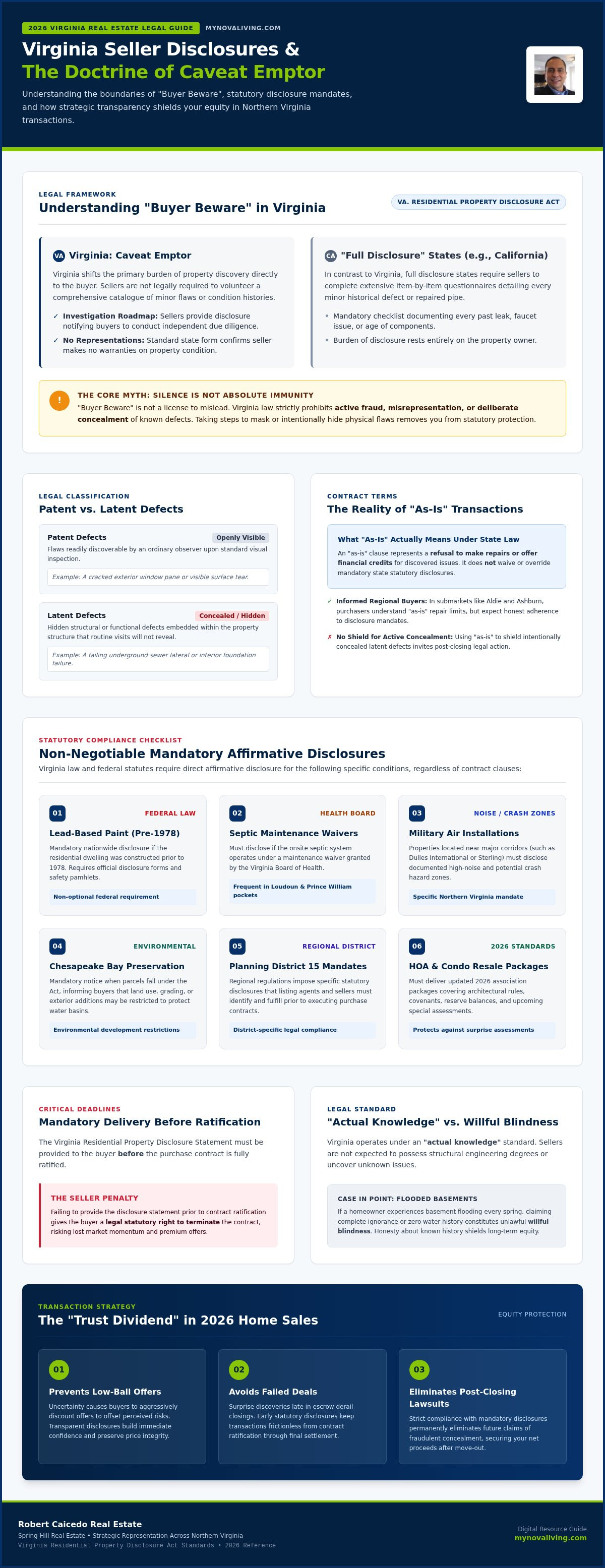
Virginia real estate operates on a philosophy of personal responsibility. It relies on the doctrine of caveat emptor, or "let the buyer beware." This makes the Commonwealth distinct from "full disclosure" states like California. In those markets, sellers must document every leaky faucet. In Virginia, the law shifts the burden of discovery to the buyer. The Virginia Residential Property Disclosure Act creates a framework where you aren't required to volunteer every flaw, but you must provide a roadmap for the buyer to investigate themselves.
Don't mistake this for a license to mislead. While buyers are responsible for their own inspections, you cannot engage in active fraud or misrepresentation. One of the most critical seller disclosure mistakes to avoid in Virginia is the belief that silence equals safety. If you take steps to intentionally conceal a known defect, you're stepping outside the protection of "Buyer Beware." The Residential Property Disclosure Statement serves as a vital tool in this process, signaling that the buyer should conduct their own due diligence through professional inspections and public records.
The Legal Reality of "As-Is" Sales
Listing your property "as-is" doesn't grant you immunity from state laws. You're still bound by mandatory statutory disclosures that exist regardless of the contract's terms. Understand the difference between patent and latent defects. Patent defects are obvious to any observer, like a cracked window. Latent defects are hidden within the structure, such as a failing sewer line. In the 2026 Northern Virginia market, transparency is your best currency. Today's buyers in Aldie and Ashburn are highly informed. They accept "as-is" as a refusal to make repairs, but they won't tolerate the discovery of hidden, undisclosed structural issues after the fact.
The Sellers Limited Duty of Disclosure
The standard Virginia disclosure form is a unique document. It doesn't ask you to check boxes about the roof's age or the HVAC's health. Instead, it informs the buyer that you make no representations about the property's condition. You have a legal duty to provide this disclosure form to the buyer before the contract is ratified. Failing to meet this requirement is one of the most common seller disclosure mistakes to avoid in Virginia. If the form isn't delivered on time, the buyer gains a legal right to terminate the contract, potentially costing you a premium offer and valuable time on the market.
Mandatory Disclosures: The Mistakes That Lead to Litigation
Virginia's "Buyer Beware" reputation often leads to a false sense of security. While the law places heavy responsibility on the buyer, certain affirmative disclosures are non-negotiable. Missing these is among the most common seller disclosure mistakes to avoid in Virginia. You must provide the official Virginia Real Estate Board disclosure forms to the buyer before contract ratification to stay compliant with state mandates. These documents act as your first line of defense against future legal claims.
Federal law dictates the first major hurdle. If your home was built before 1978, you're legally required to provide a lead-based paint disclosure. This isn't optional. Another frequent trap involves septic systems. If your property uses a septic system that has received a maintenance waiver from the Board of Health, you must disclose this to the buyer. It's a technical detail that often trips up sellers in the more rural pockets of Loudoun or Prince William County, where older systems are common.
Virginia operates on an "actual knowledge" standard. This means you aren't usually responsible for defects you truly didn't know existed. You aren't expected to be a structural engineer. However, the law doesn't look kindly on willful blindness. If you've lived with a flooded basement every spring and claim the home has no water issues, you're stepping into "actual knowledge" territory. Honesty about what you've experienced ensures your equity remains protected long after the moving trucks leave.
Local Mandates: Northern Virginia Specifics
Living near Dulles International or in Sterling requires specific Military Air Installation Disclosures. Buyers need to know if they're moving into a high-noise zone or a potential crash area. Properties in Planning District 15 also face unique requirements that your agent must navigate. If your land falls under the Chesapeake Bay Preservation Act, you must disclose that development might be restricted to protect local water quality. These regional nuances are why strategic representation is so vital for a clean closing.
Environmental and Safety Hazards
Safety takes priority over "Buyer Beware" protections. If your home was ever used as a clandestine meth lab and hasn't been remediated to state standards, you're legally bound to disclose it. The same applies to defective drywall, a lingering concern from the mid-2000s that can corrode wiring and impact health. While Virginia law doesn't force you to volunteer "stigmatized" events like a death on the property, the best policy is absolute honesty if a buyer asks you directly. Keeping the narrative transparent prevents surprises that could derail your transaction during the inspection period.
Strategy vs. Liability: The Fine Line of Disclosure
Selling a home in high-stakes markets like Ashburn or Aldie requires more than just a sign in the yard. It requires a nuanced strategy. While Virginia law allows you to remain silent on many issues, over-disclosing every minor cosmetic scratch can unnecessarily spook qualified buyers. However, one of the most significant seller disclosure mistakes to avoid in Virginia is failing to distinguish between a "fixable flaw" and a "deal-breaker." Strategic disclosure isn't about listing every chipped baseboard; it's about providing a clear, honest history of the property's major systems.
Proactive transparency creates what we call the "Trust Dividend." When you're upfront about past repairs, you build immediate rapport with potential buyers. They see a homeowner who has been an attentive steward of the property. In the sophisticated Northern Virginia real estate market, buyers are often willing to overlook a disclosed past repair if they know it was handled professionally. Conversely, discovering a hidden issue during the home inspection often leads to aggressive price renegotiations or a total loss of confidence in the transaction.
The Pre-Inspection Pivot
Choosing to conduct a pre-listing inspection in 2026 can be a powerful move. It allows you to identify potential hurdles before your home ever hits the market. By uncovering issues early, you can choose to "fix and forget" rather than "disclose and discount." Keep in mind that once you have a written inspection report in hand, your "actual knowledge" of the home's condition increases. This naturally shifts your obligations beyond the standard federal lead-based paint disclosure rules and into a space where you must be prepared to address the inspector's findings with any prospective buyer.
Handling Post-Inspection Discoveries
The discovery of a new defect during the buyer's inspection period changes the legal landscape. If a professional inspector reveals a significant issue you genuinely didn't know about, your legal obligation to update your disclosure forms is triggered. You cannot simply ignore the new information and hope for a different result with the next buyer if the current deal falls through. Navigating these moments requires a steady hand. Instead of panicking, use the new data to recalibrate your negotiation tactics. Often, offering a repair credit or addressing the issue before closing is the most efficient way to maintain your original sale price and ensure a frictionless exit.
The Northern Virginia Seller’s Disclosure Checklist
Success in a high-growth market requires more than a beautiful kitchen. It requires meticulous attention to the "paper trail" that defines your property's legal standing. One of the most expensive seller disclosure mistakes to avoid in Virginia is treating the paperwork as an afterthought. Use this 2026 protective checklist to ensure your equity remains untouched and your closing stays on track.
- Step 1: Secure the Latest Summary. Obtain the Virginia Residential Property Disclosure Act summary updated as of July 2026. This document evolves; using an outdated version can invalidate your contract.
- Step 2: The HOA Audit. Review your Homeowners Association or Condo documents. Look for pending special assessments or architectural violations you might have forgotten.
- Step 3: Mandatory Hazard Check. Audit your property for the "Big Three": septic maintenance waivers, lead-based paint (if pre-1978), and military aircraft noise zones.
- Step 4: Strategic Consultation. Meet with your representative to decide which optional disclosures will provide the most peace of mind and prevent future disputes.
HOA and Condo Document Mastery
In communities like those found in our Ashburn buying guides, the Resale Certificate is a critical document. It's often a trap for the unwary. If you fail to provide this package within the statutory timeframe, the buyer may have a right to rescind the contract without penalty. You are also liable for any undisclosed fees or architectural violations that the association hasn't yet flagged. Ensure the buyer signs a receipt for these documents to start the clock on their review period immediately.
Timing Your Disclosures
Transparency is a marketing asset. Delivering your disclosures after a buyer has already fallen in love with the home can feel like a "bait and switch" if a major issue is revealed. In high-demand areas like Sterling, VA, savvy sellers make these documents available in the MLS or during initial tours. This proactive approach filters out buyers who aren't serious and reinforces your position as a reliable seller. Perform a final walkthrough audit before closing to confirm the property matches the condition you disclosed months prior. For expert guidance on managing this process, explore our seller representation services today.
Why Expert Representation is Your Best Defense
Navigating the complexities of real estate law requires more than just filling out forms. A professional listing agent acts as your essential shield. They provide a vital buffer between you and potential legal liability by ensuring every document is executed with precision. By leveraging strategic buyer representation insights, we understand exactly what red flags high-end buyers look for in your paperwork. This proactive stance is the most effective way to circumvent the common seller disclosure mistakes to avoid in Virginia that derail otherwise perfect transactions.
Robert Caicedo brings a unique perspective to your sale. His background in Northern Virginia land development and investment consulting allows him to spot zoning or easement issues that others might miss. Whether you're selling a luxury home in Willowsford or a high-growth property in Aldie, he ensures that complex technical details are disclosed accurately. This meticulous preparation transforms a potentially stressful legal hurdle into an effortless and stylish transition to your next residence. You don't have to wonder if you've missed a detail; we've already considered them all for you.
Curating the Lifestyle, Protecting the Asset
We believe your home is more than a commercial asset. It's a lifestyle environment with its own unique story. Our goal is to frame that story beautifully while checking every legal box required by the 2026 Residential Property Disclosure Act. As your attentive guide, we prioritize your well-being and financial interests at every turn. We invite you to a private consultation to evaluate your property's unique disclosure needs and ensure your equity remains fully protected. It's about creating an inviting atmosphere where buyers feel confident and you feel secure.
Next Steps for a Successful Sale
Preparing for the 2026 market goes beyond the paperwork. It requires a holistic strategy that balances aesthetic appeal with legal transparency. To begin your journey, request a comprehensive market analysis and a preliminary disclosure audit. This early intervention helps you identify the specific seller disclosure mistakes to avoid in Virginia before they become obstacles. You deserve the confidence that comes with knowing your home is market-ready from every angle. Schedule your consultation with Robert Caicedo today to experience a curated, high-quality selling experience that puts your needs first.
Elevate Your Sale with Unrivaled Confidence
Mastering the delicate balance between Virginia's "Buyer Beware" heritage and modern mandatory requirements is the key to a frictionless closing. By staying ahead of 2026 updates and utilizing a proactive disclosure strategy, you protect your equity and build the essential trust that high-end buyers demand. Avoiding the most common seller disclosure mistakes to avoid in Virginia isn't just about legal compliance; it's about curating a seamless transition to your next chapter.
Robert Caicedo, affiliated with Spring Hill Real Estate since 2005, offers the sophisticated mastery required for luxury markets like Aldie and Middleburg. His deep expertise in land development and investment property consulting ensures that even the most complex easements or zoning nuances are handled with professional precision. You don't have to navigate these technical details alone. Secure your home sale with an expert disclosure strategy and experience the peace of mind that comes from working with a deeply attentive guide. Your successful, liability-free sale is within reach, and we're here to ensure every detail is perfectly considered.
Frequently Asked Questions
Do I have to disclose a death in the house in Virginia?
You don't have to disclose a death on the property in Virginia. State law classifies deaths, including those by natural causes, accidents, or crimes, as non-material facts that don't require disclosure. This rule protects your privacy and prevents unnecessary stigma from affecting your home's value in markets like Ashburn or Reston. If a buyer asks you directly about the home's history, honesty remains the best policy to maintain the trust established during your sale.
What happens if I forget to disclose a known defect in Virginia?
Forgetting to disclose a known defect can lead to significant legal liability after closing. If a buyer discovers a hidden issue you intentionally concealed, they may sue for breach of contract or fraud. This is one of the primary seller disclosure mistakes to avoid in Virginia that can lead to expensive litigation. Working with an attentive guide ensures every detail is documented, protecting your equity and ensuring a clean, undisputed transition to your next residence.
Is Virginia a "Full Disclosure" state for real estate?
Virginia is not a "Full Disclosure" state; it's a "Buyer Beware" jurisdiction. This means the primary responsibility for inspecting the property rests with the buyer. While you must provide the mandatory Residential Property Disclosure Statement, you aren't required to volunteer a list of every minor repair. This distinction makes the Northern Virginia market unique compared to states like California, allowing for a more streamlined and efficient selling experience when handled with professional precision.
How long does a buyer have to sue a seller for non-disclosure in Virginia?
Buyers generally have two years from the date they discover a potential fraud or misrepresentation to file a lawsuit in Virginia. For breaches of a written contract, the statute of limitations can extend up to five years. These timelines emphasize why meticulous documentation is vital for sellers in Aldie and Leesburg. Ensuring your disclosures are accurate from day one provides long-term security and prevents legal surprises from surfacing years after you've handed over the keys.
Do I need to disclose if my house is in a flood zone in Northern Virginia?
Yes, you must disclose if your home is located in a special flood hazard area. The Virginia Residential Property Disclosure Act requires you to direct buyers to the FEMA flood insurance rate maps. In low-lying areas of Sterling or near the Potomac in Reston, this is a critical step in the process. Providing this information early helps buyers understand their insurance requirements and ensures there are no delays as you approach your closing date.
Are HOA violations part of the mandatory seller disclosures?
HOA violations are a mandatory part of the disclosure process through the required Resale Certificate. You must provide a complete association packet that outlines any known architectural violations or unpaid assessments. In planned communities across Ashburn and Middleburg, these documents start a legal review period for the buyer. Failing to deliver these on time is a common error that gives the buyer a right to cancel the contract, so prompt delivery is essential.
What is the "Actual Knowledge" standard in Virginia real estate law?
The "Actual Knowledge" standard means you're only responsible for disclosing defects you truly know exist. You aren't expected to perform invasive inspections or act as a professional engineer. This standard protects sellers in high-stakes markets like Washington D.C. from being held liable for hidden structural issues they couldn't have seen. It focuses on transparency regarding your lived experience in the home, ensuring the disclosure process feels fair and manageable rather than overwhelming.
Do I have to disclose that my neighbors are loud or have a barking dog?
You aren't legally required to disclose loud neighbors or a barking dog in Virginia. These are considered "off-site" conditions rather than physical defects of the property itself. While these factors contribute to the lifestyle of a neighborhood in Aldie, they don't fall under the mandatory requirements of the Residential Property Disclosure Act. Focusing on the physical integrity of your home ensures you meet your legal obligations while maintaining a positive and inviting atmosphere for potential buyers.


