

What if a quiet week is a reason to review your plan, not an immediate signal to cut your price? Managing seller anxiety in a slow Washington DC market starts with separating a temporary lull from a pattern in buyer feedback. When you’re balancing showings with a move, finances, or a new chapter, waiting can feel especially unsettling.
It’s understandable to look for answers in national headlines or compare your listing with homes that sold under different conditions. But the market can vary across Washington, D.C., and Northern Virginia, as well as by neighborhood, property type, and presentation. A slower response alone doesn’t tell the whole story.
This guide offers a practical way to review your listing, set decision points, and use showing activity and buyer feedback to inform your next move. With seller representation from Robert Caicedo Real Estate, you can weigh your options against local comparisons and your goals instead of reacting to every quiet week.
Key Takeaways
- Separate observable listing signals from assumptions, then decide what each signal needs you to investigate.
- Compare your home with nearby properties that match its location, type, condition, and timing rather than relying on broad averages.
- Weigh whether to maintain your plan, improve presentation or visibility, or revisit pricing based on the evidence and trade-offs.
- Make managing seller anxiety in a slow Washington DC market more manageable with a regular review of feedback, agreed actions, and the next check-in.
- Use local seller representation to connect market feedback with your goals and adjust your strategy as new evidence emerges.
Why a Slow-Feeling Washington, DC Market Can Make Selling So Stressful
Waiting for showings, meaningful feedback, or an offer can make every quiet day feel significant. You may be coordinating a move, managing financial commitments, or making plans around family needs. That pressure is real, but a slower-than-expected response is a reason to review the evidence, not proof that your home won’t sell.
Stress can feel sharper when important plans depend on an outcome you can’t control. The broader idea of psychological stress helps explain why uncertainty can weigh on you, but it can’t tell you what activity on a particular listing means. For that, look at your home’s signals alongside relevant local context.
What can make a home sale feel slow?
Elapsed time is only one part of the picture. Review it alongside completed showings, the substance of buyer feedback, and whether interest has led to offers. A listing with few showings raises different questions from one attracting visits but no follow-up.
Seasonality, condition, pricing, and competing listings can all shape buyer response. So can the details that make your home distinct, including its layout, setting, and presentation. Don’t label the market slow based on a headline or broad regional average. Use comparisons that match your property type, location, and relevant time period.
Washington, D.C., and nearby Northern Virginia communities can move differently. Conditions can also vary by neighborhood and property type within those areas. National coverage may provide context, but it can’t replace a close look at the homes buyers are considering alongside yours.
Why does waiting intensify seller anxiety?
Selling often takes place during a larger life transition. You may need to coordinate a move, financial decisions, or family plans with a timeline that feels uncertain. Refreshing listing pages or checking for updates repeatedly can amplify worry without giving you new evidence.
Listing silence is information to review, not a verdict on your home. Write down what has happened, what remains unknown, and when you’ll review the picture again. That distinction is central to managing seller anxiety in a slow Washington DC market: respond to relevant feedback and patterns, rather than letting one quiet stretch dictate your next move.
How to Read DC-Area Listing Signals Without Assumptions
Turn listing activity into questions to investigate, rather than conclusions drawn in a stressful moment. Review current local MLS information or another reliable source with Robert Caicedo Real Estate. Before relying on a comparison, note its date, geographic area, property type, and limitations. A metro-wide figure may describe a broad trend, but it can’t explain how buyers are responding to your particular home.
The U.S. Census Bureau’s Washington, DC housing market data can provide context about housing and residents, but it isn’t a live measure of showings or current listing competition. For decisions about your listing, use timely local sales and active-listing comparisons that match its location and characteristics.
What do showing activity and buyer feedback tell you?
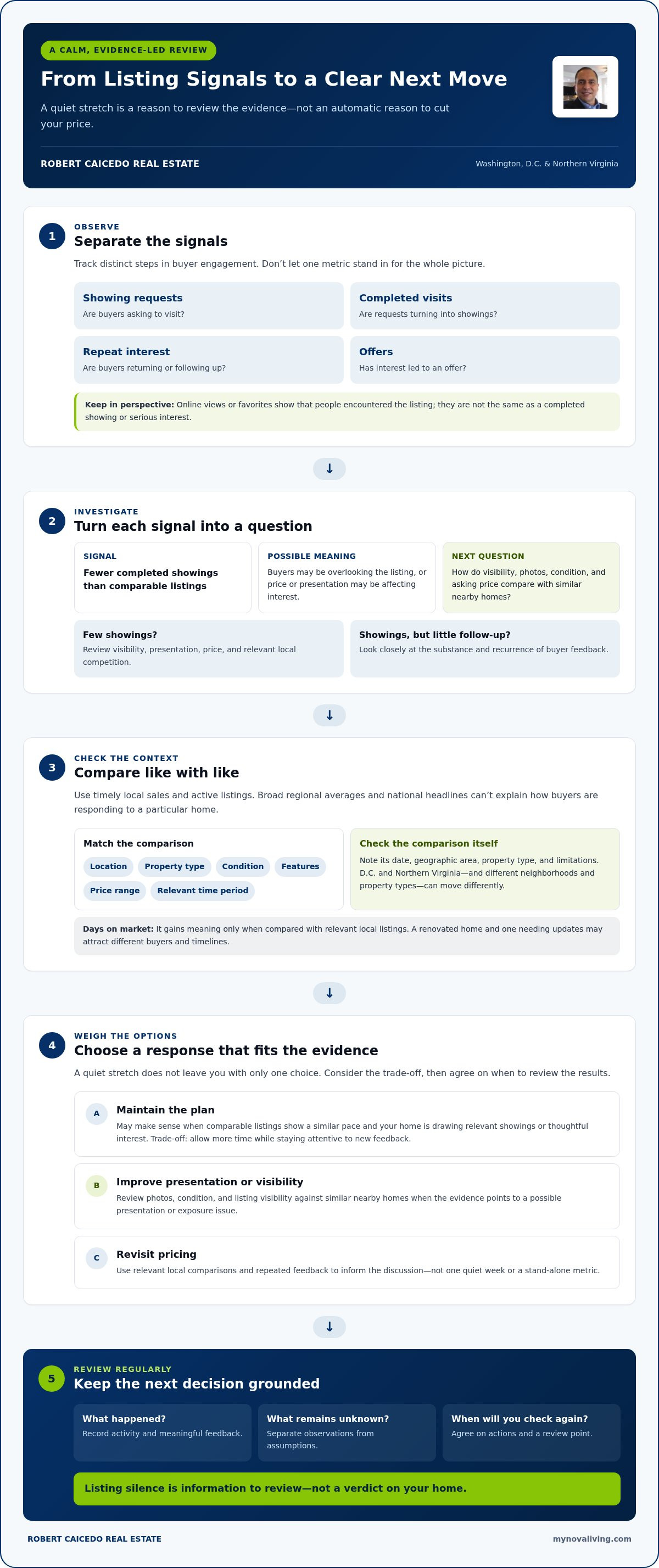
Track showing requests, completed visits, repeat interest, and offers separately. Each reflects a different step in buyer engagement. Online views or favorites may show that people encountered the listing, but they aren’t the same as a completed showing or serious interest.
Look for patterns in buyer comments. One person’s preference may be personal; repeated observations about condition, presentation, or price may warrant a closer review. Neither is an automatic instruction to change course. Ask what the feedback suggests and what additional evidence could clarify it.
When does days on market deserve a closer look?
Compare your listing’s time on market with similar nearby homes, not a broad regional average. Check whether active competitors and recent sales share your property type, location, condition, features, and price range. A renovated home and one needing updates may attract different buyers and timelines, even if they’re close to each other.
Days on market gains meaning only when compared with relevant local listings. Confirm that the information covers the same time period and geography, then consider what the differences may mean before making a pricing decision.
Signal to review: Fewer completed showings than comparable listings.
Possible meaning: Buyers may be overlooking the listing, or something about price or presentation may be affecting interest.
Next question: How do listing visibility, photos, condition, and asking price compare with similar nearby homes?
Use the same three prompts to review feedback, repeat interest, and time on market. This structure supports managing seller anxiety in a slow Washington DC market by keeping one metric from carrying more weight than it deserves. Treat each signal as a starting point for a local discussion, not a stand-alone reason to change the price.
Price Change, Presentation, or Patience: Compare Your Next Moves
A quiet stretch doesn’t leave you with only one choice. Match your response to the evidence, then agree when to review the results with Robert Caicedo Real Estate. A clear review point helps keep a decision from becoming a reflexive response to one slow week.
- Maintain the plan: This may make sense when comparable listings show a similar pace and your home is drawing relevant showings or thoughtful interest. The trade-off is allowing more time while staying attentive to new feedback.
- Improve presentation or visibility: Consider this when comments repeatedly point to unclear photos, access challenges, condition, or features that aren’t coming through in the listing. Choose practical, proportionate changes; they may take effort and expense without guaranteeing a result.
- Revisit pricing: A review may be warranted if current comparable listings and buyer response suggest your asking price is out of step. Waiting can mean competing listings continue to shape buyer expectations, while a price change is a consequential choice that deserves fresh evidence.
These options aren’t mutually exclusive. A focused presentation update may accompany a decision to hold the price while you observe new feedback. Define what you’re changing and which signal you’ll watch next.
When might a presentation or marketing adjustment help?
Start with specifics. If multiple visitors mention a condition issue or have difficulty understanding the layout from photos, consider whether a targeted improvement or clearer listing materials could address it. Review whether the home’s distinctive features, such as natural light, outdoor space, or setting, are easy to see and understand. Robert Caicedo Real Estate can help you prioritize changes that fit your goals rather than trying to perfect every detail at once.
How can you evaluate a possible price adjustment?
Review active, pending, and recently sold homes that are genuinely comparable, using reliable, current information. Consider differences in location, condition, features, and timing, then weigh the evidence against your moving plans and financial priorities. A nearby market can offer context, but it can’t replace a comparison tailored to your home. For a glimpse of one Northern Virginia community’s character, explore this Sterling, VA home-selling guide.
A price change isn’t an admission of failure. It’s a strategic choice that should reflect buyer response, comparable homes, and what matters most to you. Managing seller anxiety in a slow Washington DC market becomes more grounded when each option has a reason, a trade-off, and an agreed point to reassess.
A Step-by-Step Plan for Managing Seller Anxiety During a Listing
A regular review gives new information a place in your decision-making instead of leaving you to carry every question through the week. Agree with Robert Caicedo Real Estate on how updates will be shared and when you’ll revisit decisions. The aim isn’t to eliminate every unknown. It’s to make the next step clear.
What should a weekly listing check-in cover?
Keep the review focused on what changed, what it may mean, and what you’ll do next. Look at new comparable listings, showing activity, buyer feedback, and marketing actions. Record unanswered questions, too. Naming what remains uncertain can stop a guess from quietly becoming a conclusion.
Use a short shared record:
- Evidence: What new activity, feedback, or comparable listing emerged?
- Questions: What needs clarification before you act?
- Agreed action: What, if anything, will you change?
- Next check-in: When will you review the response?
Even if the agreed action is to hold steady, record the choice and its reasoning. A planned review date gives you a moment to reassess instead of making every new notification feel urgent.
How can sellers keep worry from driving decisions?
Choose a regular time to review listing updates instead of checking metrics throughout the day. Note concerns as they arise, then bring them to your next planned conversation. This gives you room to consider the full picture before making consequential decisions about price, timing, or moving plans.
For immediate relief, step away from the screen, take a pause, or talk with someone you trust. Those actions may help you feel steadier, but they don’t replace a careful review of market evidence. Keep emotional support separate from decisions with financial or logistical consequences.
If relocation, finances, or family circumstances change, revisit your priorities with Robert Caicedo Real Estate. A plan that fit last week may need a thoughtful update when your constraints shift. That’s not inconsistency; it’s a response to new information.
Managing seller anxiety in a slow Washington DC market becomes more manageable when updates, questions, and decision dates have a place in your routine. Discuss your selling goals and listing plan with Robert Caicedo Real Estate.
Choose a Calm, Local Selling Strategy for Washington, DC and Northern Virginia
A thoughtful selling strategy starts with your priorities, then connects them to what buyers are doing in the relevant local market. Seller representation from Robert Caicedo Real Estate brings listing feedback, comparable properties, and your goals into one plan. You remain involved in weighing options, with room to adapt as new evidence emerges.
Local context matters. A home in Washington, D.C., shouldn’t automatically be measured against a broad regional average or a property with a different setting and buyer appeal. Comparisons with nearby communities such as Aldie, Leesburg, Middleburg, Ashburn, Sterling, and Reston can offer perspective when they fit the question, but they aren’t a substitute for property-specific market comparisons.
What should a supportive seller-representation process feel like?
You should understand what the available evidence says, what remains uncertain, and why an option is being considered. Clear explanations and agreed updates make it easier to stay oriented. Local comparisons should reflect your home’s competitive area and relevant characteristics, while pricing or presentation changes remain choices to discuss, not automatic responses to a quiet period.
A collaborative plan can set out how you’ll review new activity, when you’ll talk through feedback, and what evidence might prompt a change. That structure gives you a steady reference point without locking you into a strategy that no longer fits.
What can you do before your first strategy conversation?
Gather your preferred timeline, move-related priorities, and questions about the listing process. Write down the specific signals causing concern, such as limited showings, a recurring comment, or uncertainty about competing homes. You don’t need to arrive with a solution. A clear picture of what matters to you helps shape a more useful discussion.
Managing seller anxiety in a slow Washington DC market is easier when your plan reflects both local evidence and the life you’re preparing for next. Robert Caicedo Real Estate represents sellers in Washington, D.C., and Northern Virginia, including Aldie, Leesburg, Middleburg, Ashburn, Sterling, and Reston, with a strategy shaped around your home and goals.
Move Forward With a Clearer Selling Plan
A quiet period doesn’t have to dictate your next move. Consider showing activity, buyer feedback, and relevant local comparisons together, then decide whether patience, a presentation adjustment, or a pricing review best fits the evidence. Set regular check-ins and decision points so each new signal has a place in the plan.
Managing seller anxiety in a slow Washington DC market also means keeping your priorities in view. Your preferred timing, moving plans, and financial considerations matter alongside market response. A calm strategy can adapt as circumstances change without treating every quiet week as a reason to act.
Seller representation is a primary service at Robert Caicedo Real Estate, serving Washington, D.C., and Northern Virginia communities. If you’re preparing to sell, talk through a thoughtful plan for your home sale and the decisions ahead.
You can move forward with more perspective, one informed choice at a time.
Frequently Asked Questions
Is Washington, DC a slow market for home sellers in 2026?
There isn’t one answer that fits every Washington, D.C., home. Conditions can vary by neighborhood, property type, price range, and season, so a national headline or metro-wide figure may not reflect your listing’s competition. Review current local activity, buyer response, and recent comparable sales. Before using market data to make a decision, note when it was gathered and which area it covers, since conditions can shift.
How do I stop worrying when my home is not getting showings?
Start by separating what you know from what you fear. At a planned check-in, review showing requests, comparable listings, and any recurring buyer feedback with Robert Caicedo Real Estate. Agree on a next step and a date to assess it. Managing seller anxiety in a slow Washington DC market doesn’t mean ignoring uncertainty; it means giving concerns a useful place in the process instead of monitoring listing activity throughout the day.
Should I lower my asking price if my home is not selling?
Not automatically. First consider how your price compares with relevant homes, then review presentation, showing activity, and buyer feedback. If the evidence suggests a gap between your asking price and buyer expectations, discuss a considered adjustment and its trade-offs. Your timing and financial priorities matter, too. Ground a pricing decision in current local conditions and your goals, not pressure from one quiet week.
How long should I wait before changing my home listing?
There’s no universal number of days that works for every home. Set a review schedule before listing, then assess time on market alongside comparable properties, showings, feedback, and competing inventory. Check that comparisons reflect a relevant area and time period. A planned review gives you a clear moment to reconsider your strategy, helping you avoid reacting too quickly while still responding if the evidence changes.
What happens if my home gets no offers in a slow market?
No offers are a reason to review the listing, not proof that a sale is impossible. Look at comparable activity, price positioning, presentation, access, and any consistent buyer feedback. Then discuss whether to maintain the current approach, make a focused improvement, or revisit pricing. Keep your preferred timeline and personal priorities in view as you weigh those options. Each response has trade-offs, and none guarantees a particular outcome.
Can a real estate agent help manage seller anxiety?
Yes. Seller representation can bring structure to a stressful process through local comparisons, clear explanations, and agreed decision points. Robert Caicedo Real Estate represents sellers in Washington, D.C., and Northern Virginia communities including Aldie, Leesburg, Middleburg, Ashburn, Sterling, and Reston. A useful conversation connects recommendations to your home, its relevant competition, and your goals, helping you weigh options calmly without promising a buyer, sale price, or timeline.


